
1869 English Velocipede (Marked ‘F2’)
36″ Front wheel
30″ Rear wheel
LENGTH: 64″
WIDTH: 25.5″
HEIGHT: 50″
(Now sold)

Even though they were built in just a short period – from 1868 to 1870 – the overwhelming majority of English velocipedes have unknown makers. Such was the enthusiasm for this novel means of transportation that hundreds of engineers, blacksmiths, coach-builders, wheelwrights, sewing machine manufacturers, toolmakers, gunsmiths and the like jumped on the bandwagon to create a new cycle industry.
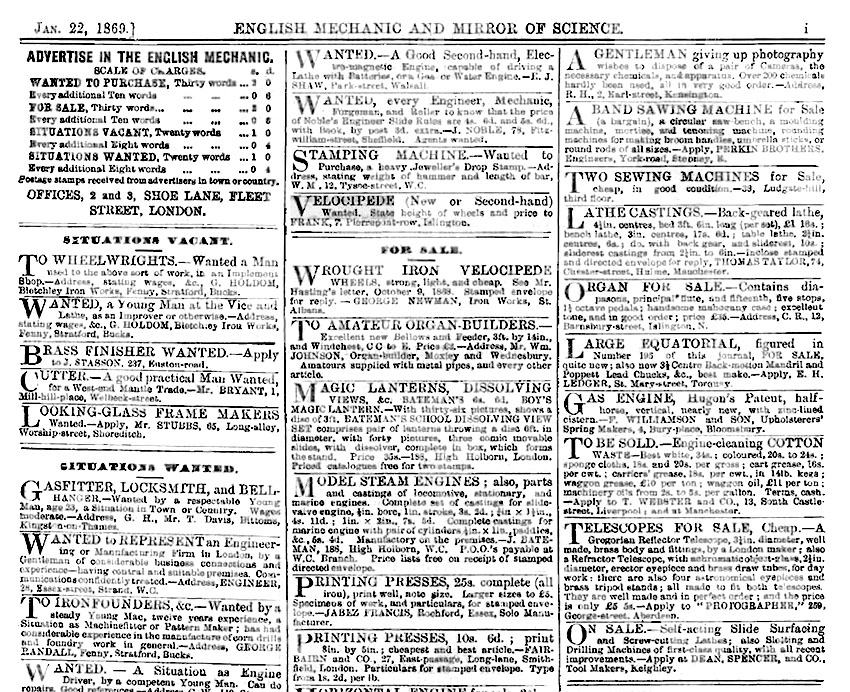
The advertising industry was still in its infancy in 1869. Even when a velocipede was advertised for sale in a newspaper or magazine, few were accompanied by illustrations. Even if there was a picture, the differences between them were mostly in the fine details, which is too hard to discern from a line drawing. There is no known list of all the makers. So it is almost impossible to attribute a manufacturer to a machine nowadays, and the best information that cycle historians can usually offer is the country in which an unknown velocipede was manufactured.
Wheels of English velocipedes invariably have exact measurements in inches rather than centimeters, so the assumed origin of this one is based on the wheel size being exactly 36″ and 30″.
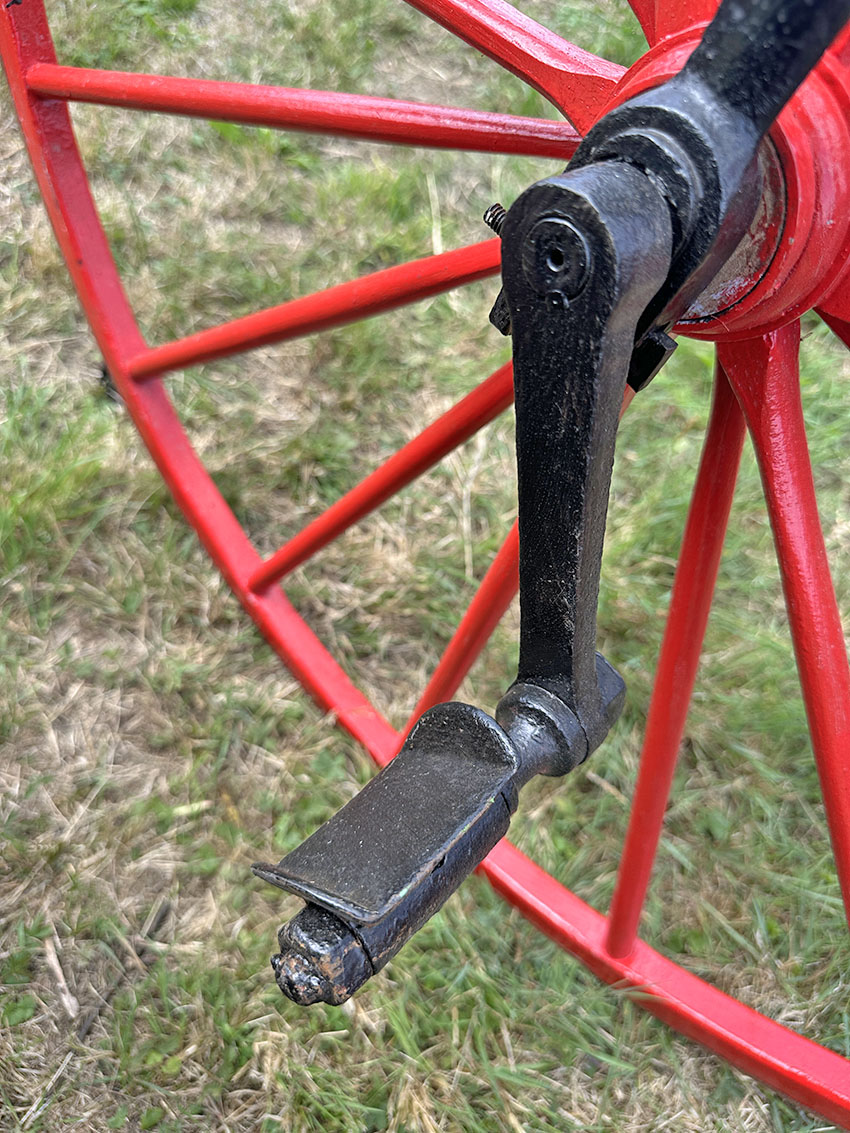
This velocipede, built around 156 years ago, is in very good overall condition. It was restored some time ago with new wheels, constructed by a wheelwright in exactly the same way as in 1869. My inspection reveals some damage to the right hand pedal, but this does not affect its use (and reproduction pedals are available if required). It is perfectly functional and ready to ride.


‘F2’ STAMPING ON VELOCIPEDE


VELOCIPEDE RIDING SCHOOL






PHOTOSHOOT LOCATION:
Mayfield Lavender Farm, Banstead, Surrey
I read an article in the Sunday Times about the popularity of lavender farms in Britain during their short season in July. So I asked permission from Lorna, owner of Mayfield Lavender Farm in Banstead, and took some bicycles there for a photoshoot. They were very popular with the visitors, so we spent some time explaining about their history to various families from around the world. It’s a wonderful location, and I recommend visiting it while it is still open.

