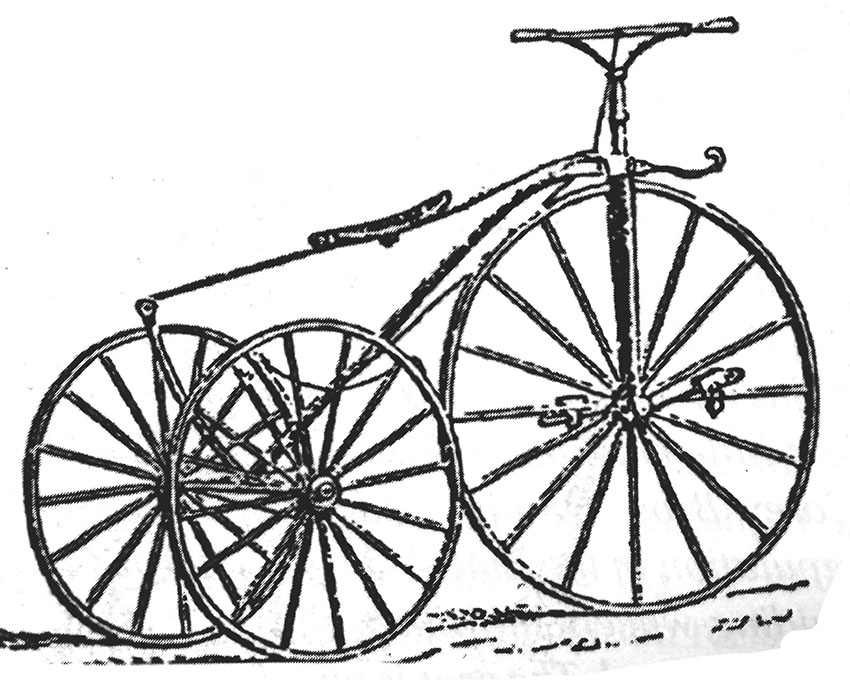
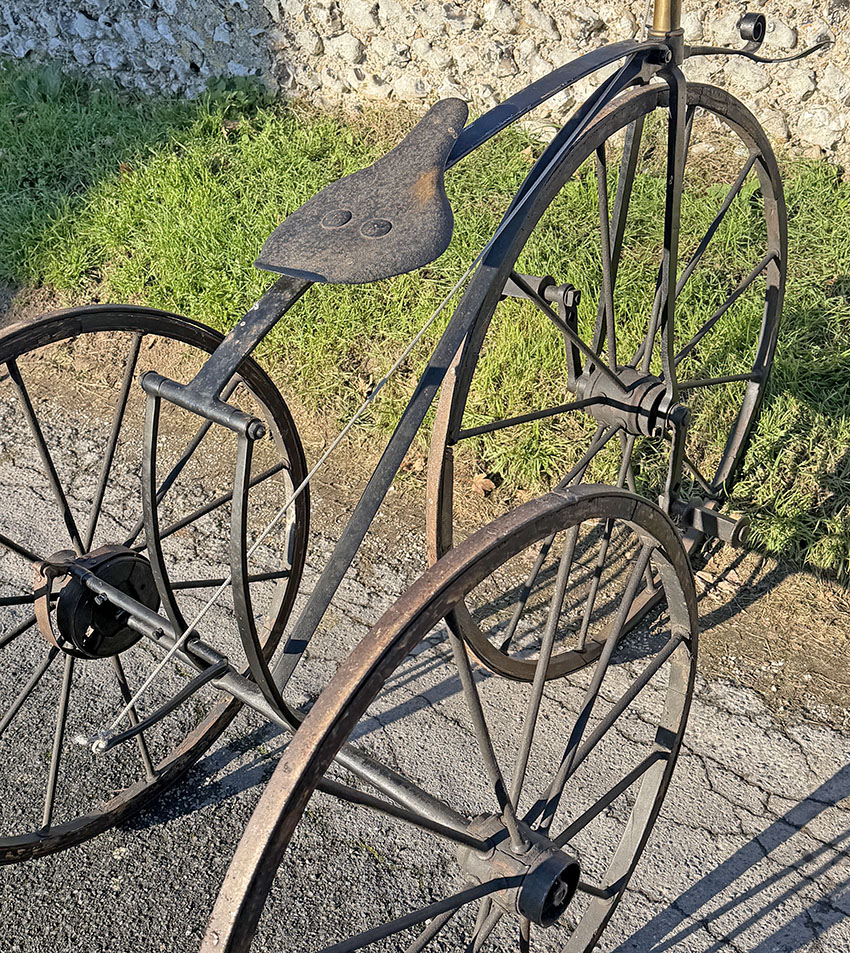
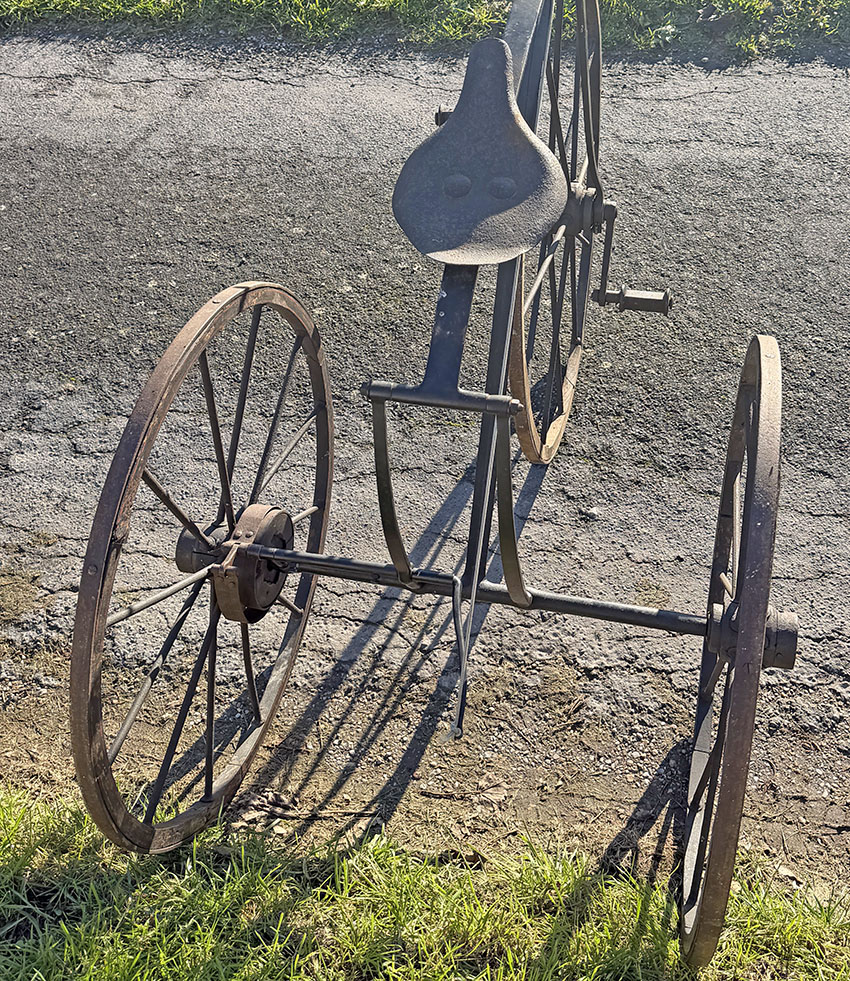
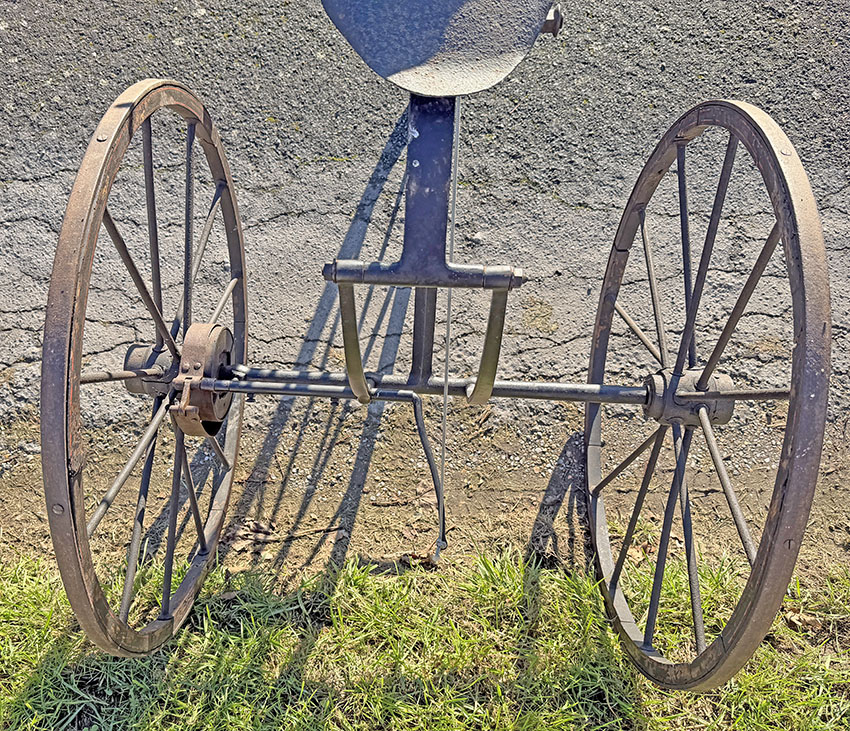
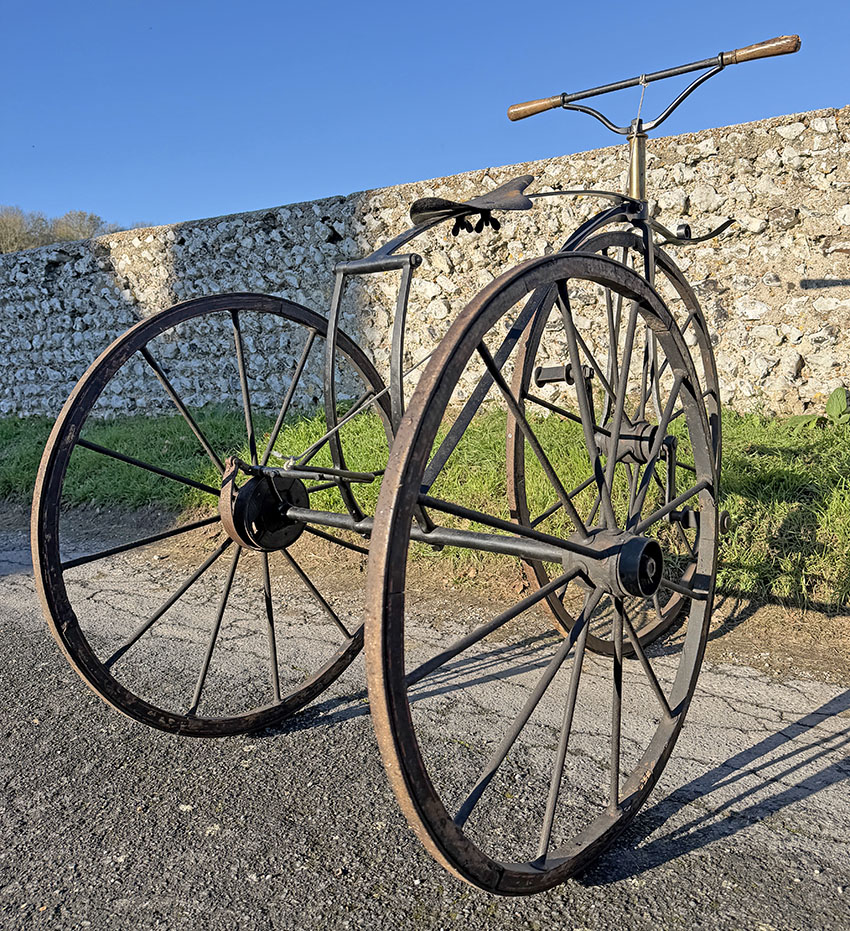
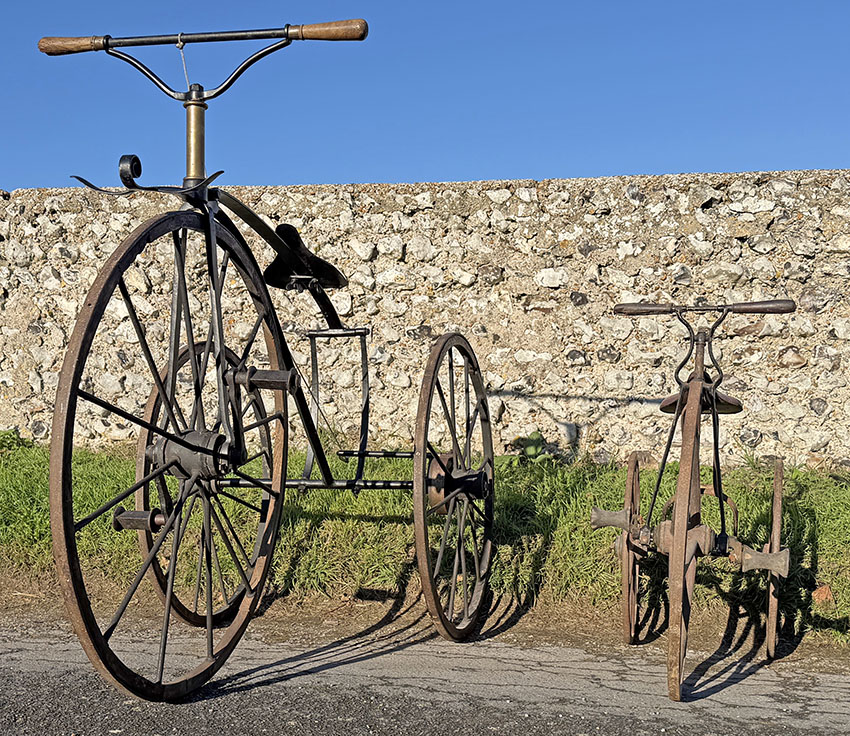
“In all probability the three-wheeled velocipede will have a more enduring and wider-spread popularity than the two-wheeled. Not that those in present use are safer or even easier to guide than the bicycle, but they permit the body to remain in a sitting posture when going downhill and when the machine is at rest. An artist can sketch from the seat.
It can be taken to a shady nook while the luncheon or quiet pipe is enjoyed, and what is lost in speed is made up in comfort. There are, however, some drawbacks. Strange as it may appear to the uninitiated, the tricycle is far more likely to upset the tyro than the bicycle. Some modifications in the form of the machine have been made which bid fair to remove this objection.
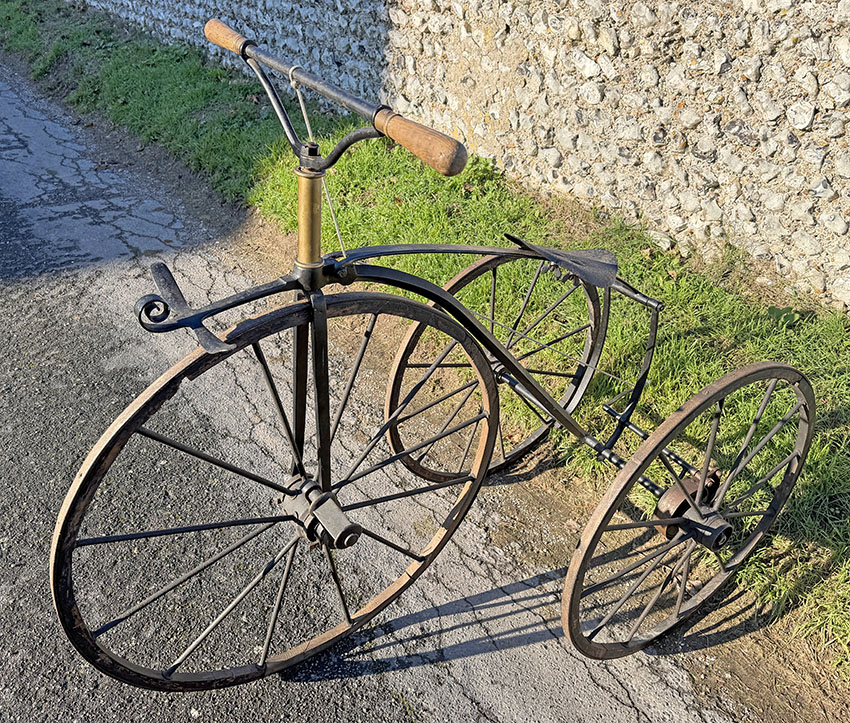
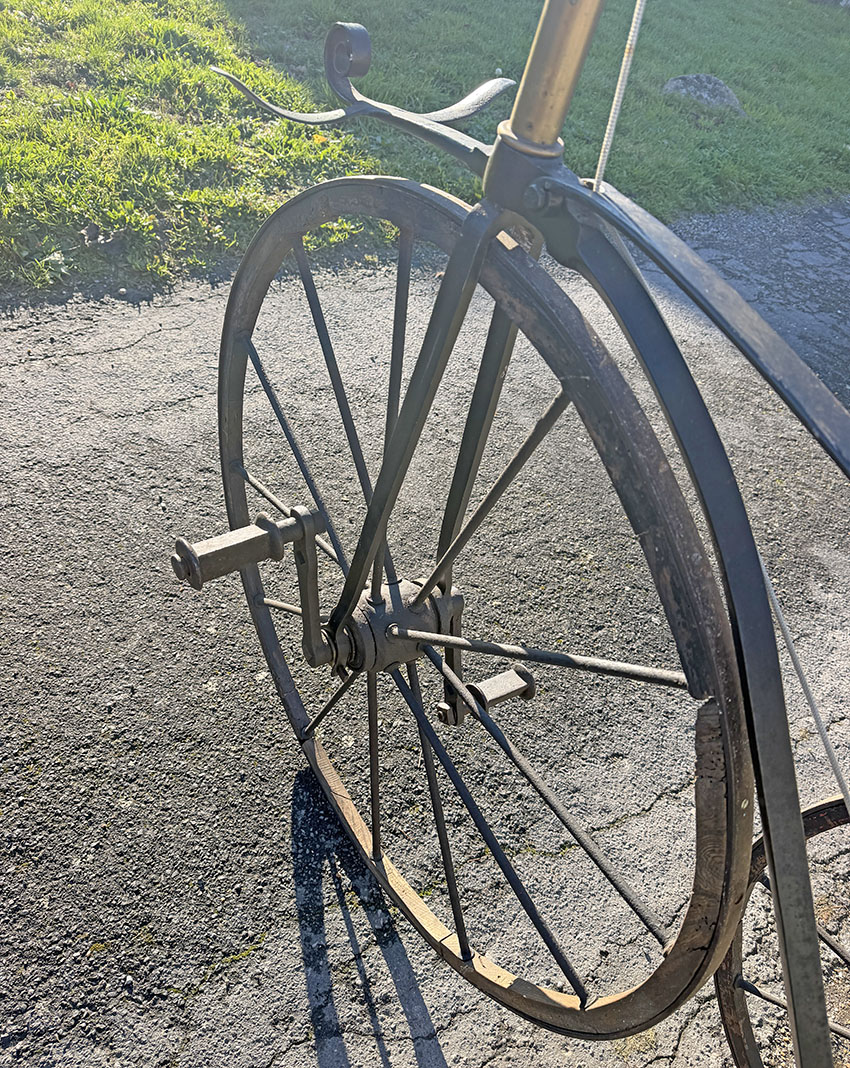
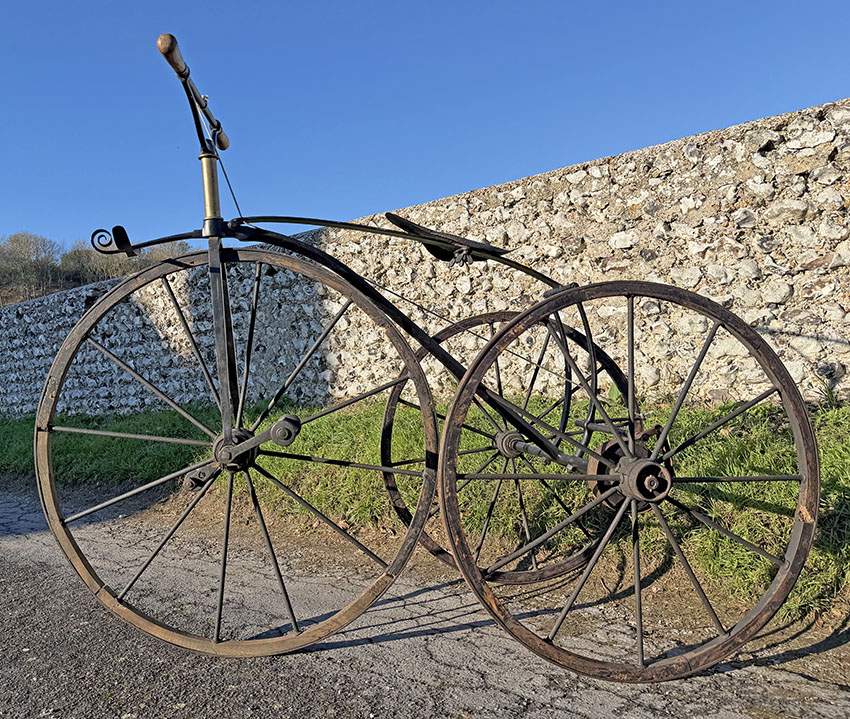
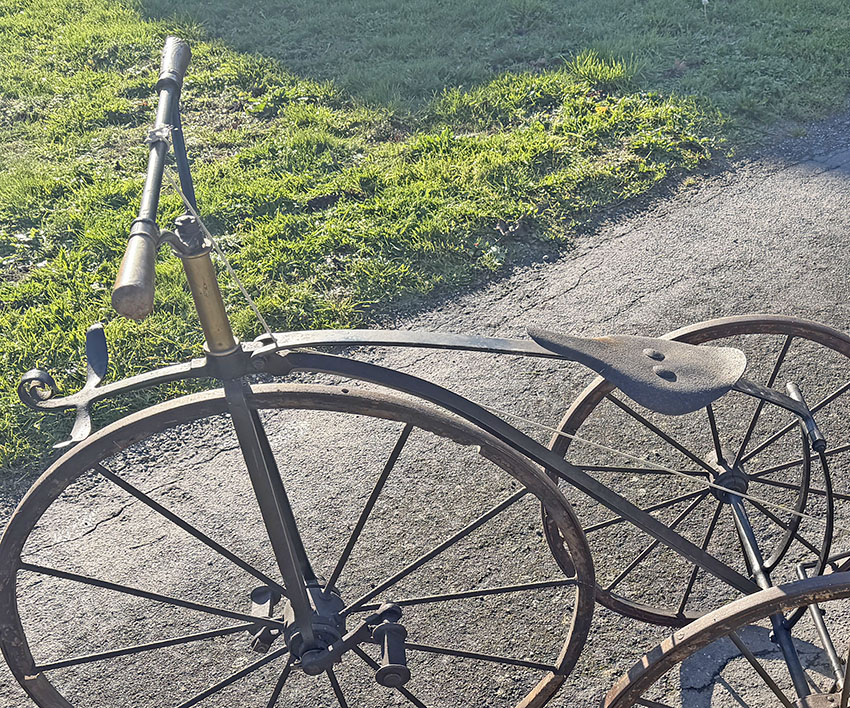
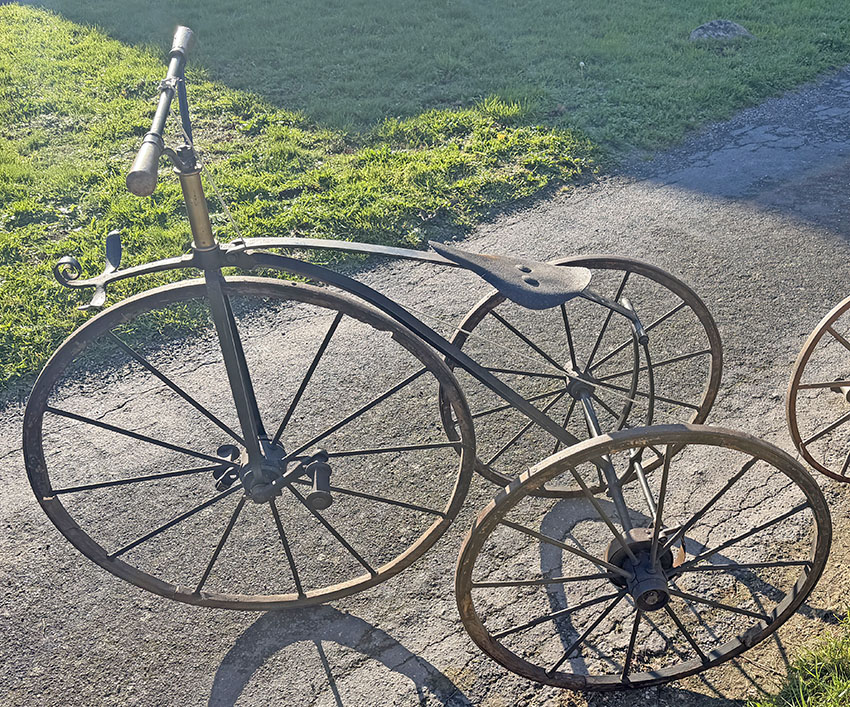
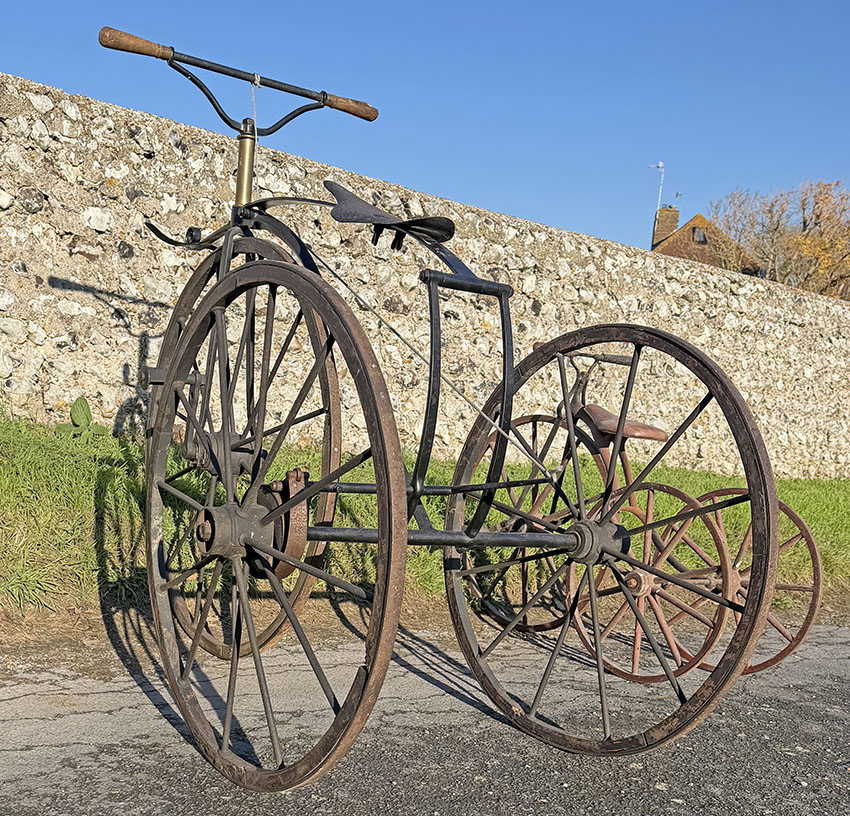
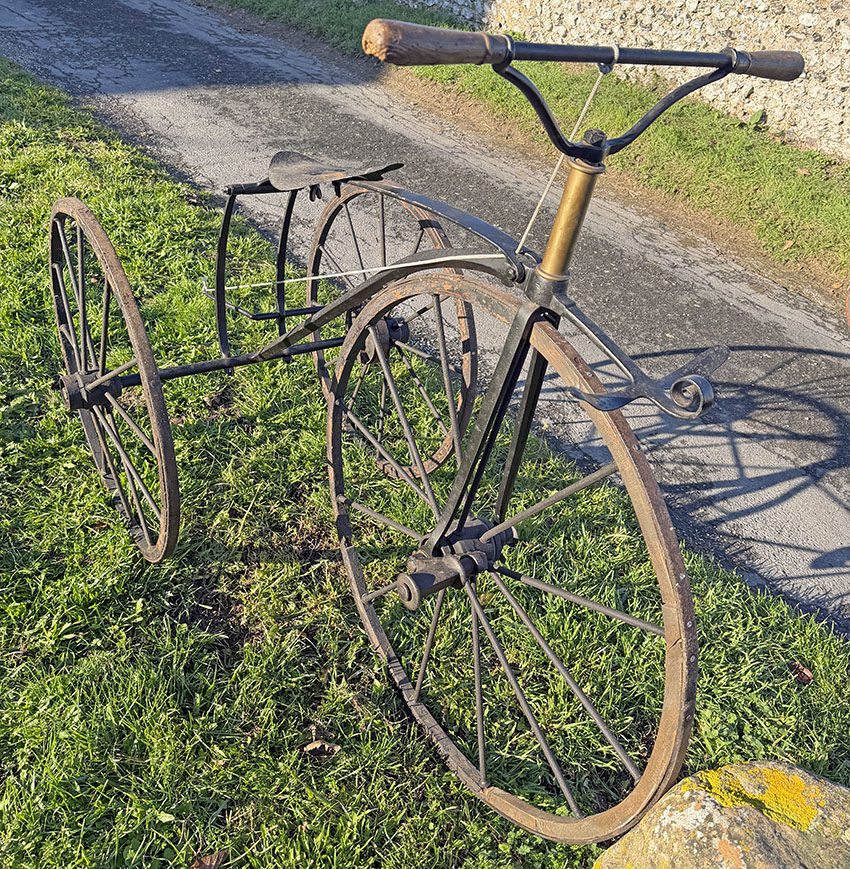
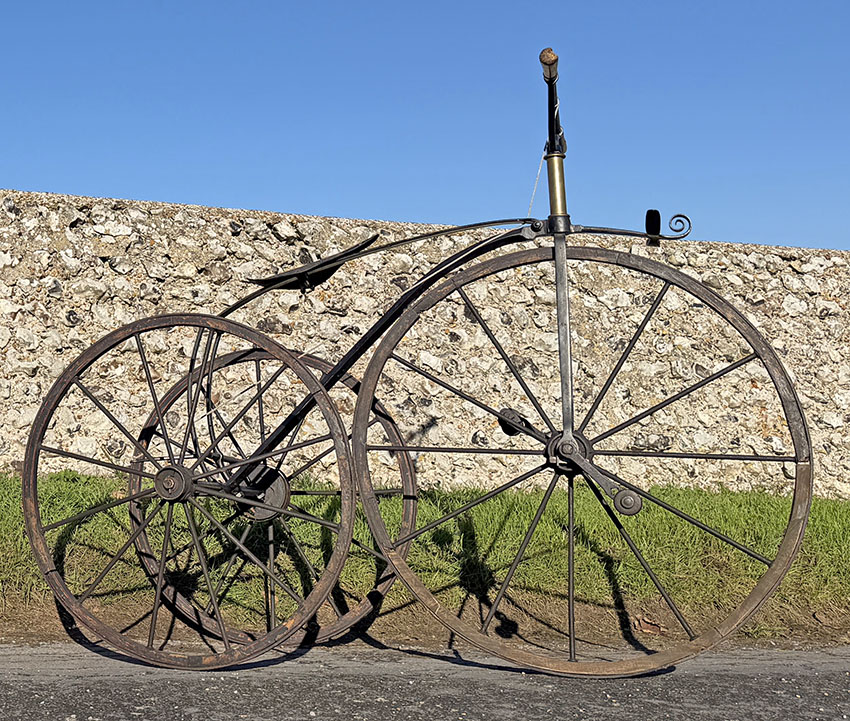
The simplest form of a tricycle is shown in Fig. 7 above. It is one of those manufactured by Mr. Lisle, of Wolverhampton, and is known as the German tricycle. It is, in fact, a converted bicycle of the American pattern. The rear wheel is removed, and its place supplied by a pair of wheels, running free on an axle two feet long. The motive power is supplied by the crank pedals attached to the front axle. There is not much loss of power in this form of bicycle, but there is a tendency to turn over when the machine is not running on the crown of thé road.”
– From ‘Velocipedes: 1870’
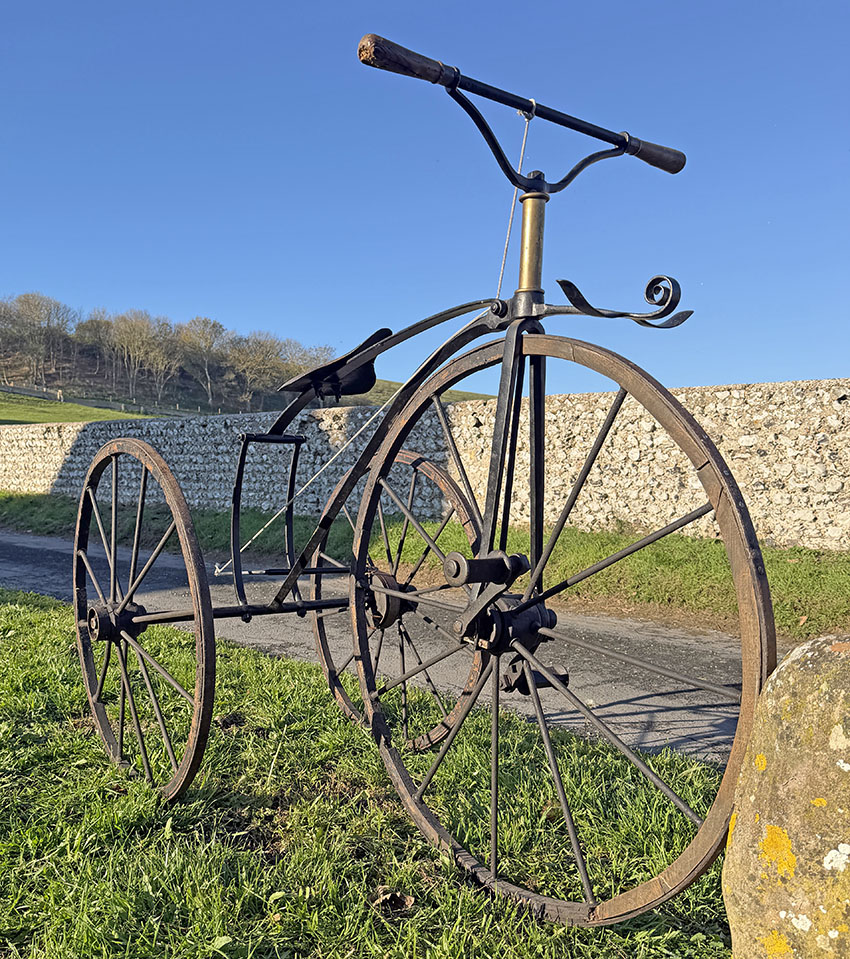
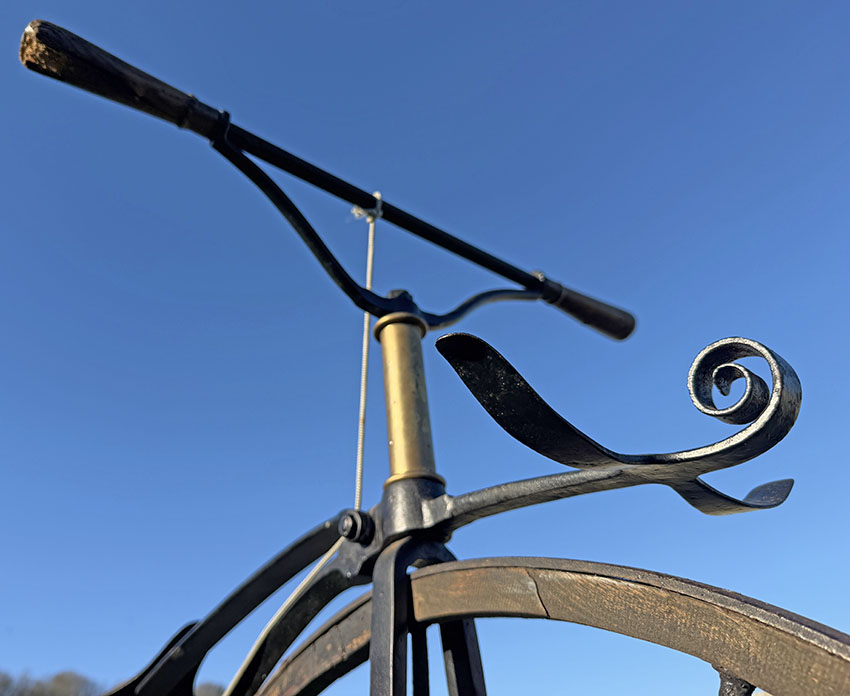
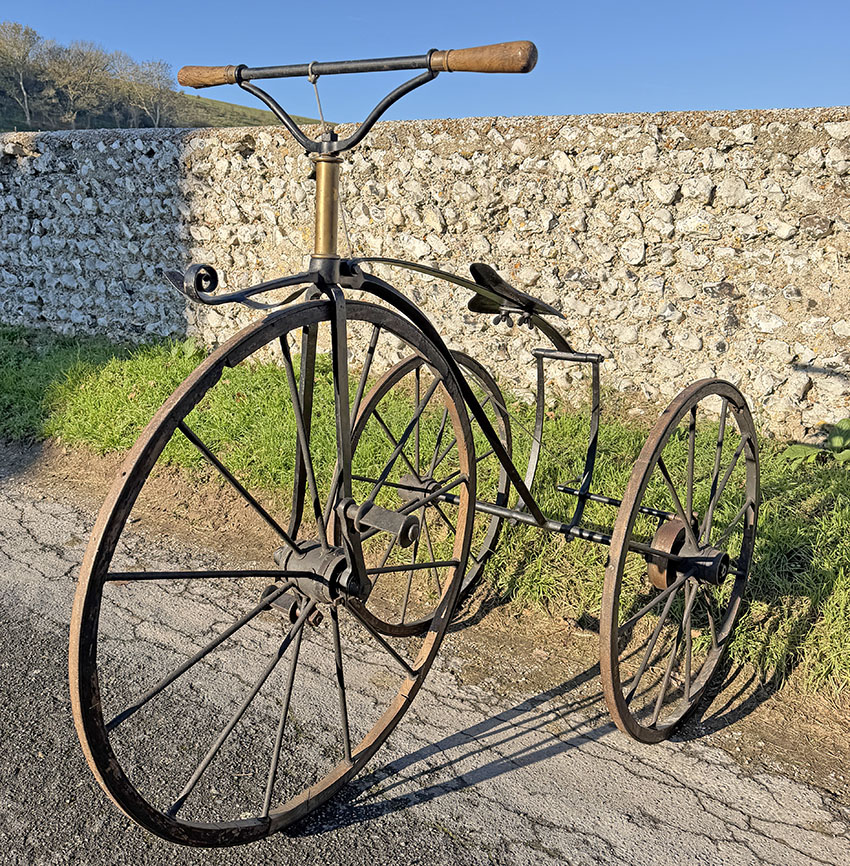
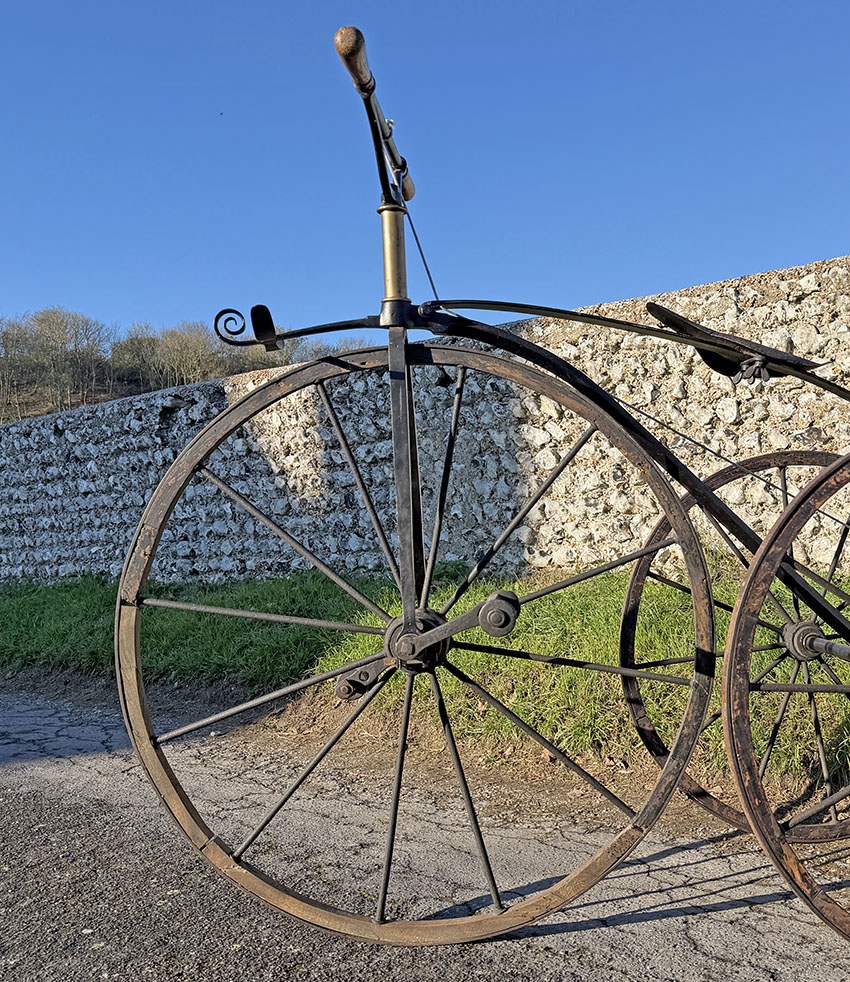
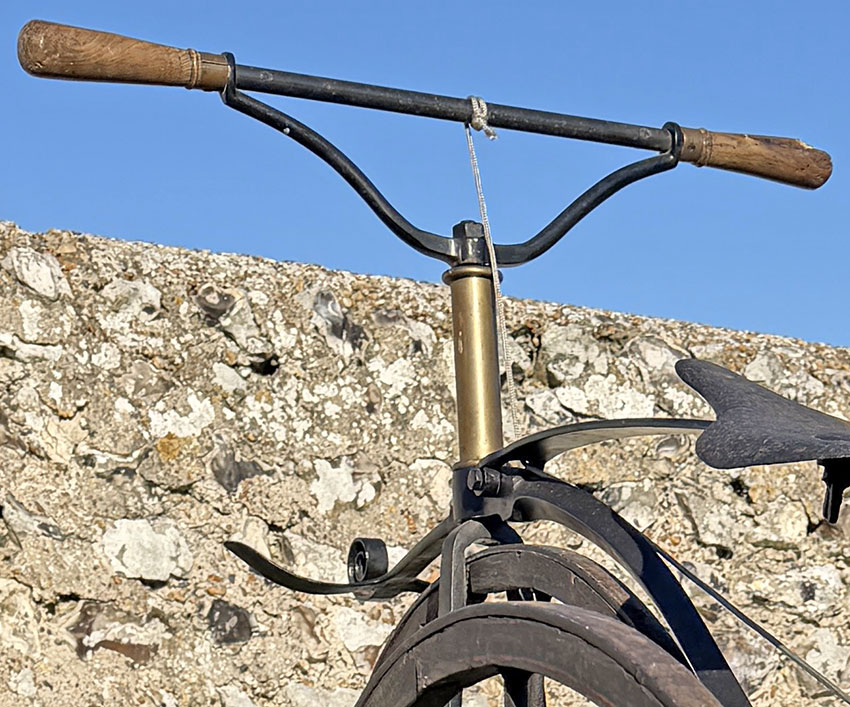
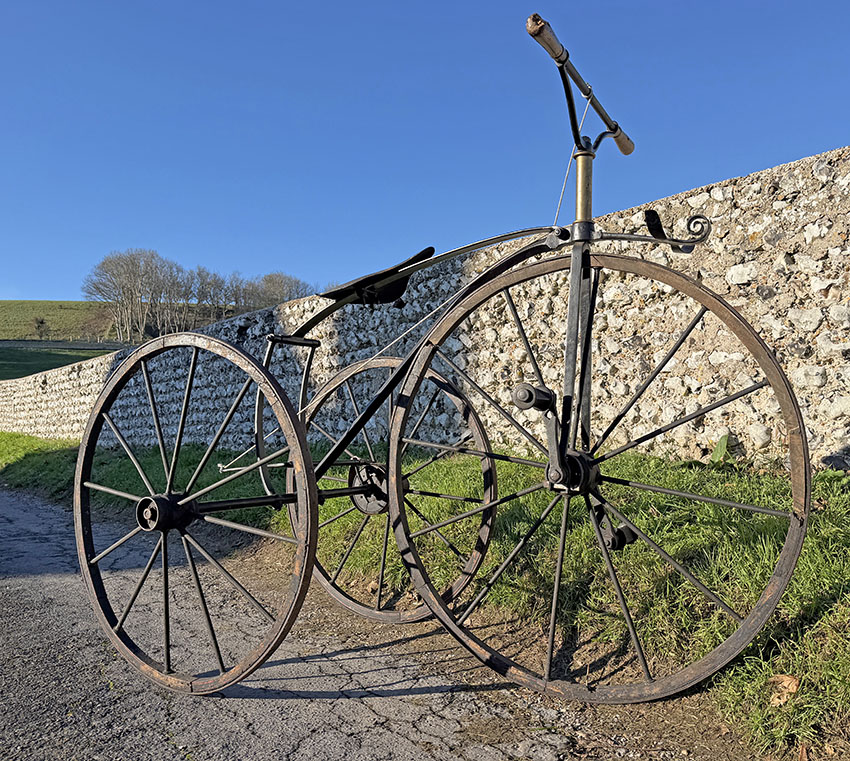
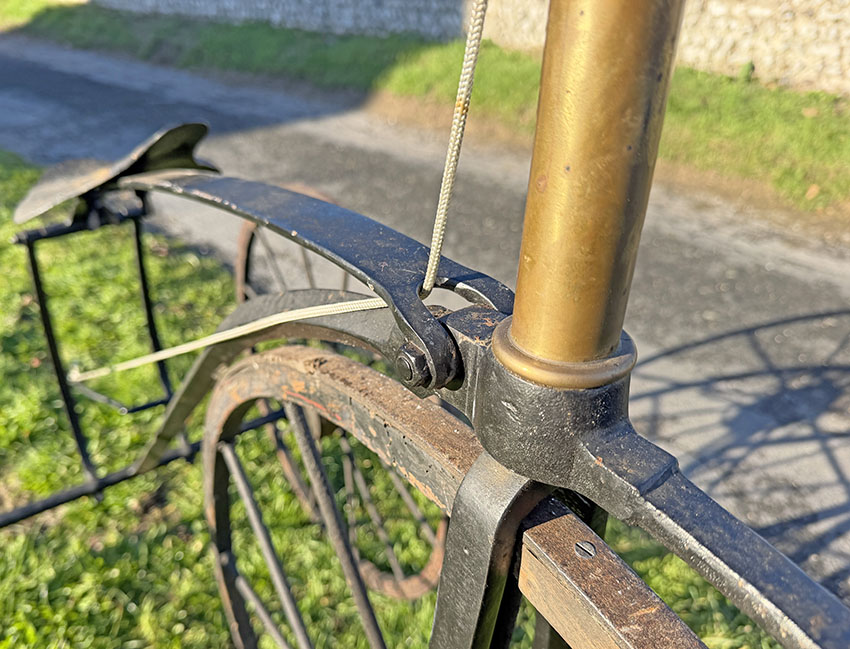
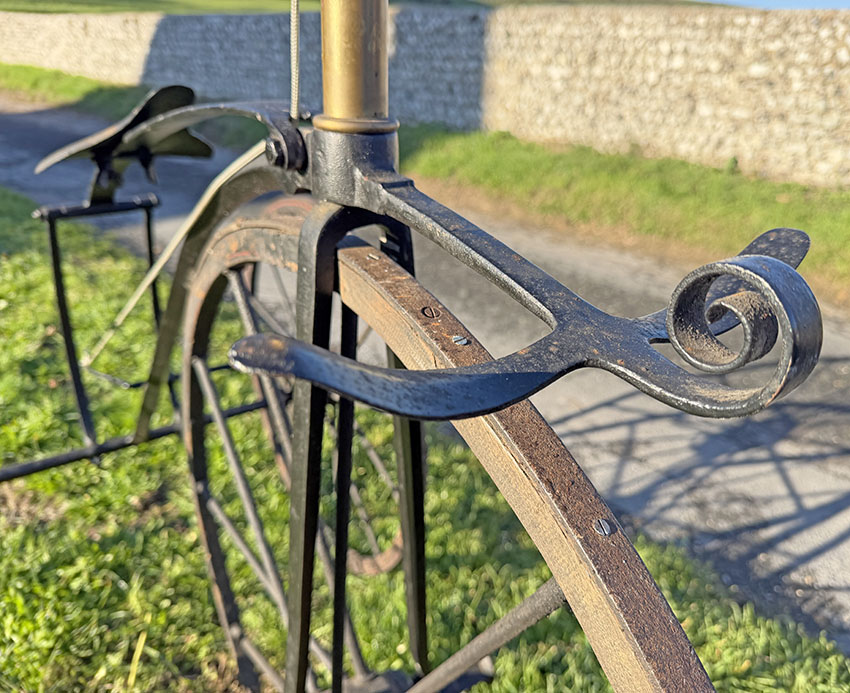
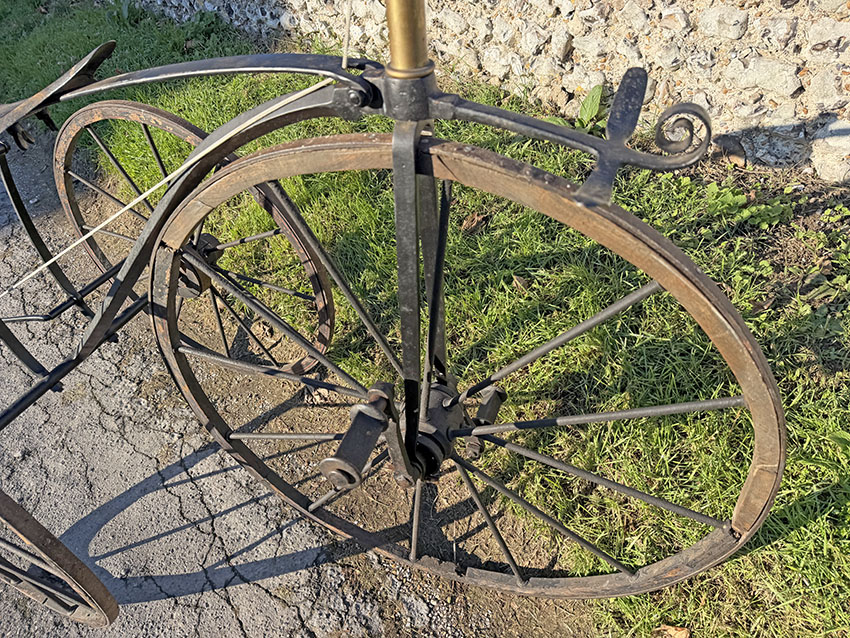
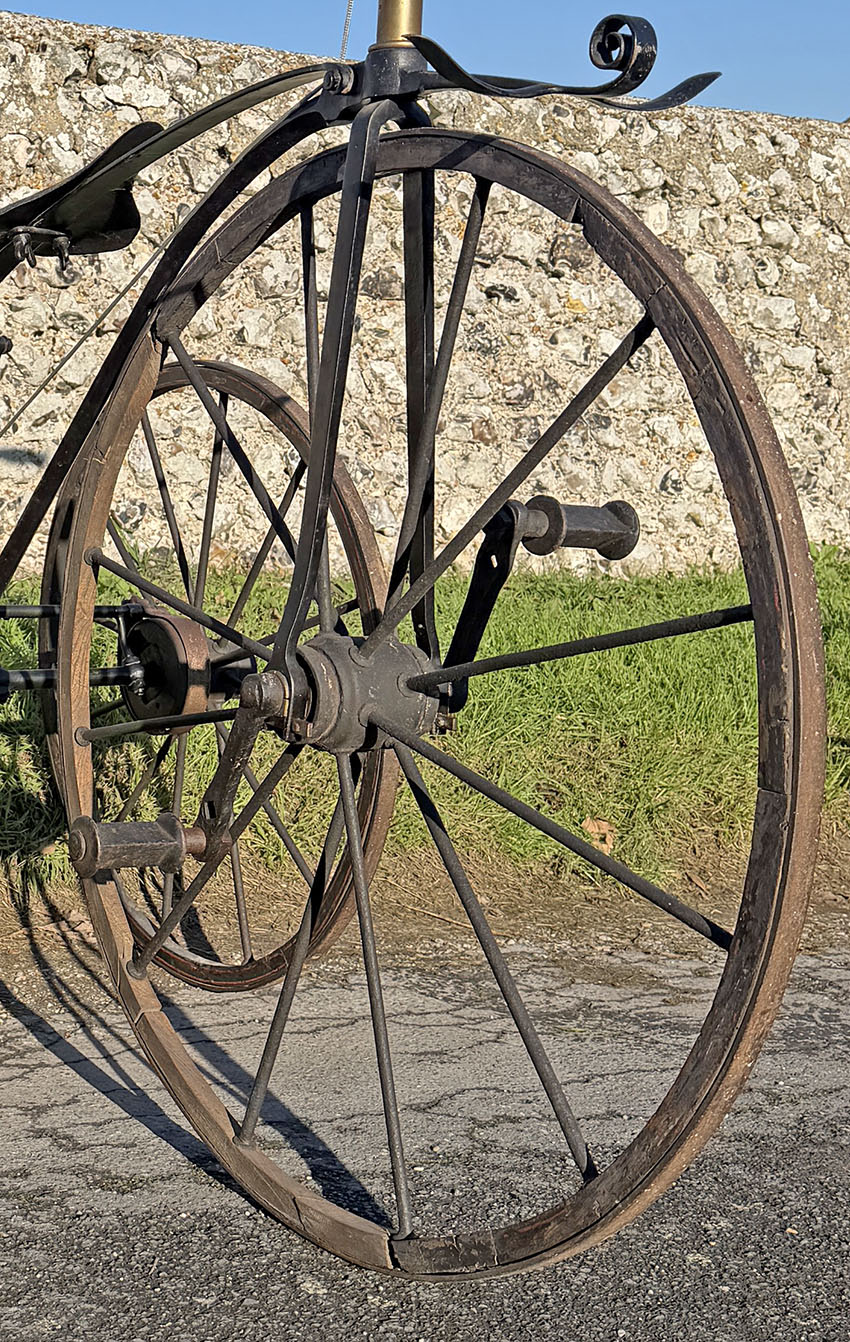
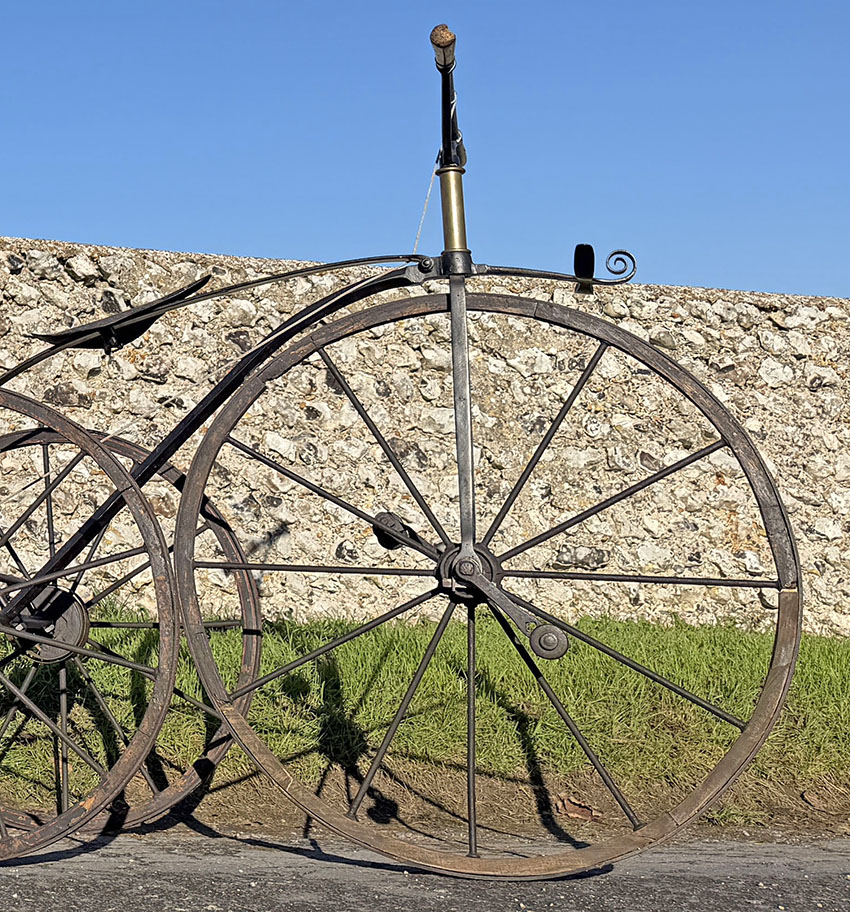
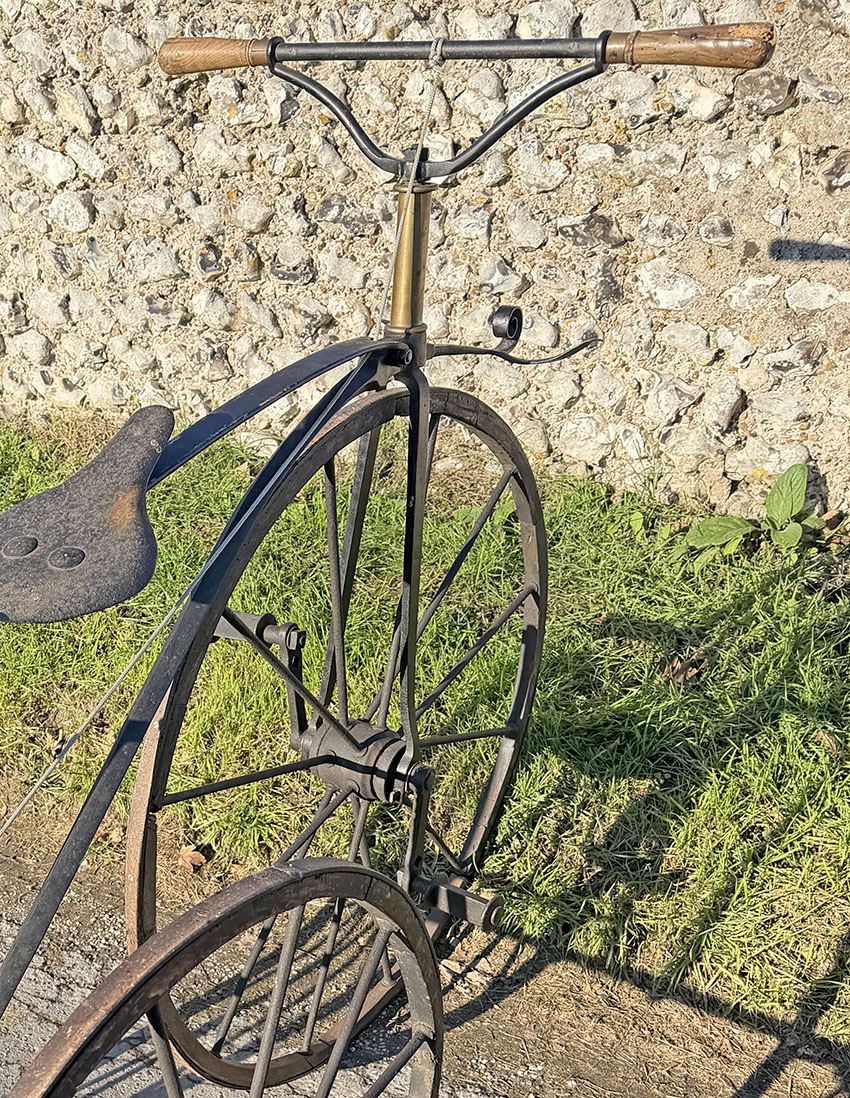
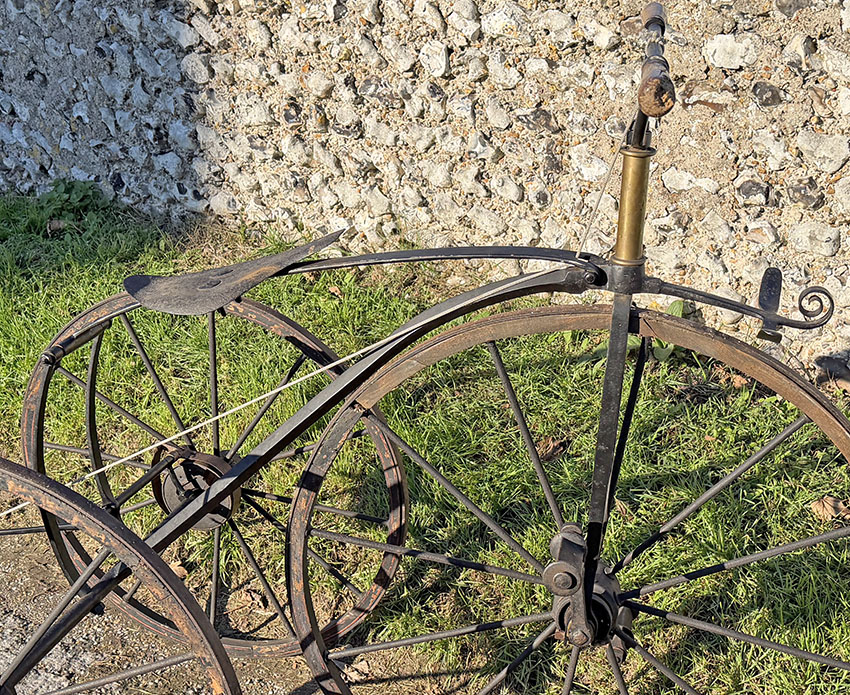
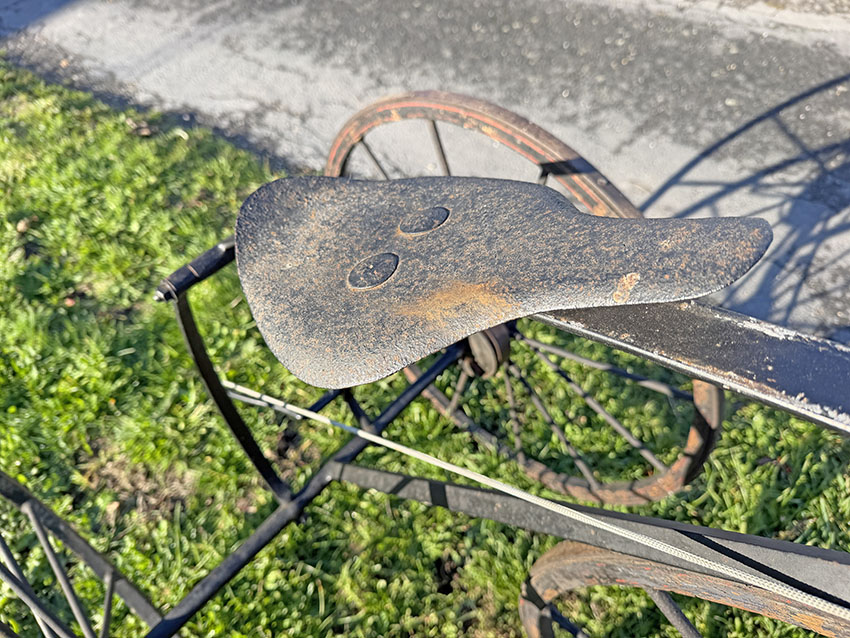
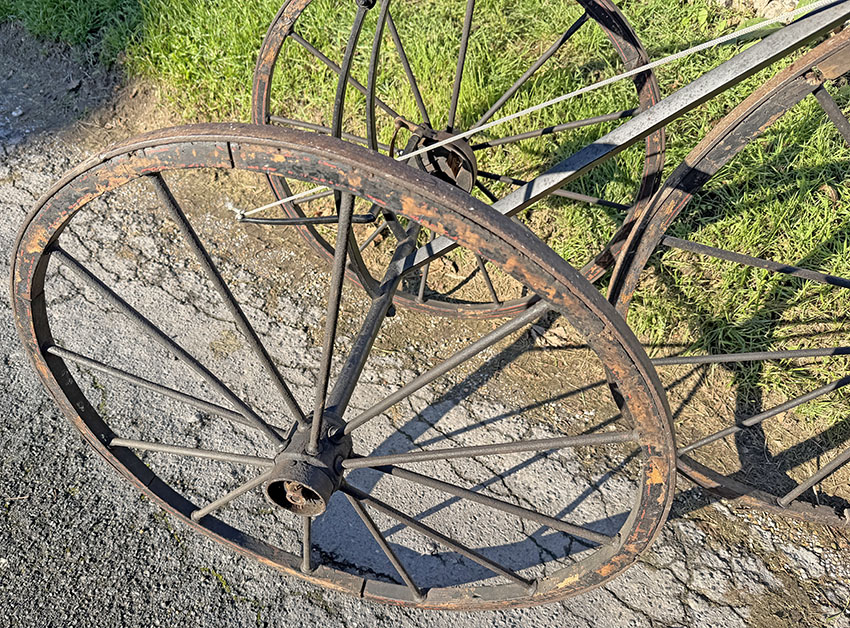
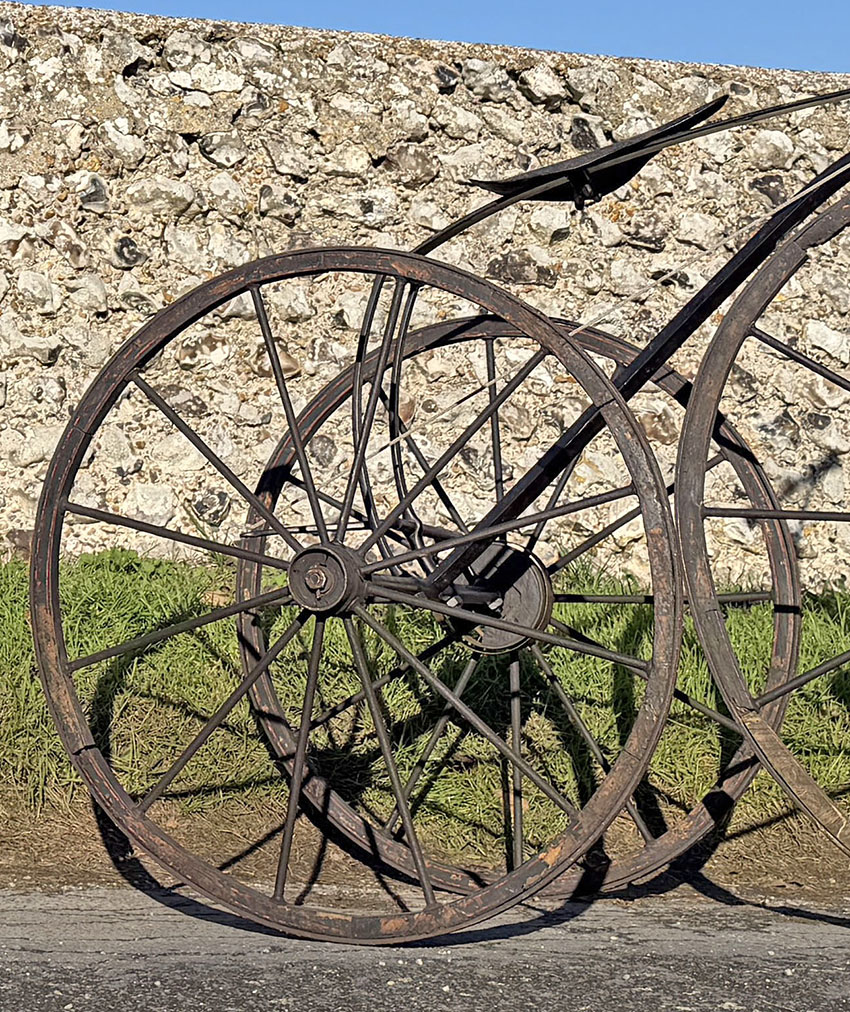
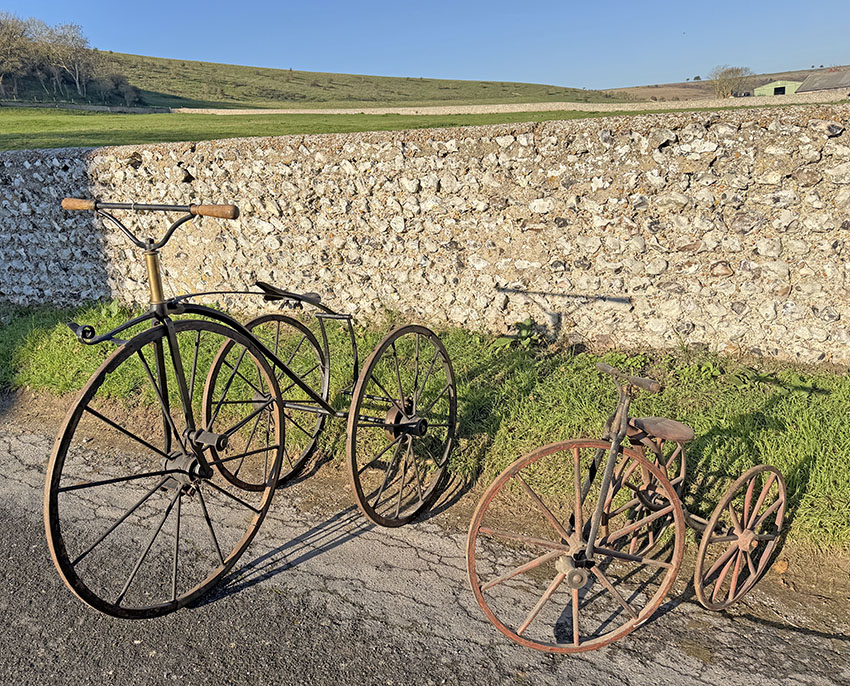
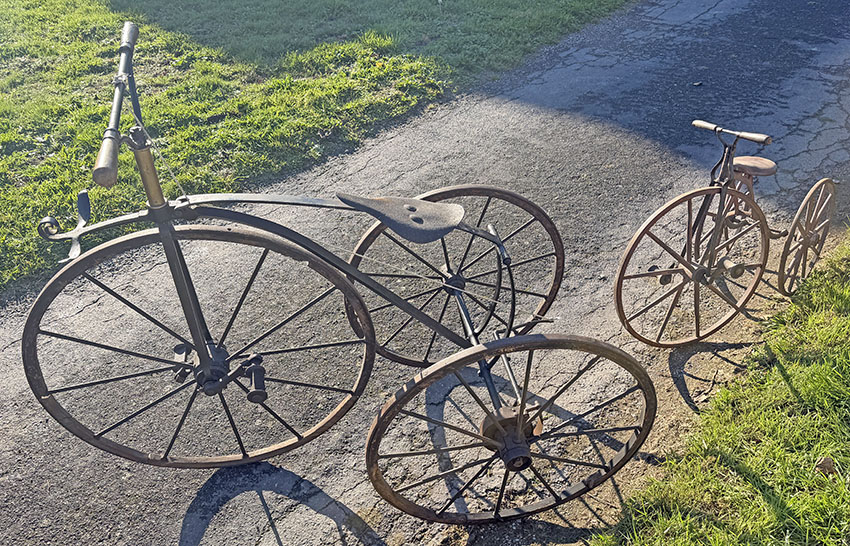
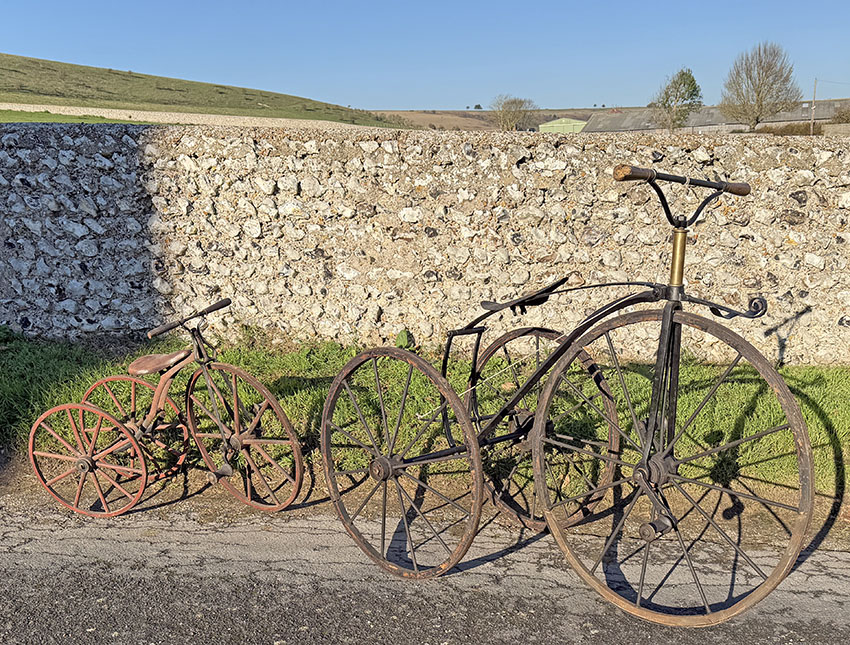
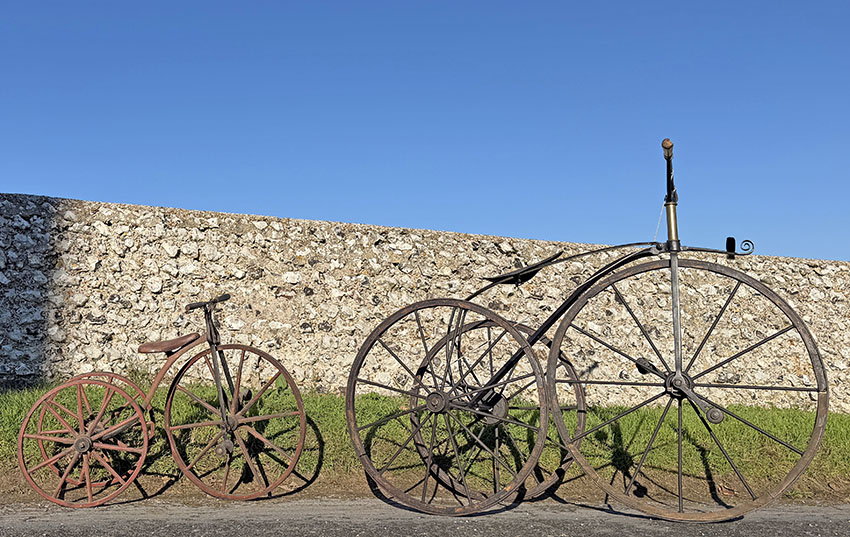
1870 Velocipede Tricycle
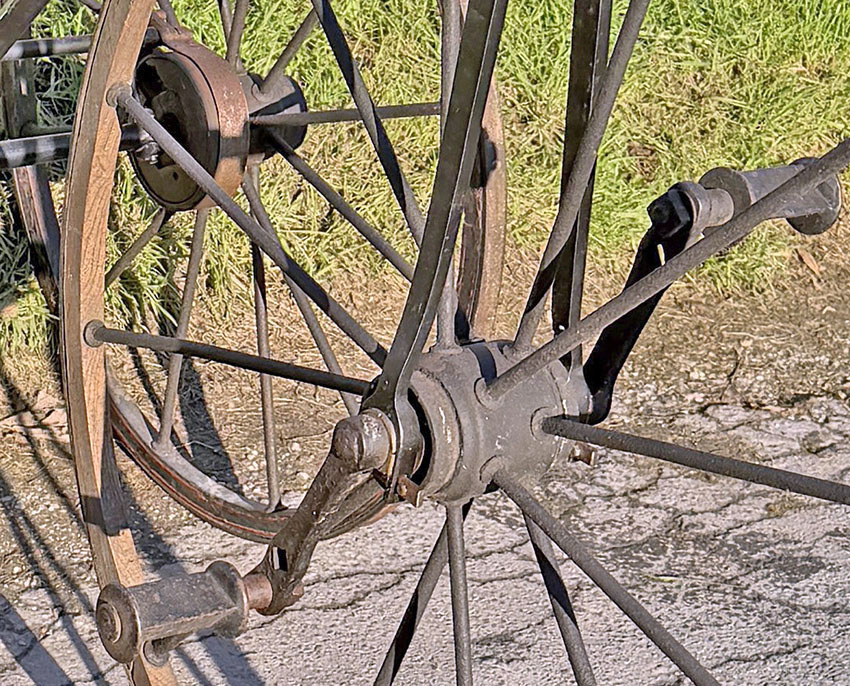
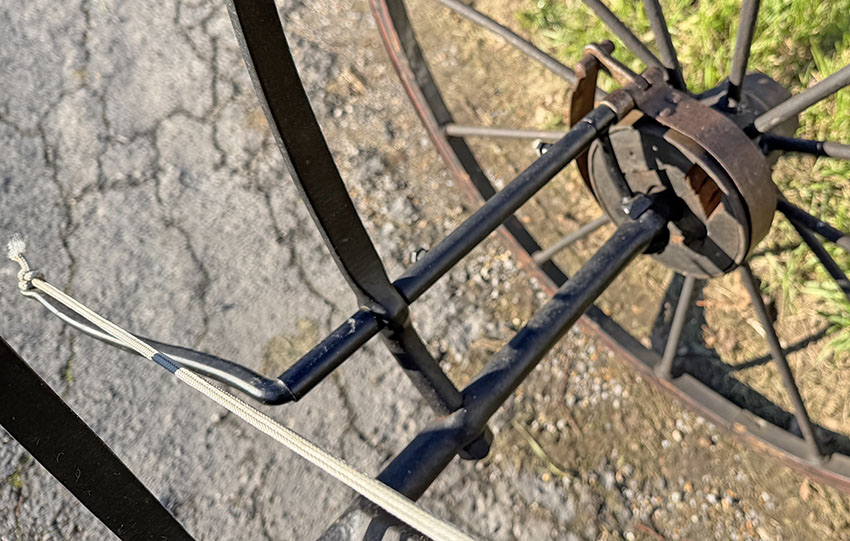
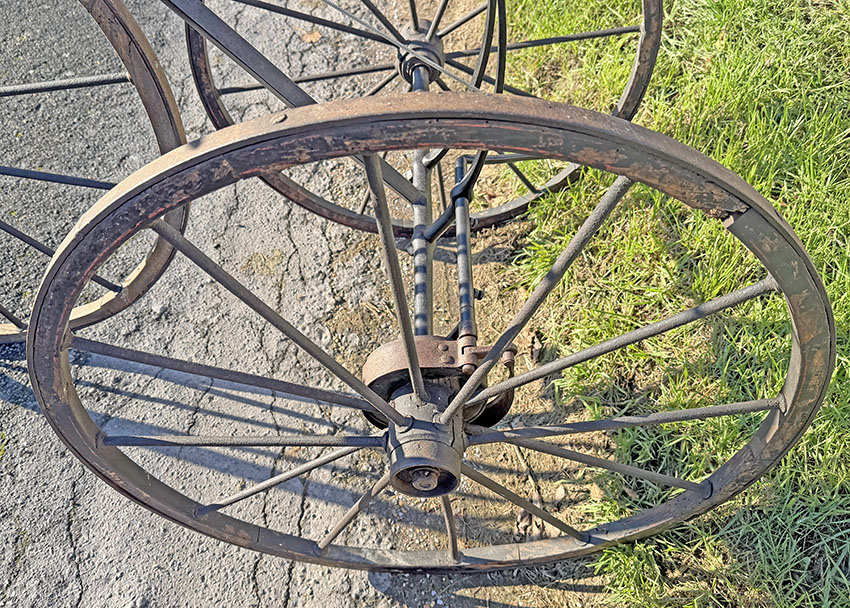
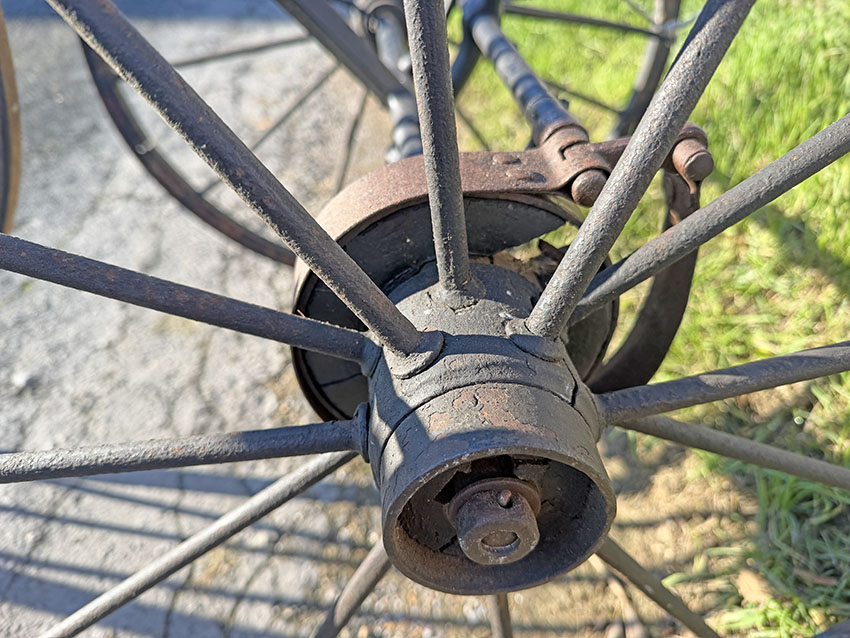
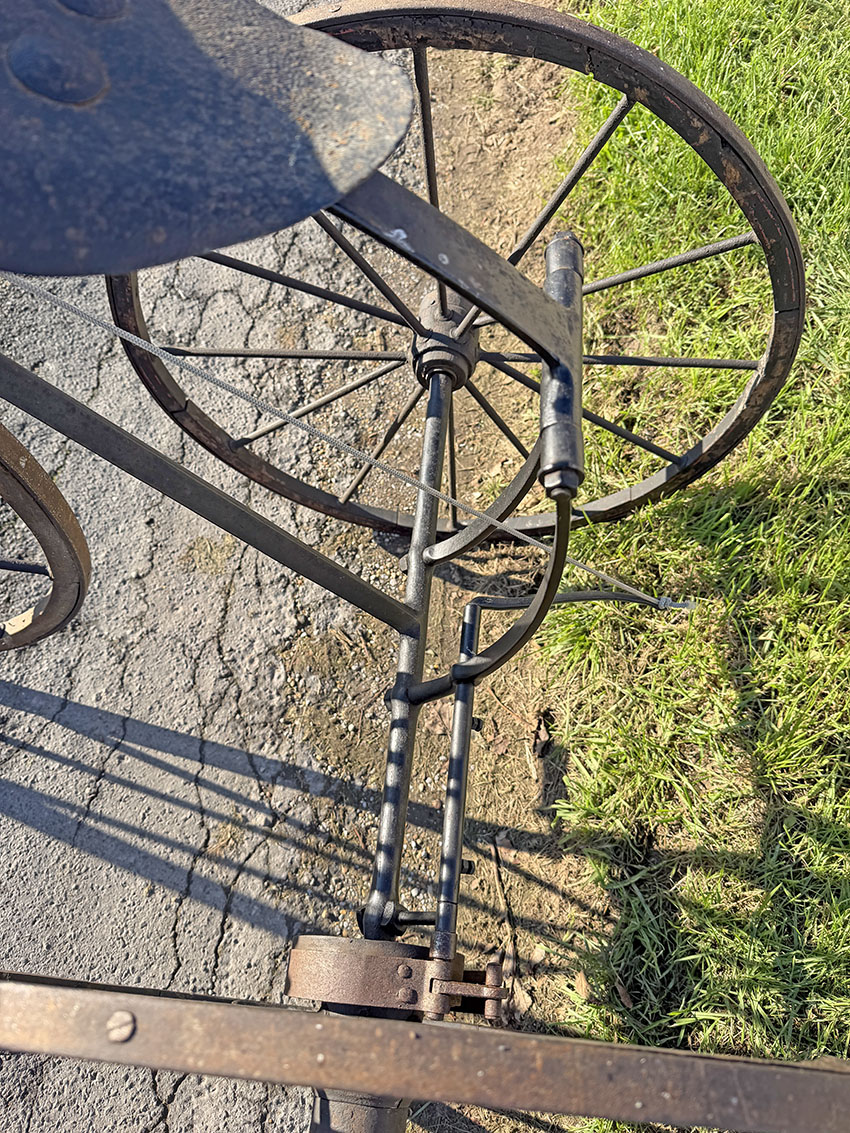
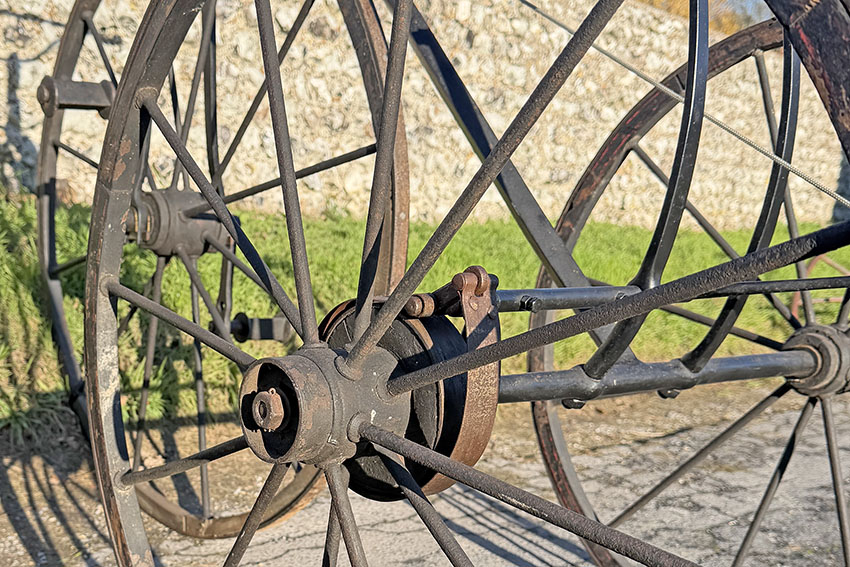
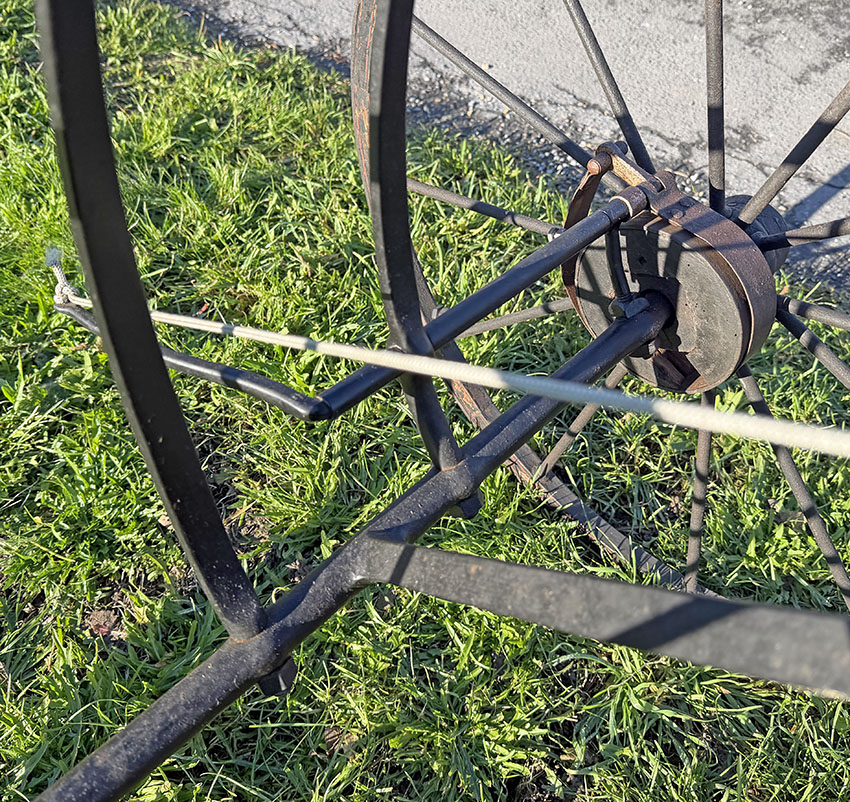
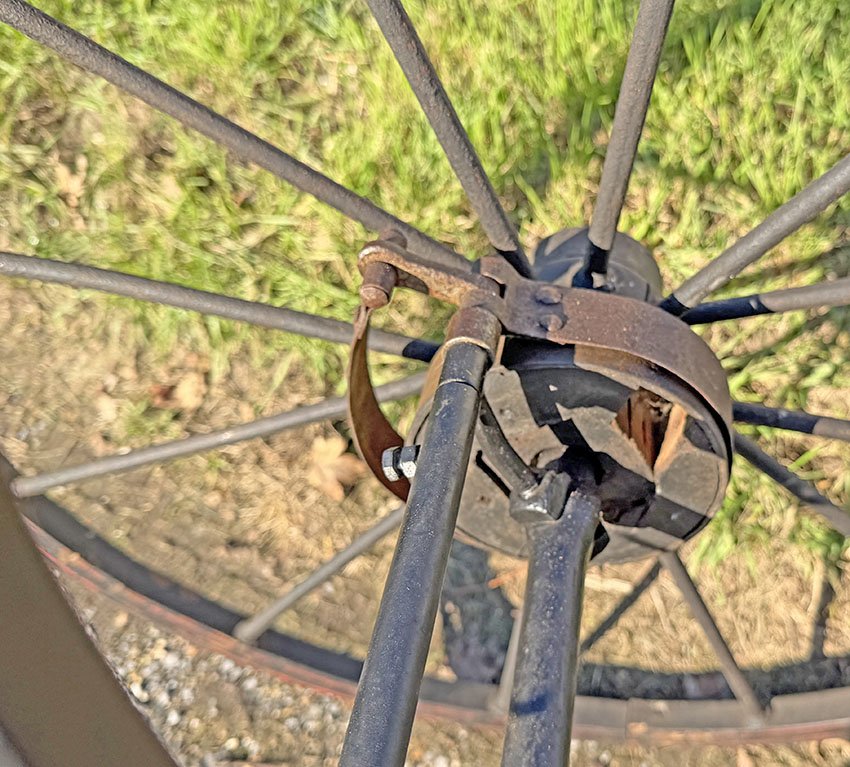
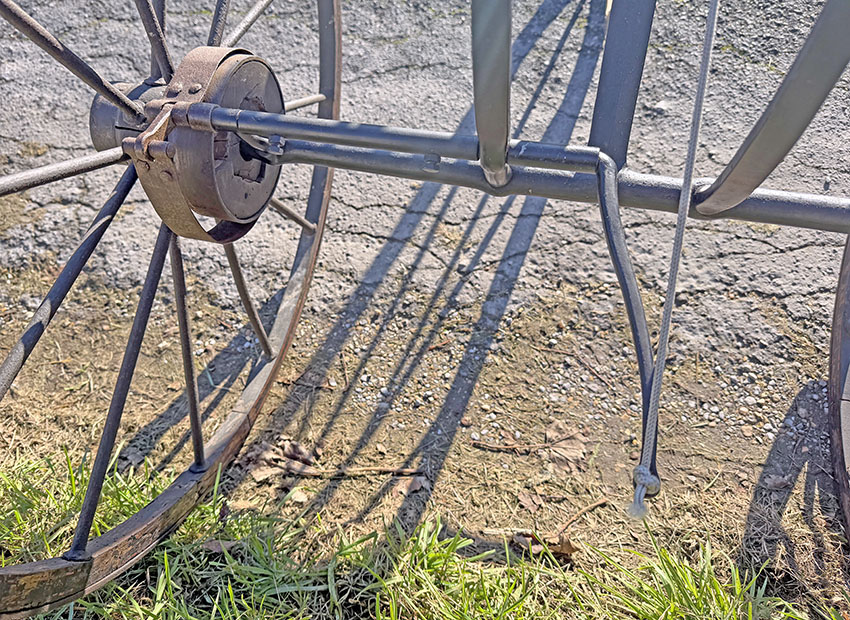
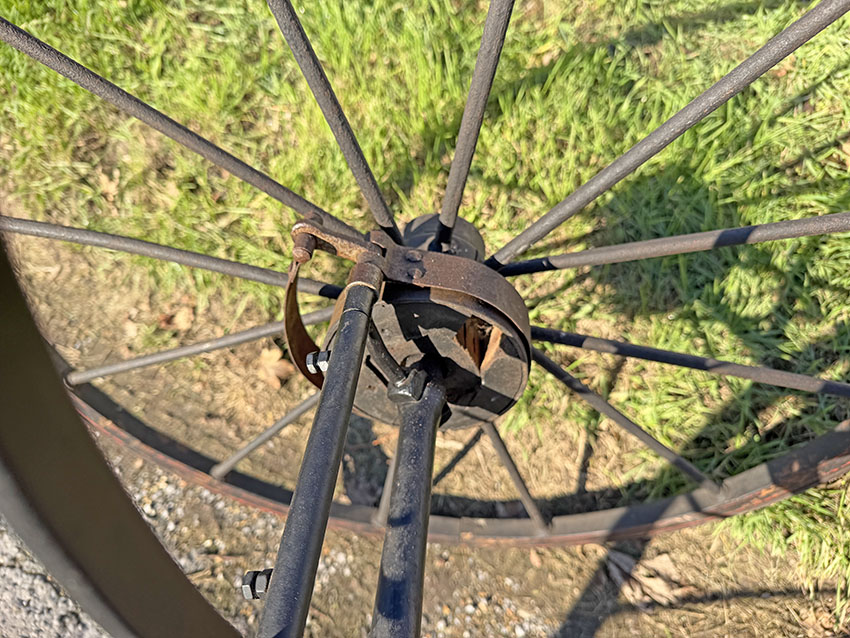
with band brake
36″ Front wheel
28.5″ Rear wheels
LENGTH: 64″
WIDTH: 33″
HEIGHT: 50″
The velocipede bicycle came in and went out of fashion in the course of just a few years. Such was its popularity in its prime in Britain that it created a new industry, and proved to the new manufacturers that there was a great public demand for a means of independent wheeled transportation. But the manufacturers also realised that the velocipede itself was just the first version, and innovators in the fledgling industry soon introduced a more practical machine with a lighter weight backbone and metal wheels. Though the velocipede bicycle was superseded by the new ‘penny farthing’, the larger front wheel of the ‘penny farthing’ was less practical for a tricycle version and more unstable too.

While solo velocipedes were only suitable for athletic young men, a tricycle could be ridden by older riders. However, the roads were not up to the job. Roads outside cities were rutted by the regular use of horse carts, and though bicycles could ride in the ruts it was impossible for tricycles to use. So they were limited to city use. In fact, their ideal use was in velocipede riding schools, many of which sprang up around the country.
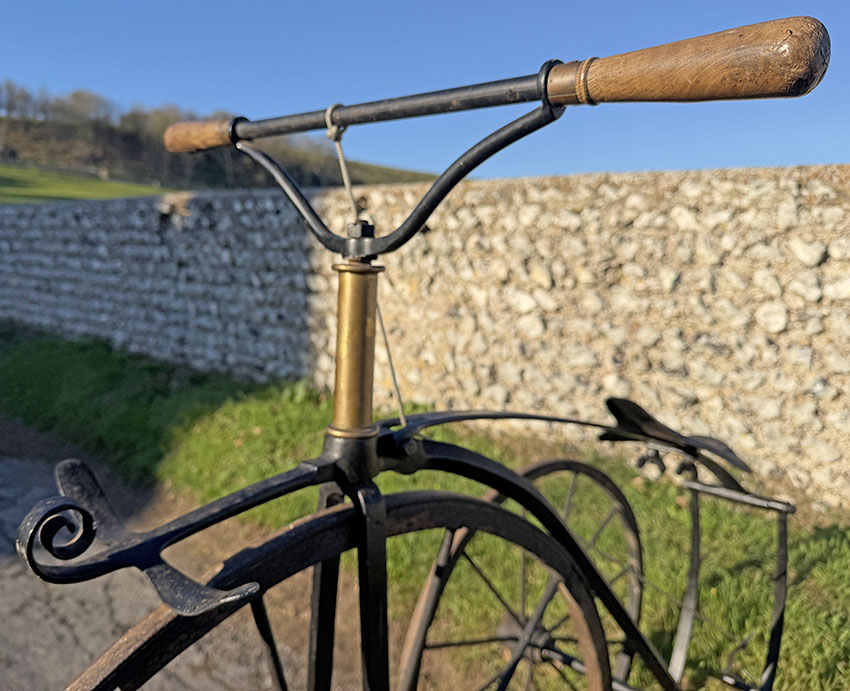
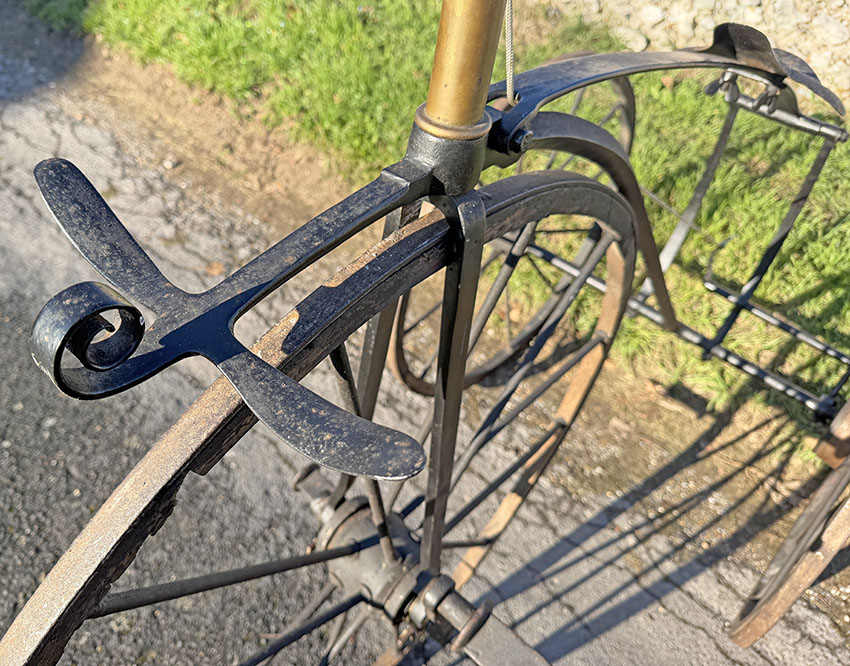
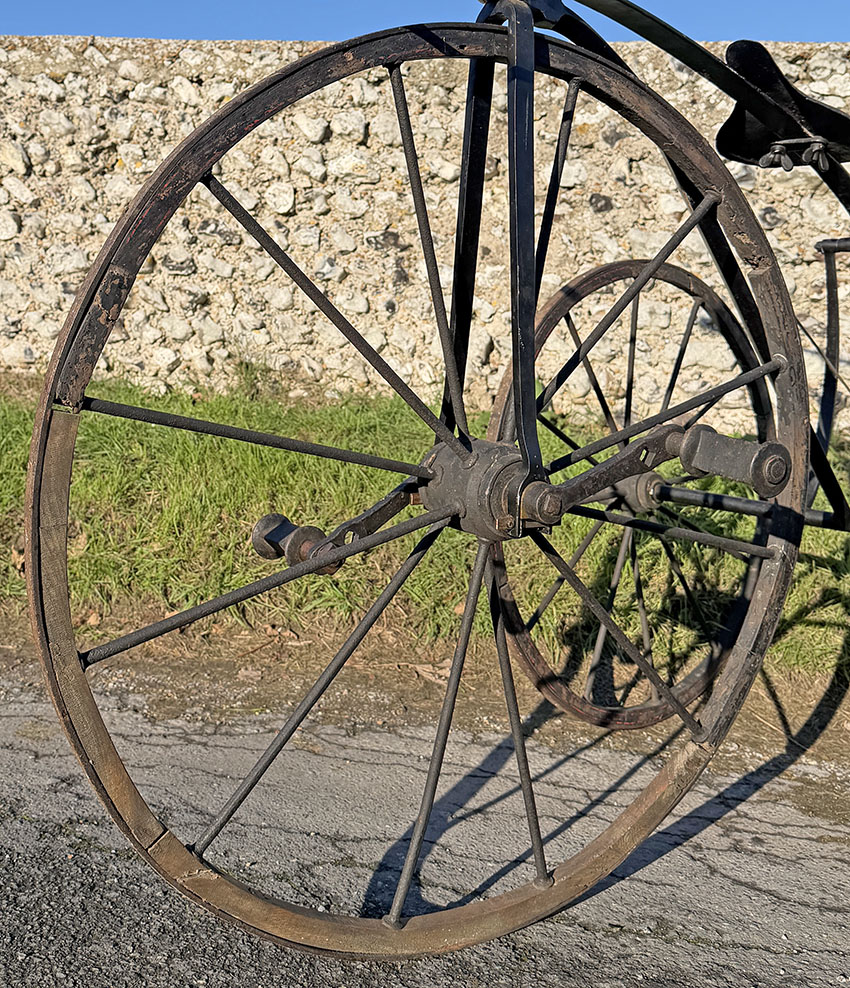
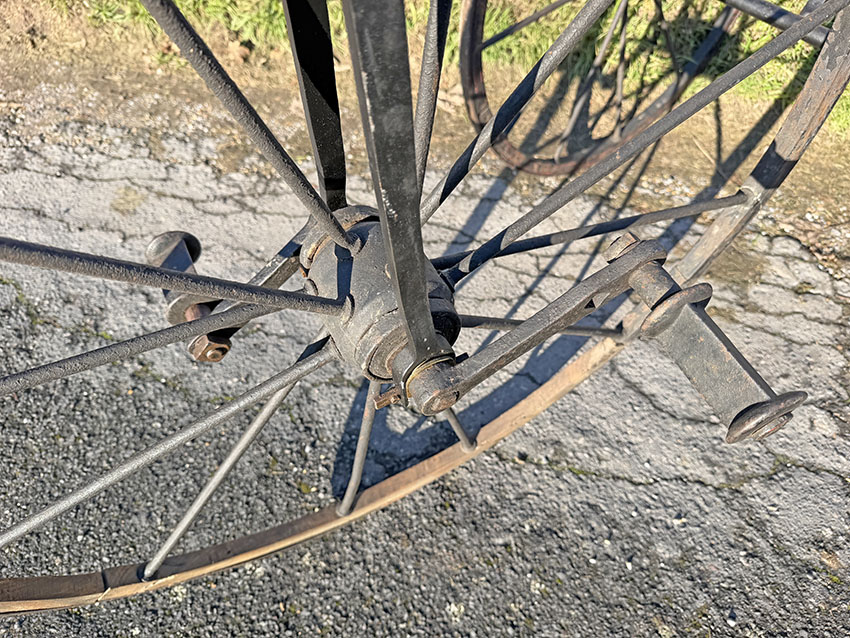
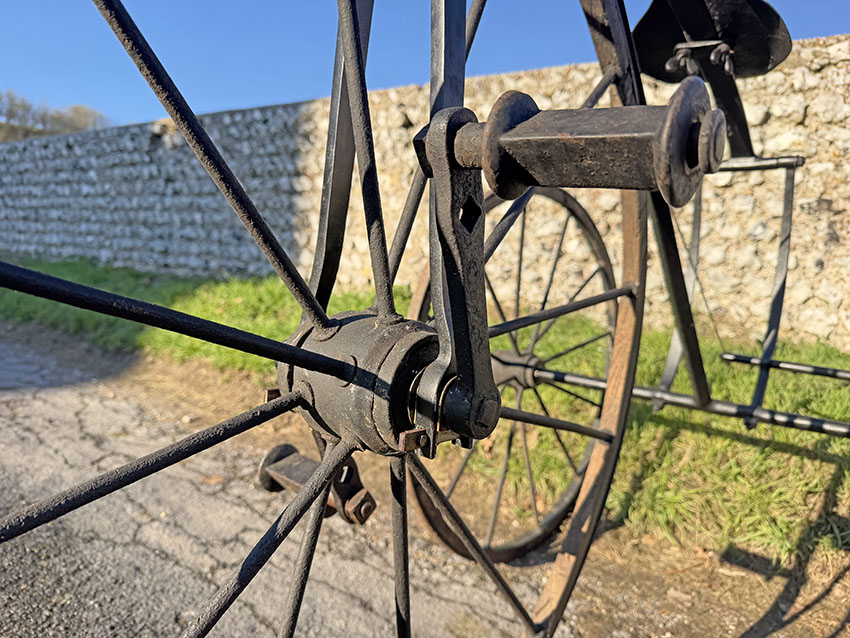
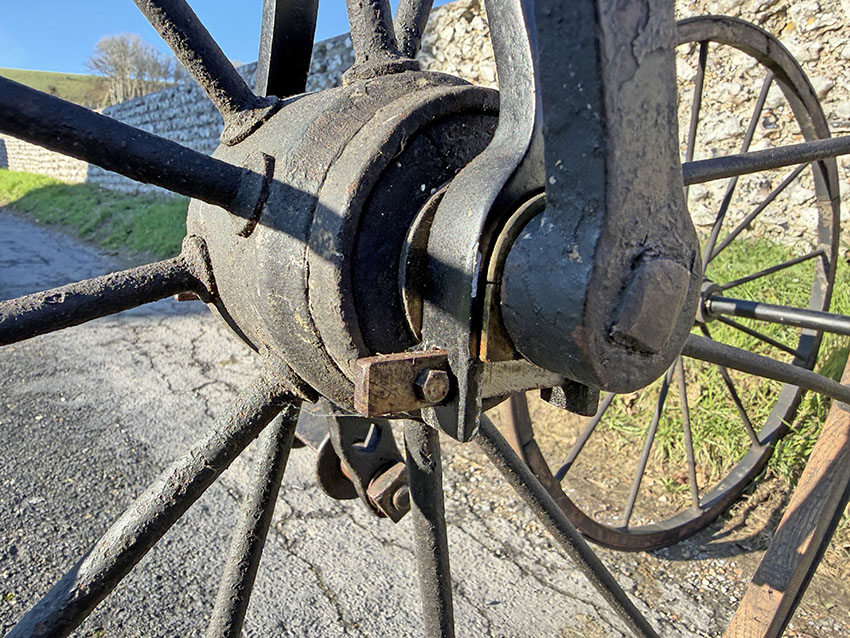
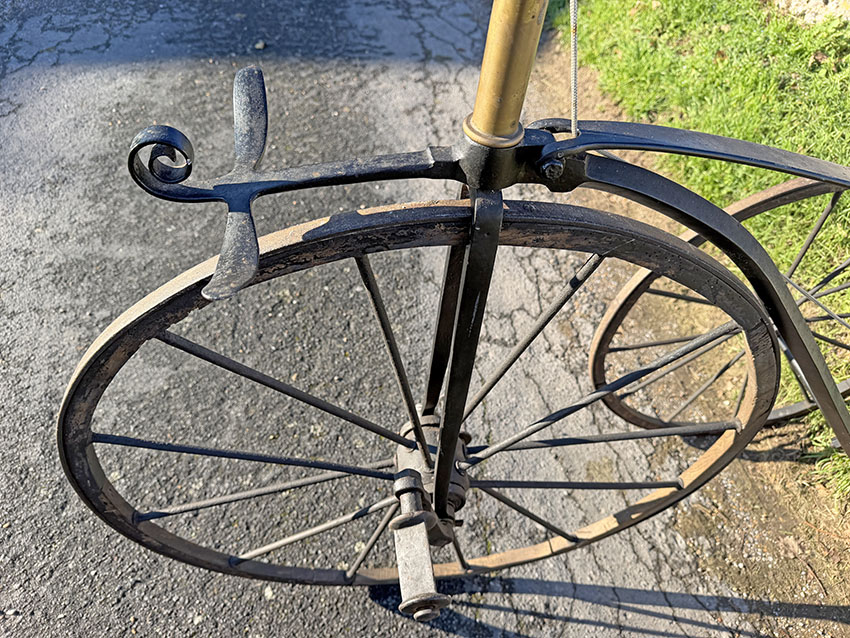
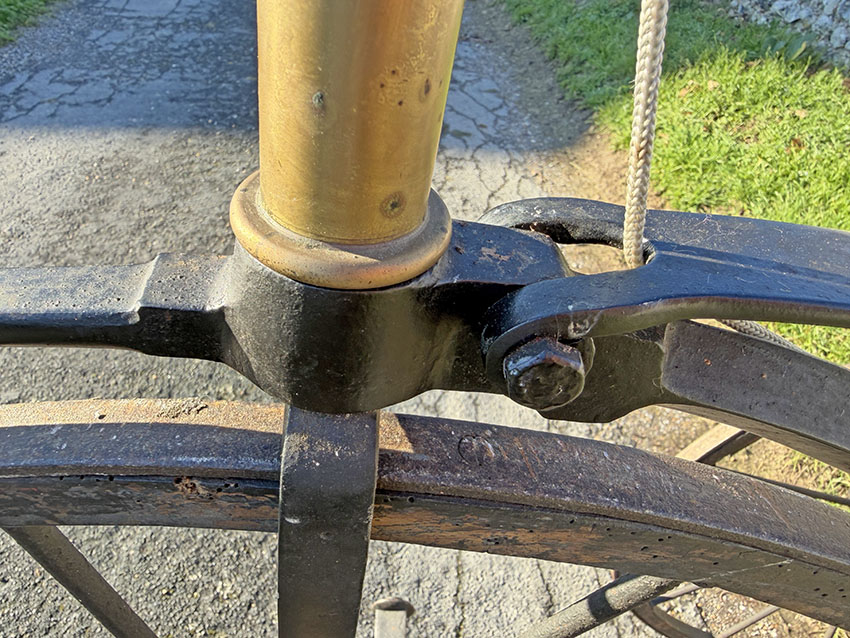
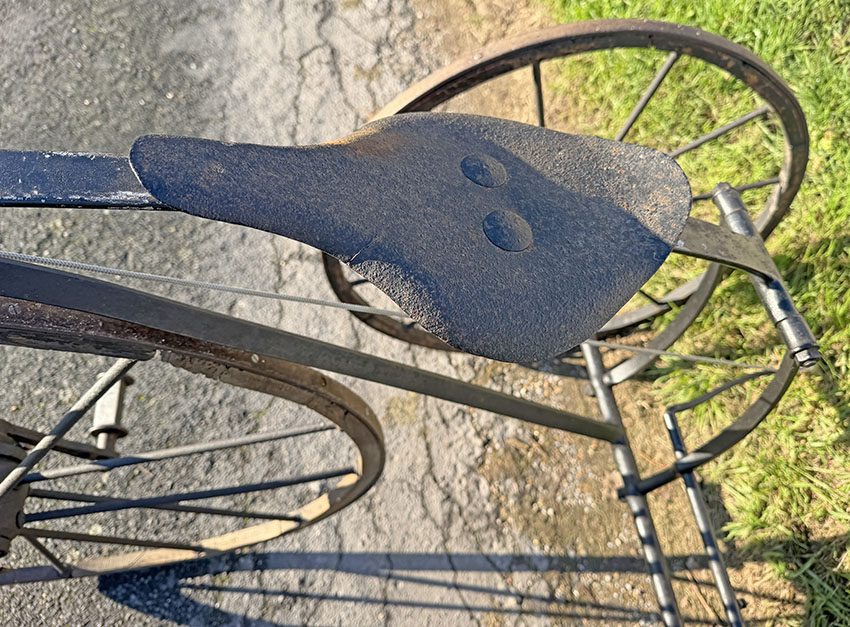
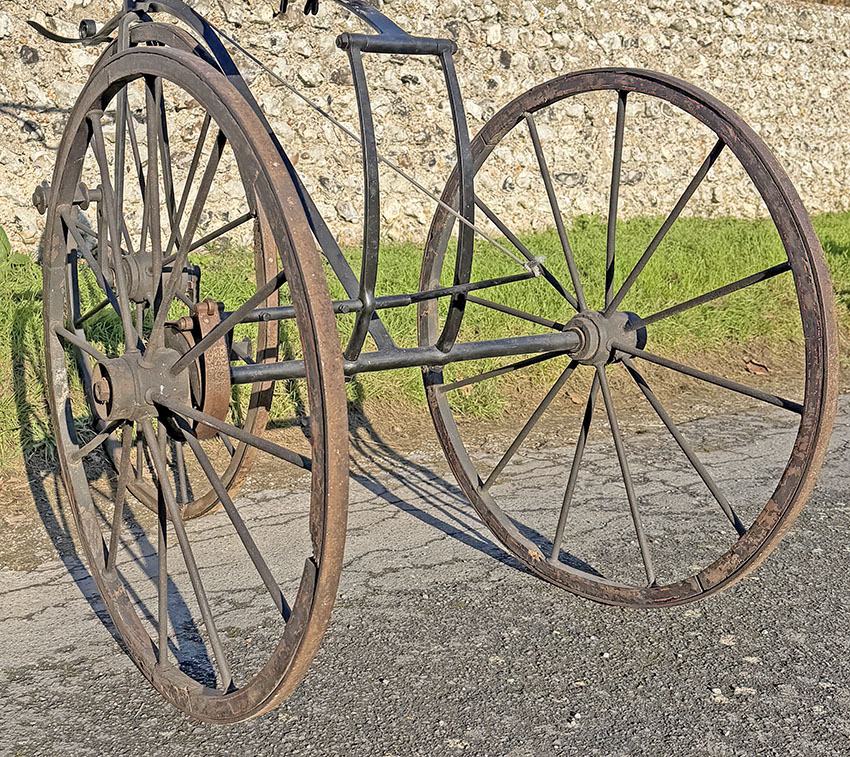
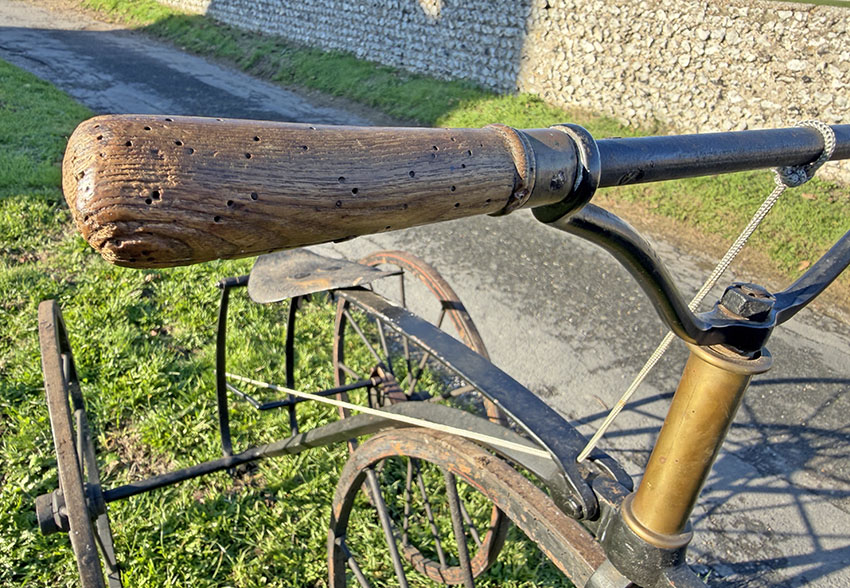
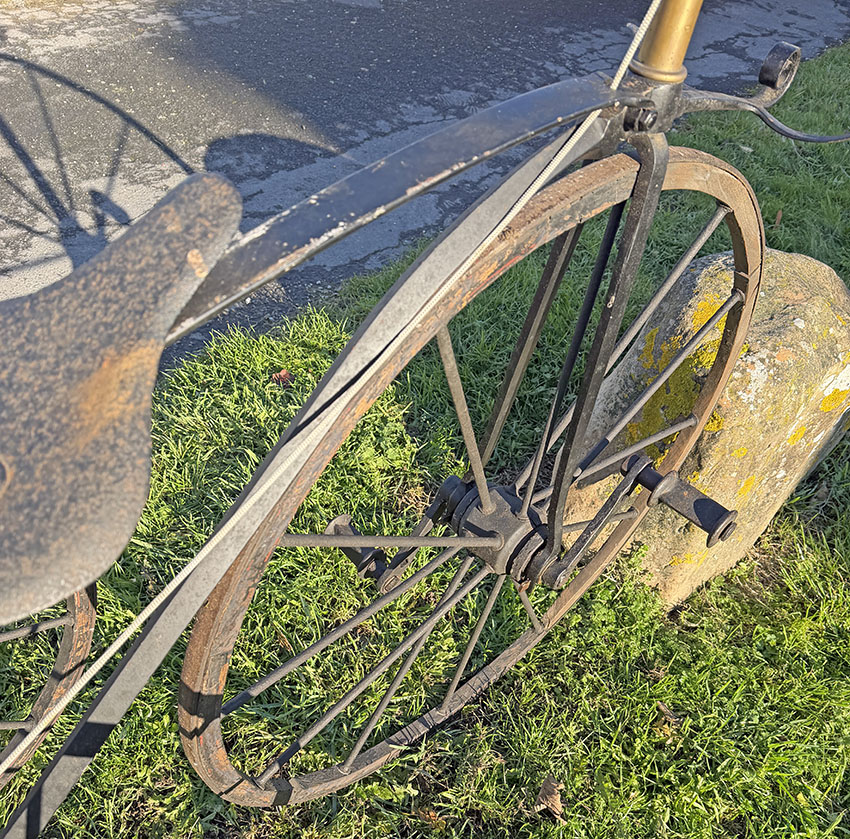
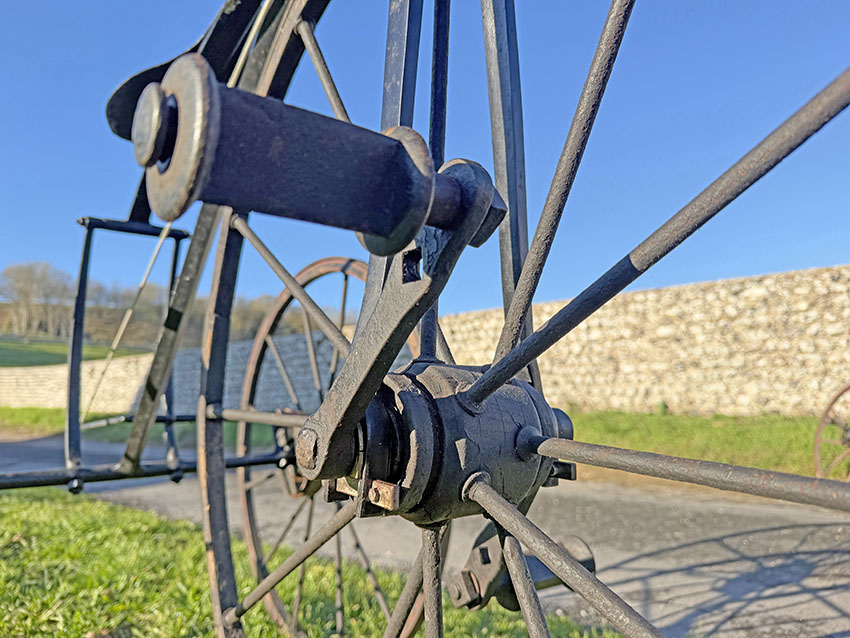
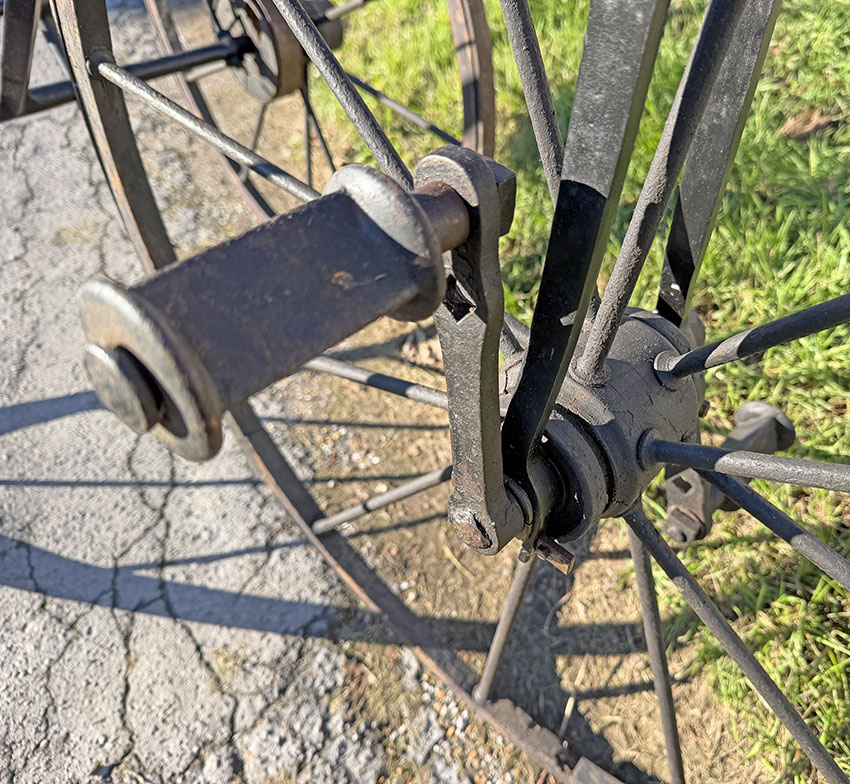
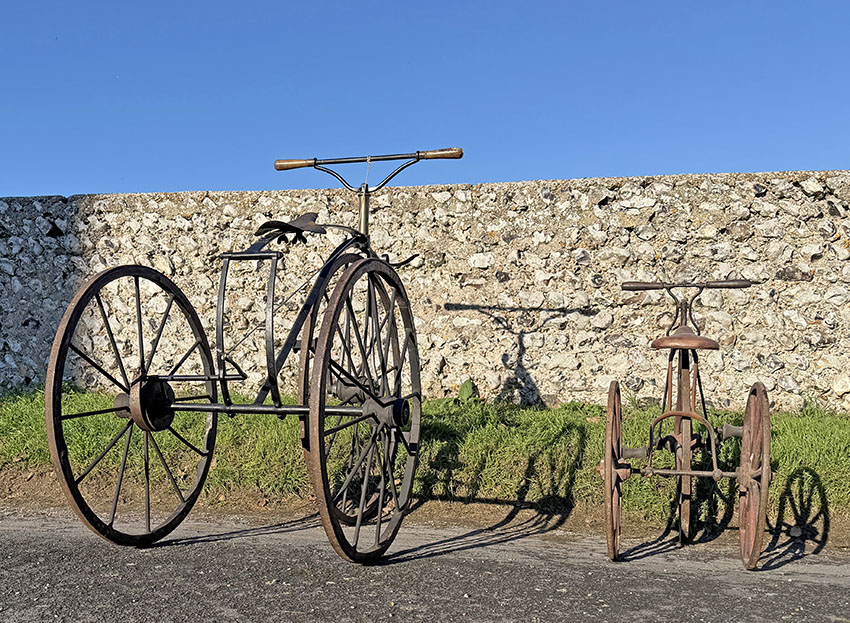
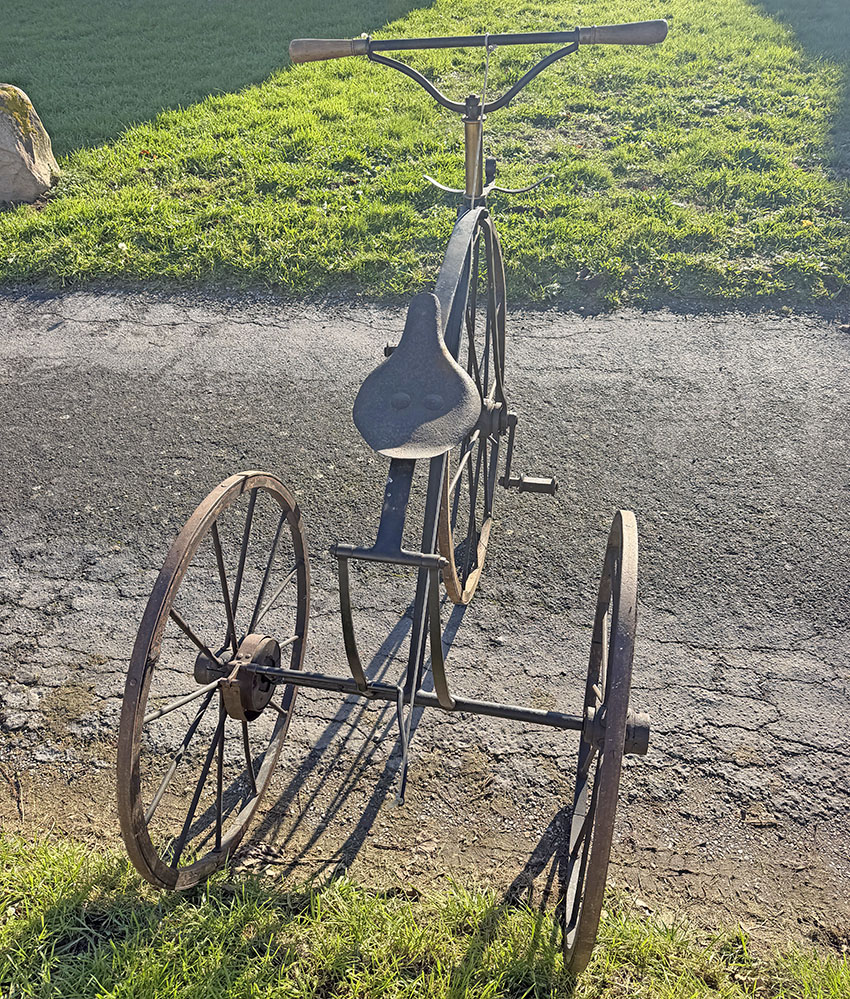
As you can read in the text of the 1870 ‘Velocipedes’ book at the top of the page: “The rear wheel is removed, and its place supplied by a pair of wheels, running free on an axle two feet long.” The high standard of workmanship to convert a solo velocipede to a tricycle version suggests that this job was done at the time. In addition it is fitted with a hub brake to one rear wheel. While English velocipedes were more functional, in France there were more cycle makers at this time and they had already started to improve the basic design by the time that the first velocipedes were imported to England. The origin of this tricycle is not known but to my eye it looks English rather than French.
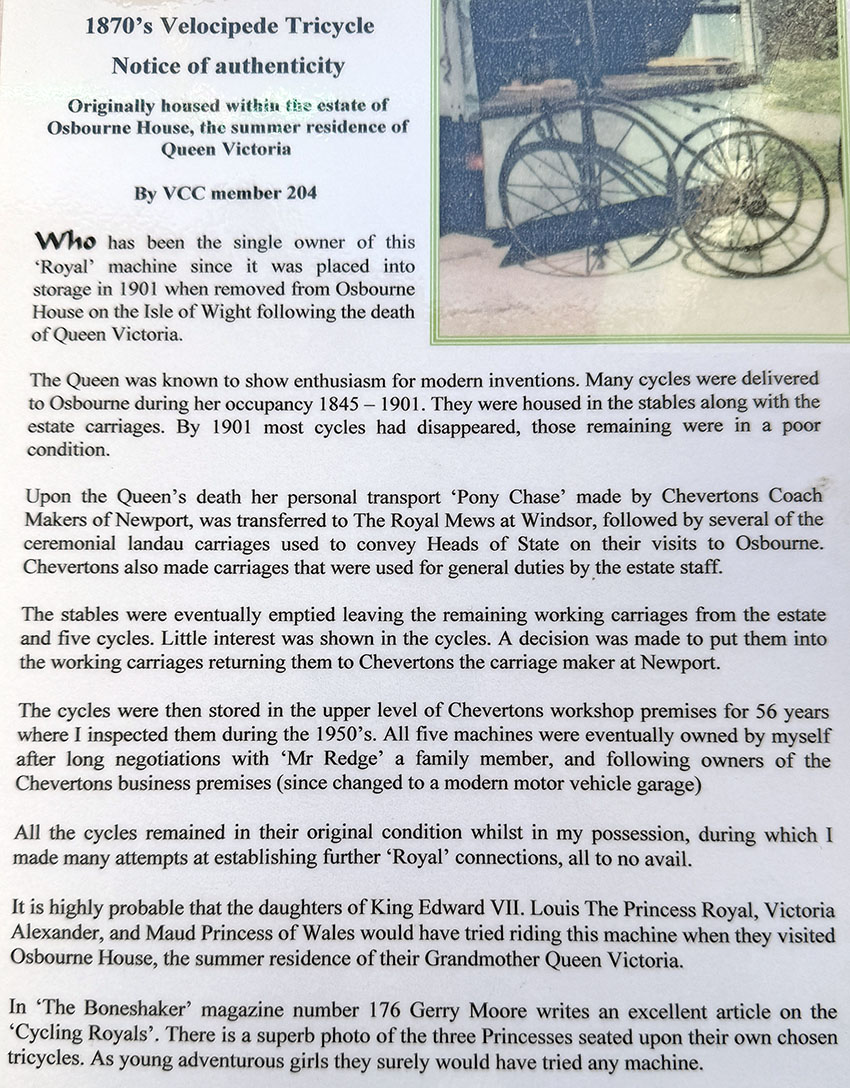
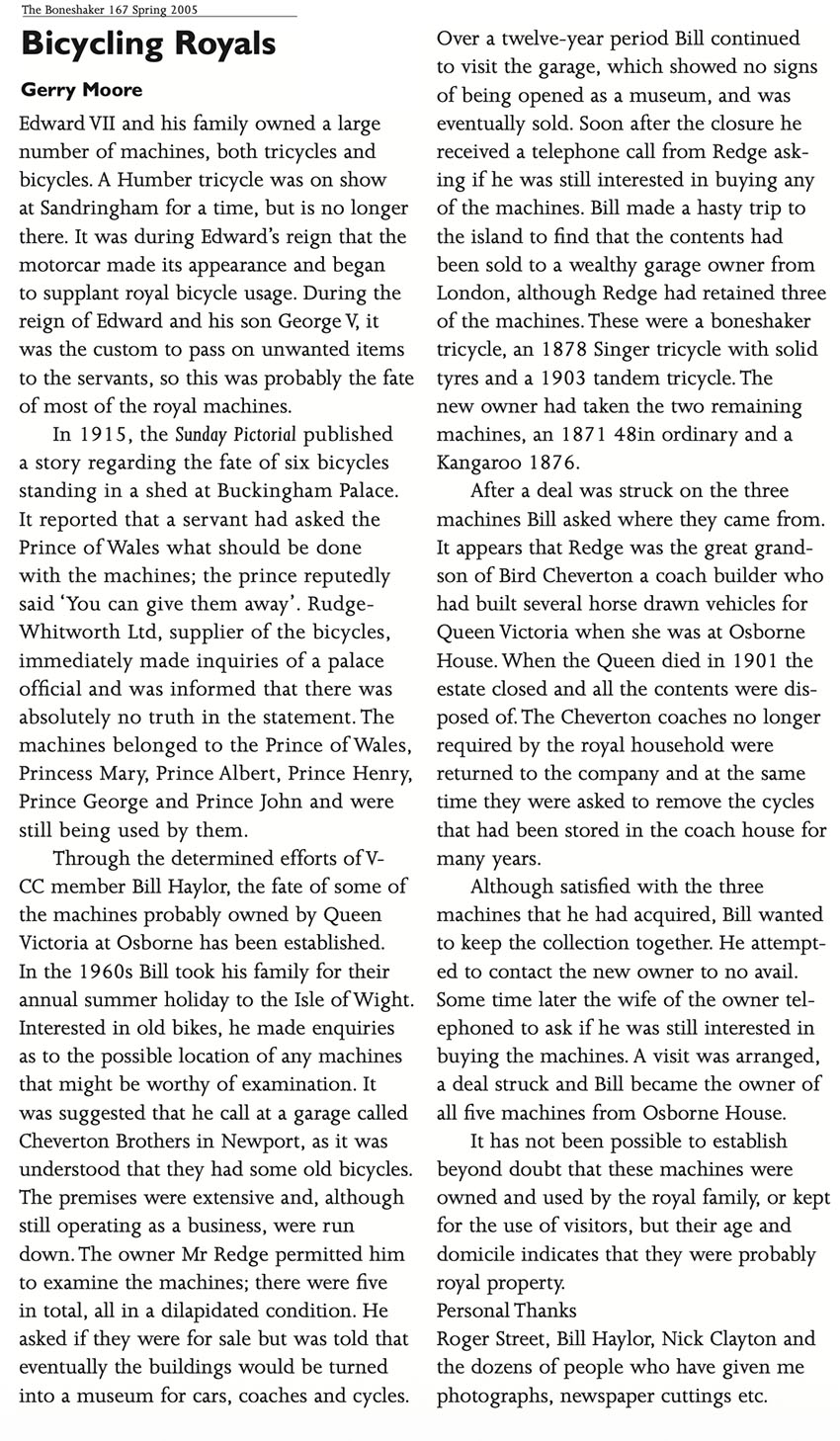
What we do know is that it has a Royal connection. It was part of a collection of bicycles and tricycles that came from Queen Victoria’s residence at Osborne House on the Isle of Wight, and purchased by Bill Haylor of Copthorne, East Sussex, in the 1970s.
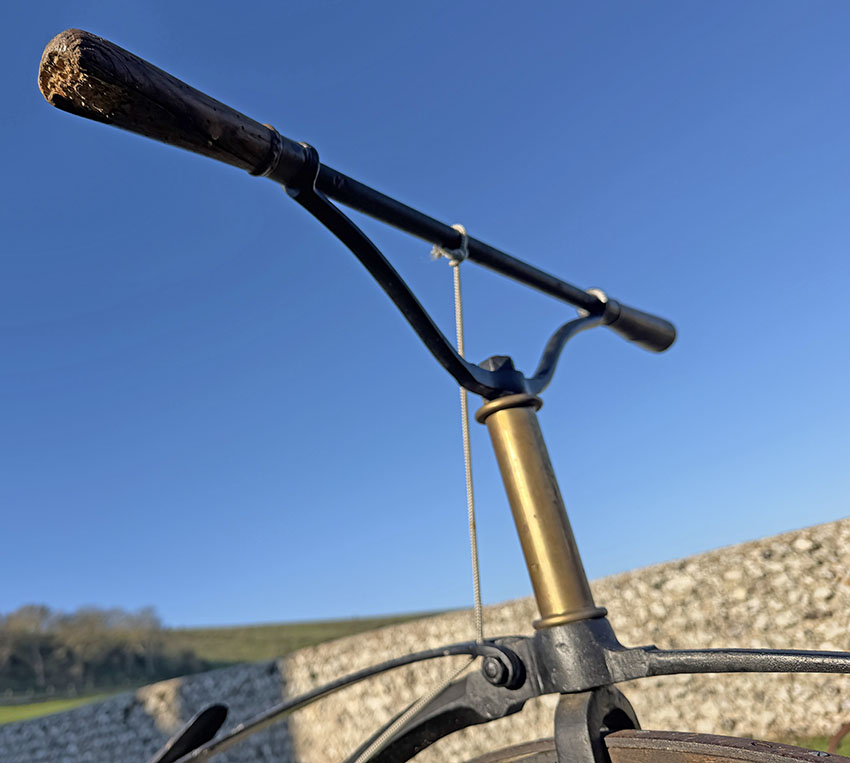
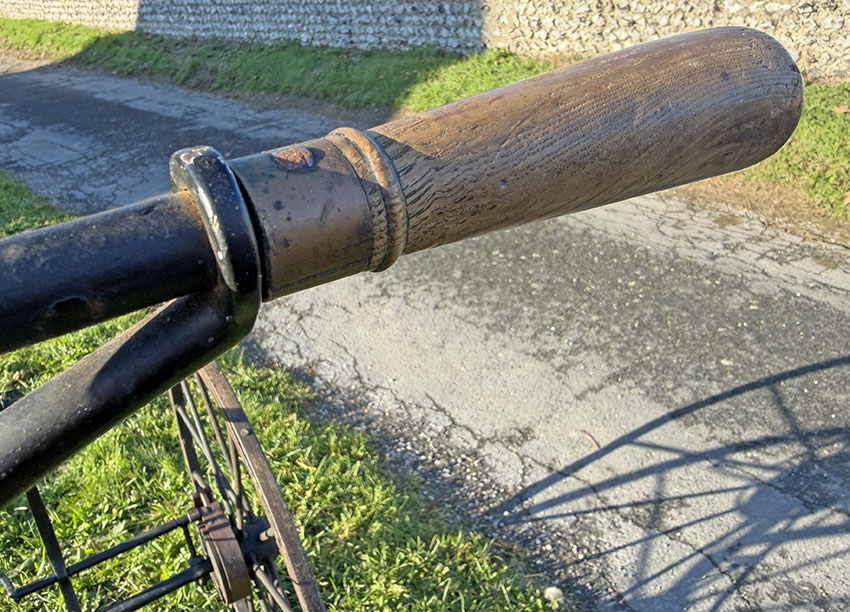
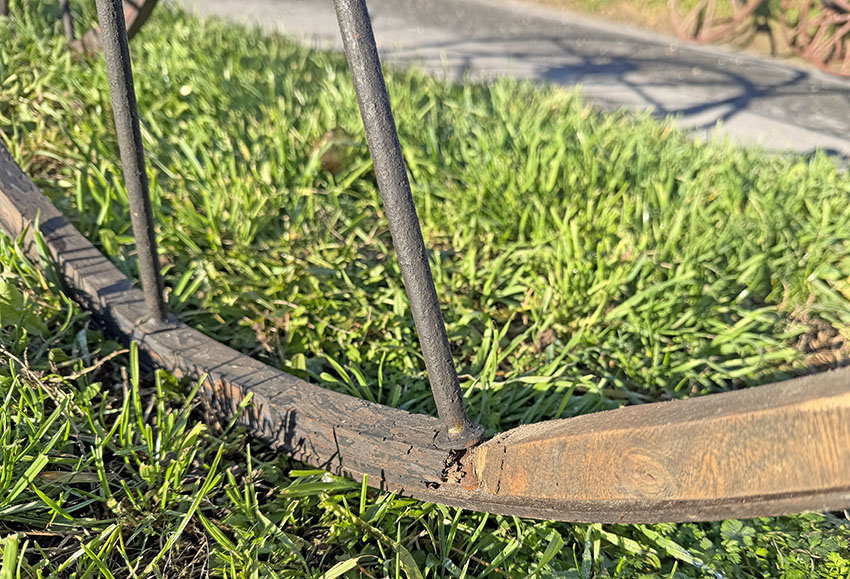
This historic tricycle is in functional original condition. Though you can see evidence of woodworm, it was treated and arrested. The wheels need servicing and repairing but it is rideable with care. With its connecftion to Queen Victoria’s estate and – to my mind, even more important – the earliest known use of a band brake on a bicycle – this unique machine would be a worthy addition to the collection of any serious vintage bicycle enthusiast.

THE BAND BRAKE
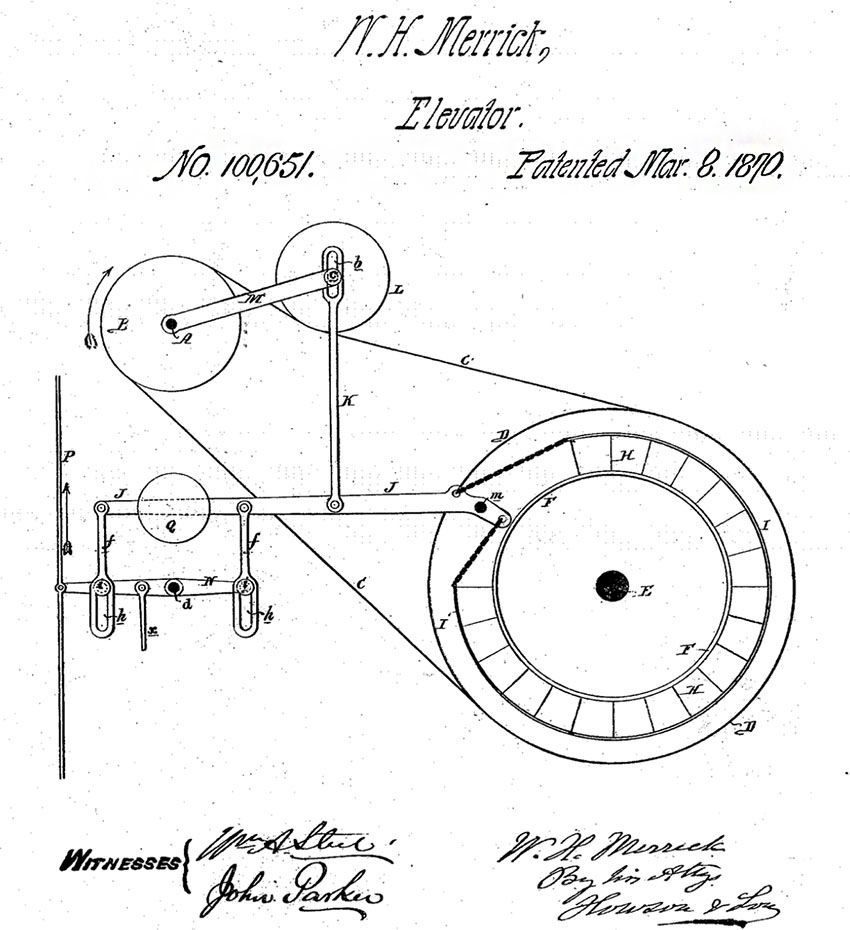
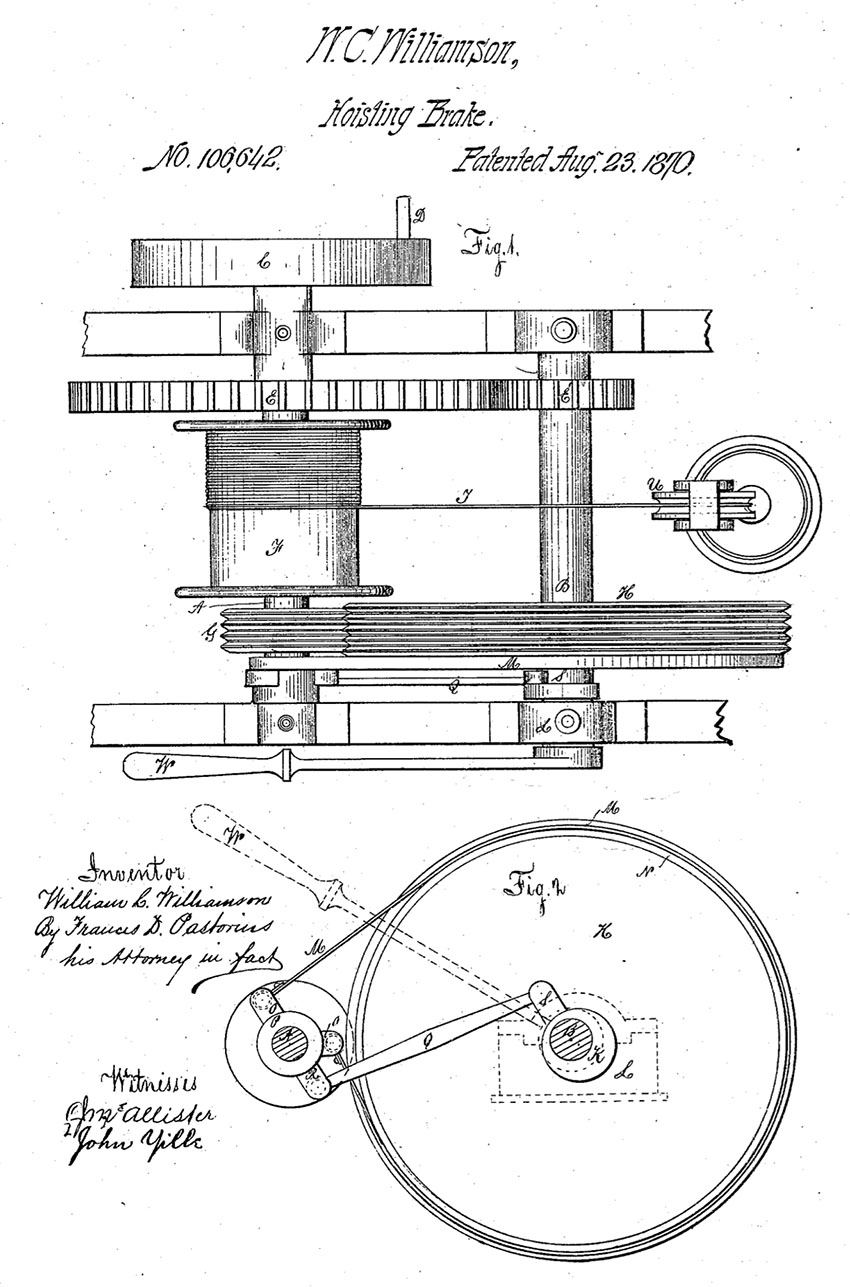
Though this is the earliest use of a band brake that is recorded on a bicycle, band brakes were already in wide use on heavy machinery, steam hoists, winch drums, sawmills, and railway inclines to control loaded wagons on steep slopes.
A few years after this velocipede tricycle used a band brake, probably on an experimental basis, steam locomotives on the Rigi railway in Switzerland employed them in 1873 to control gear and rack-and-pinion operations, as well as on winding drums and cable inclines to manage heavy loads on steep slopes.
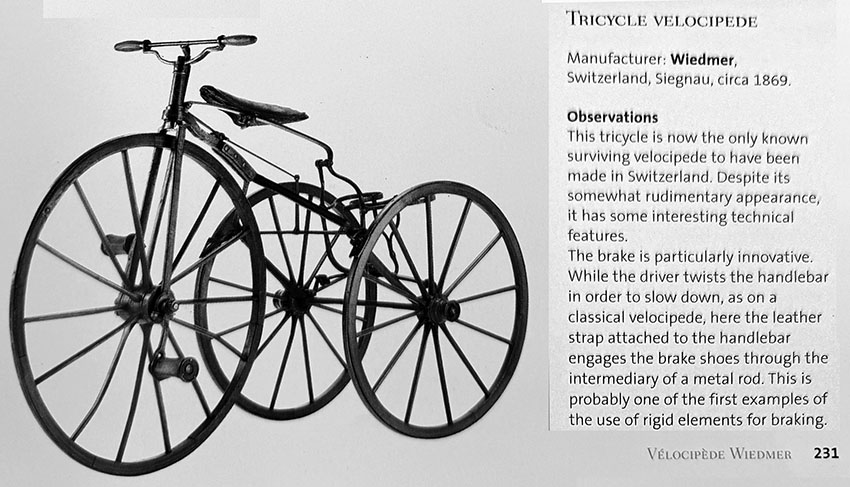
THANKS to Ian Hall for the photos above and below, showing a similar tricycle that was once owned by his family