
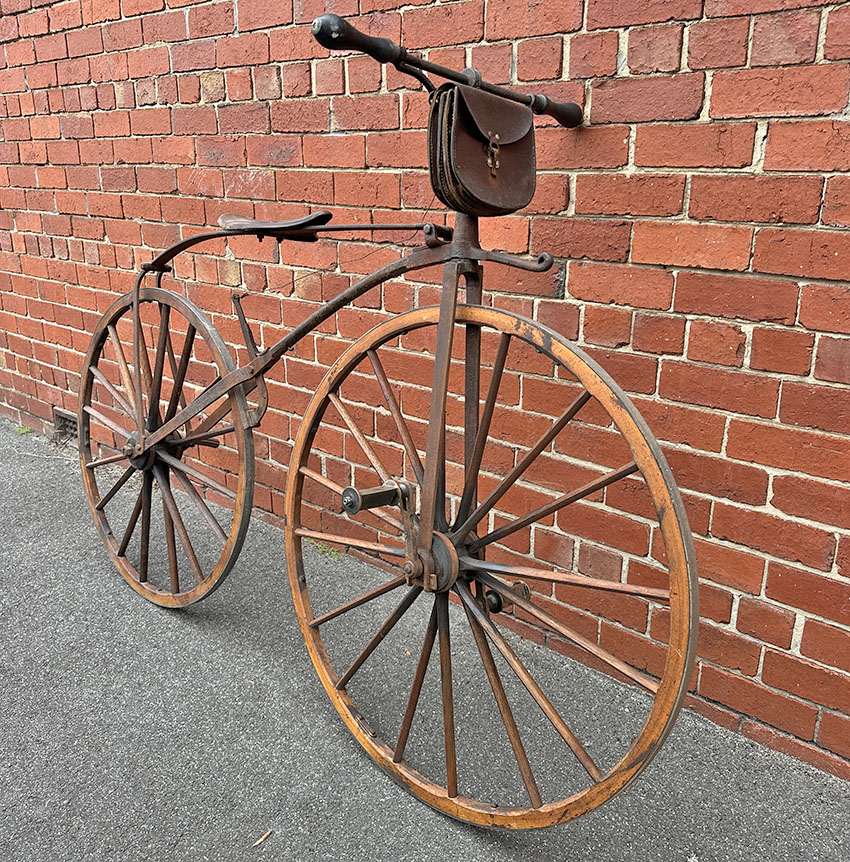
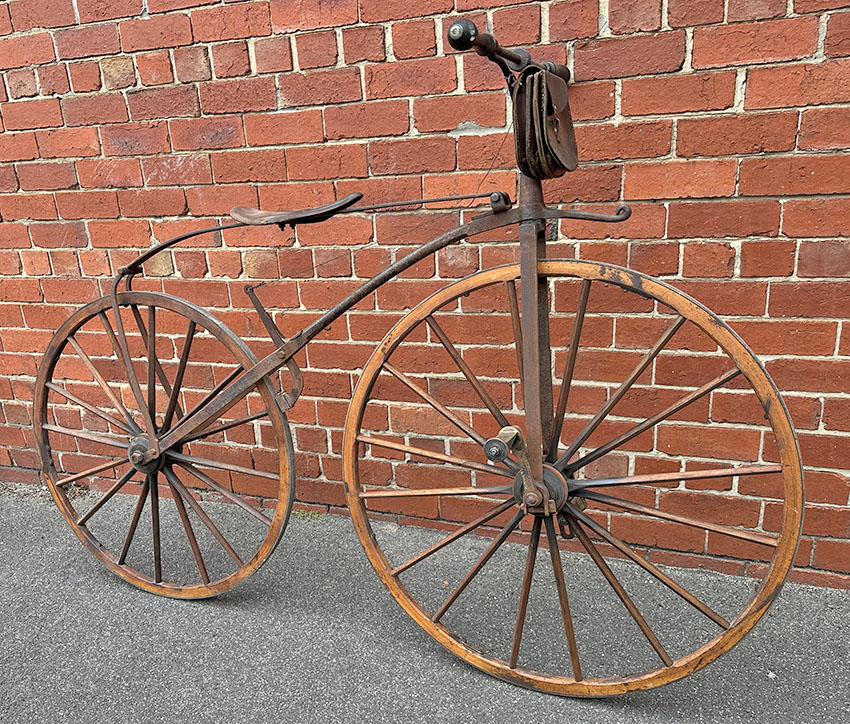
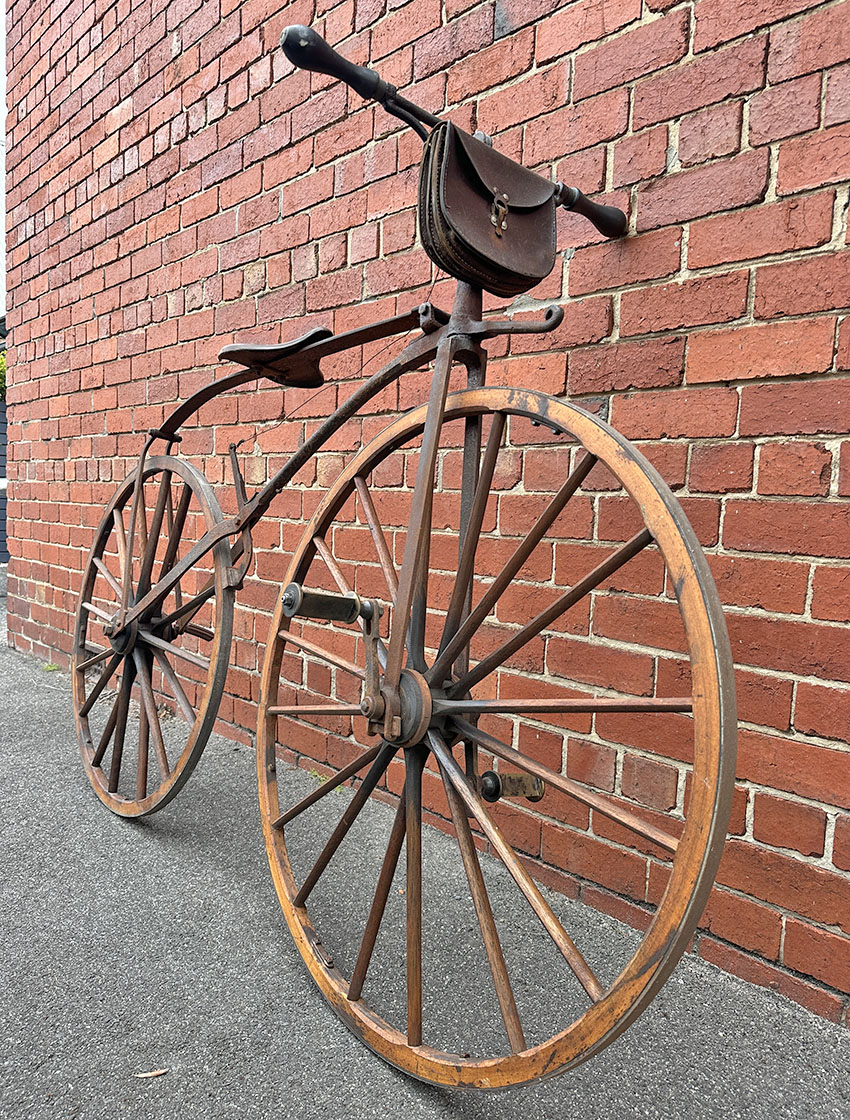
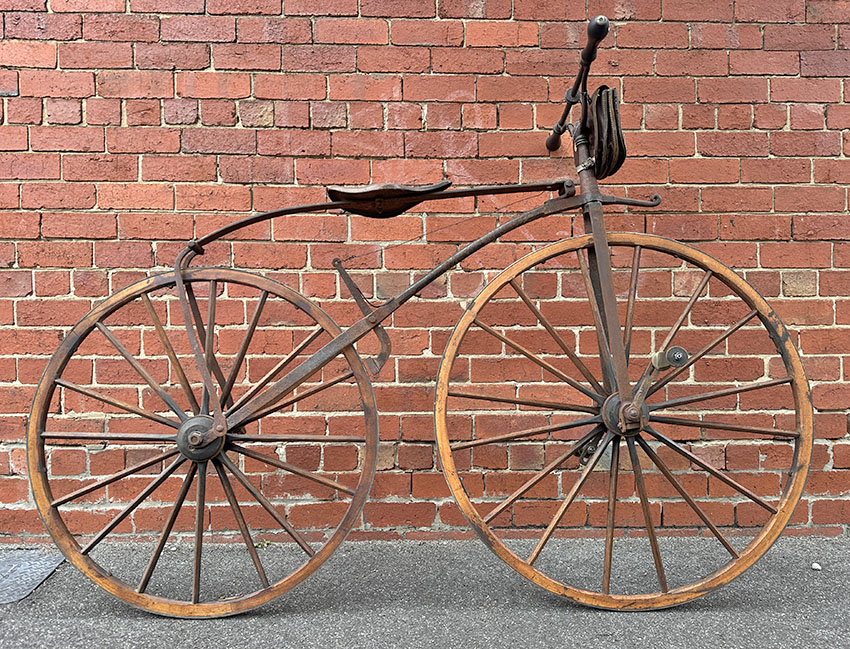
1870s Australian Goldfields Velocipede
Believed built for the Australian Goldfields
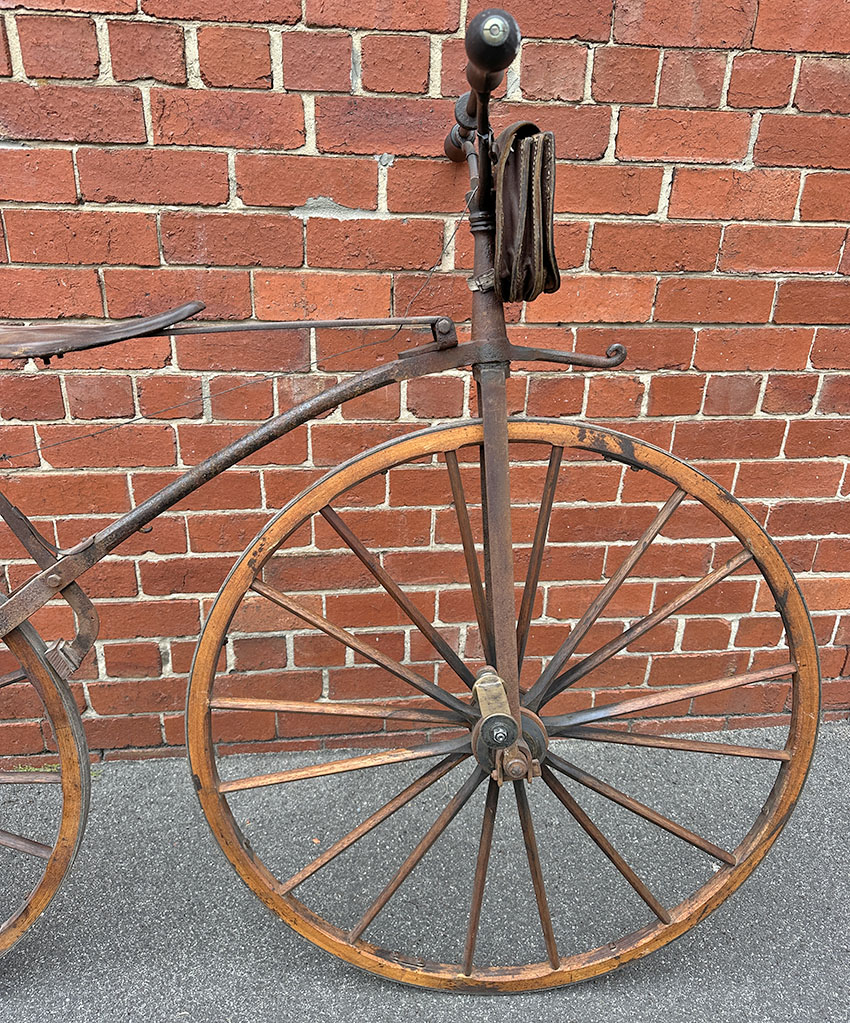
36″ Front Wheel
33″ Rear Wheel

The transportation of British convicts to America officially ended in 1783 as a result of their War of Independence. The British government then established penal colonies in Australia, with the First Fleet sailing in 1788. From then until the mid-1800s, Britain transported roughly 162,000 convicts to Australia for a wide range of crimes, though most involving petty theft. Transportation did not reflect the level of the crime, but was used because of the sheer volume of prisoners.
Many goldfield velocipedes were built using convict labour. I often wonder if a British TV programme exploring celebrity ancestry will one day turn up someone’s distant descendent who stole a bottle of beer in Manchester, was shipped to the Colonies, and ended up as a velocipede maker in the Ballarat goldfields of Victoria.
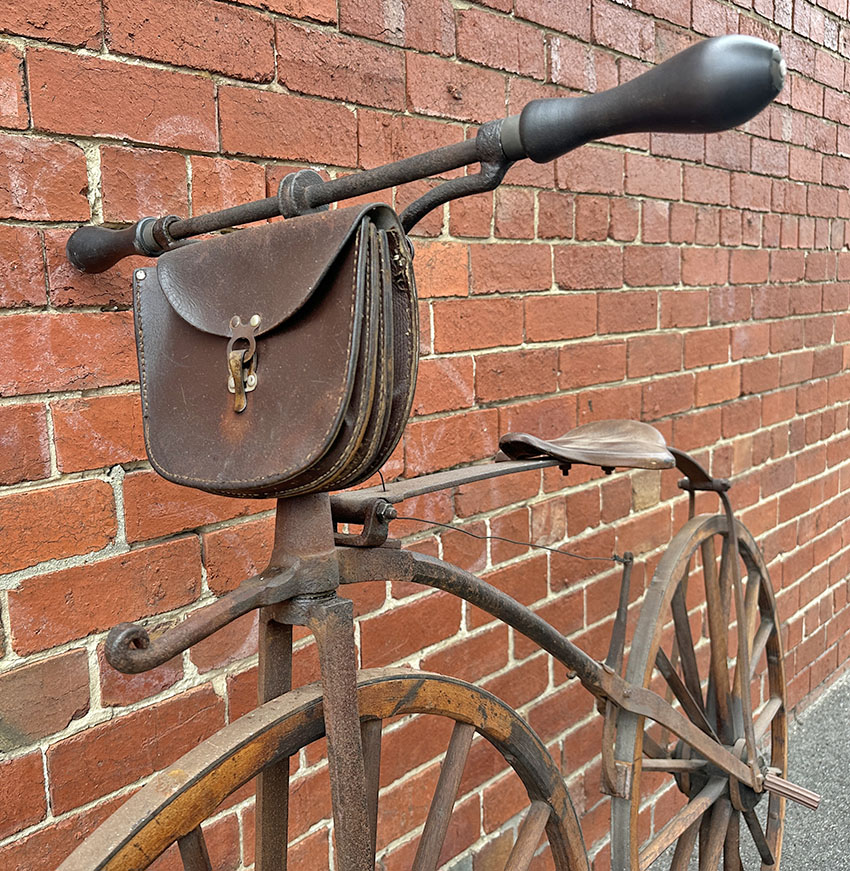
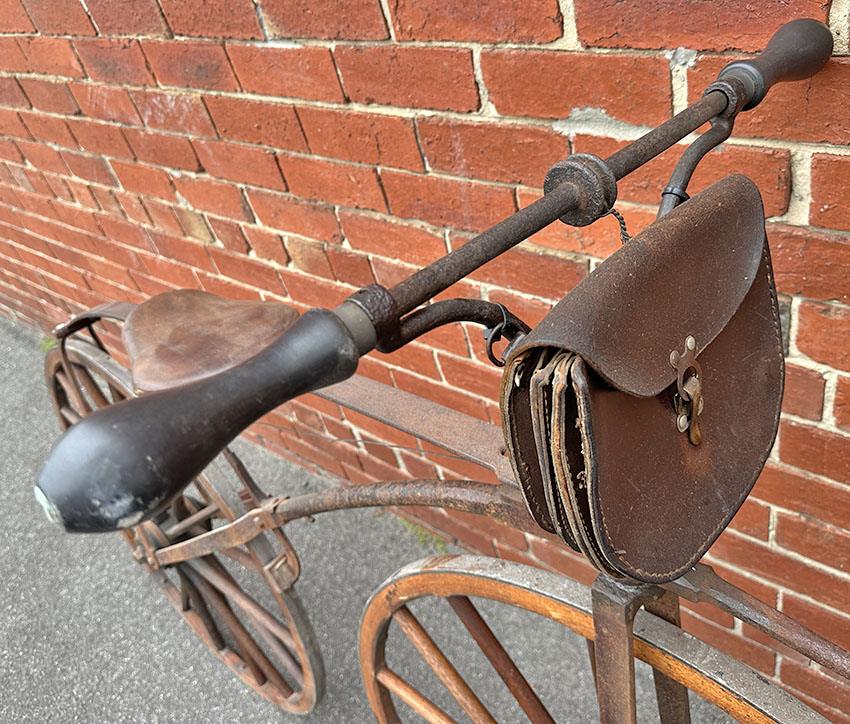
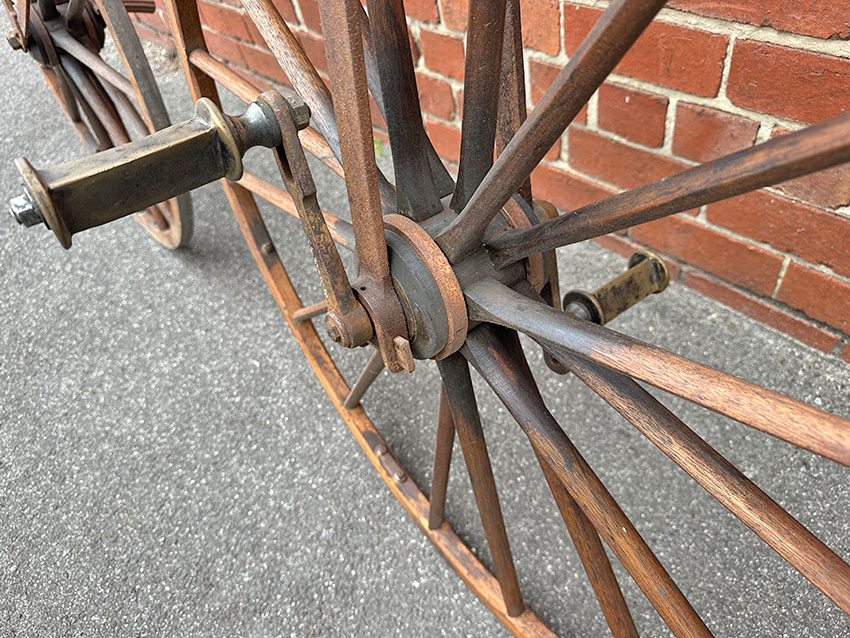
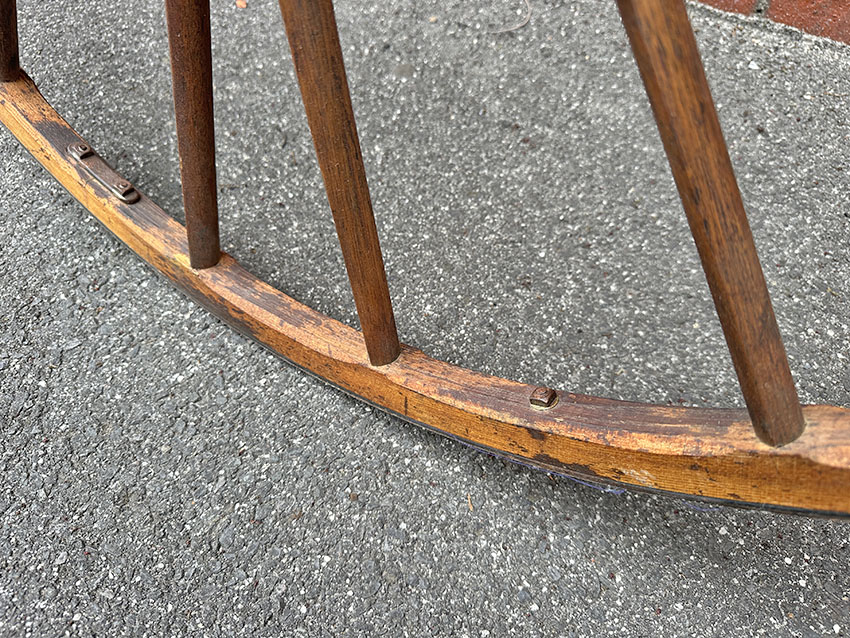
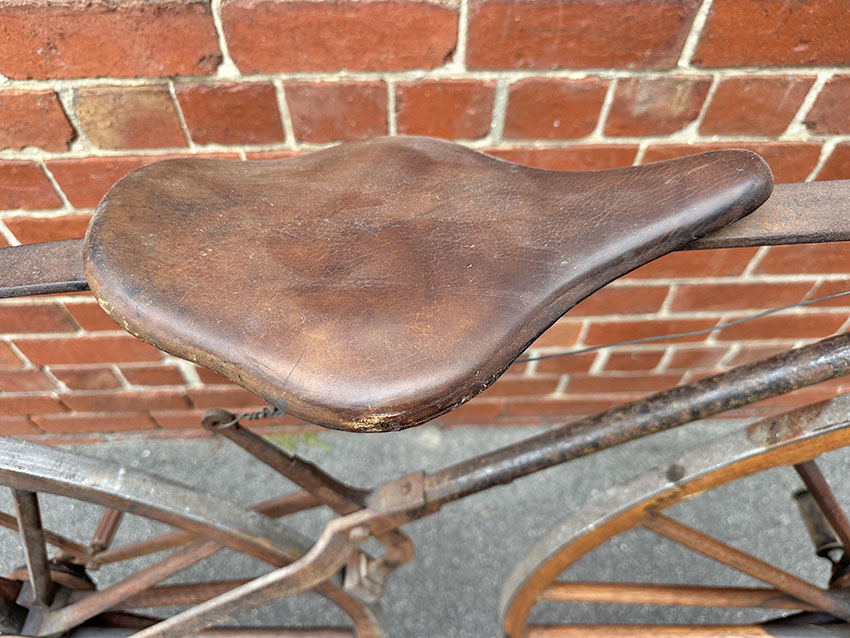
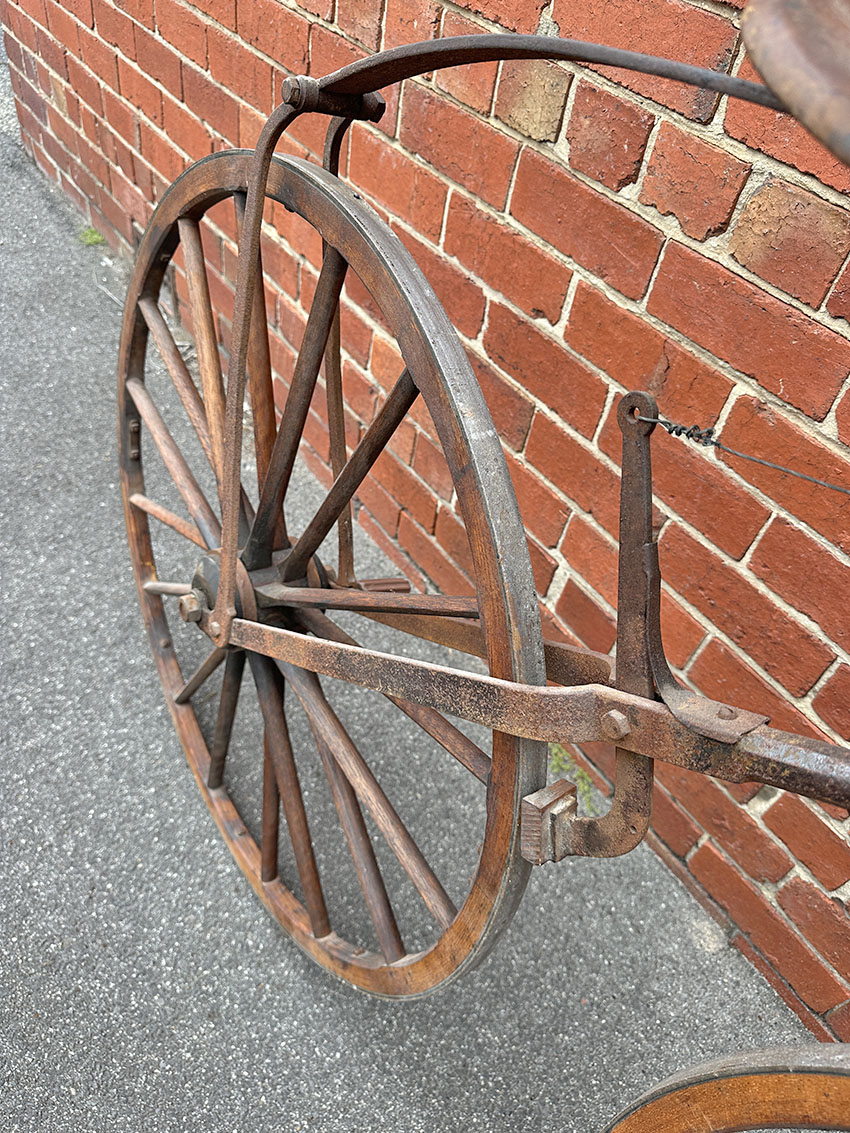
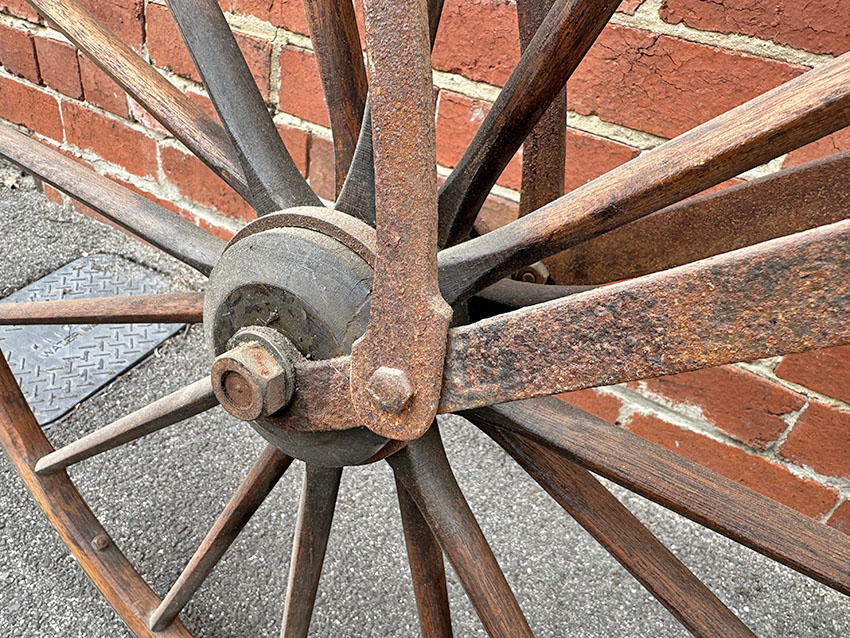
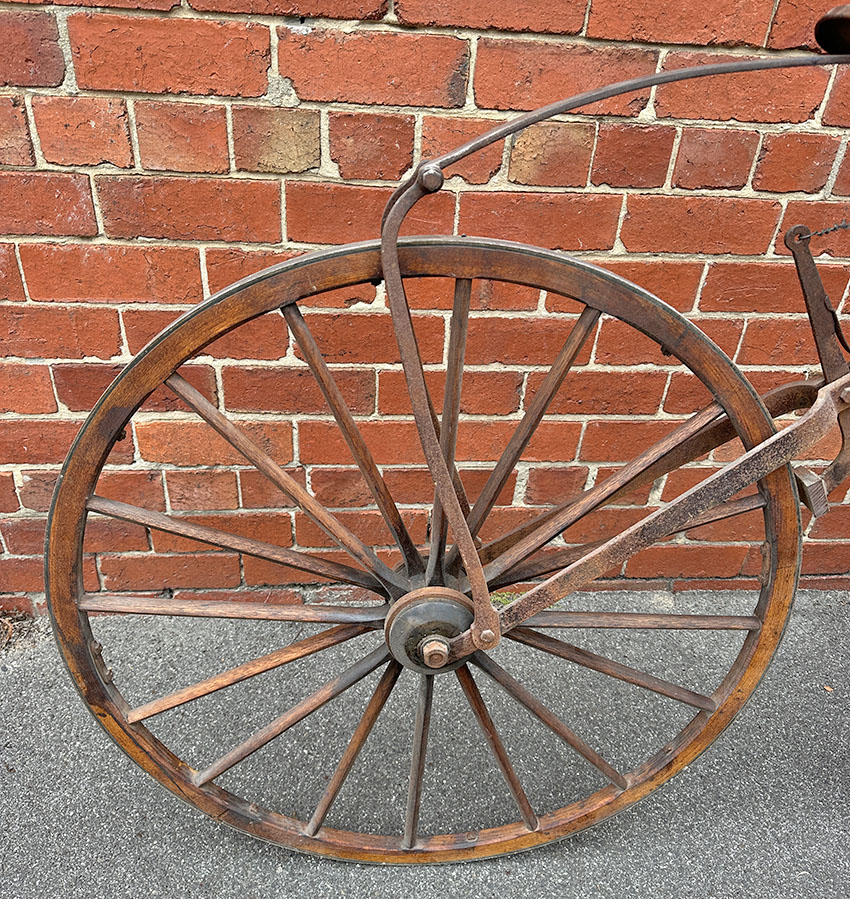
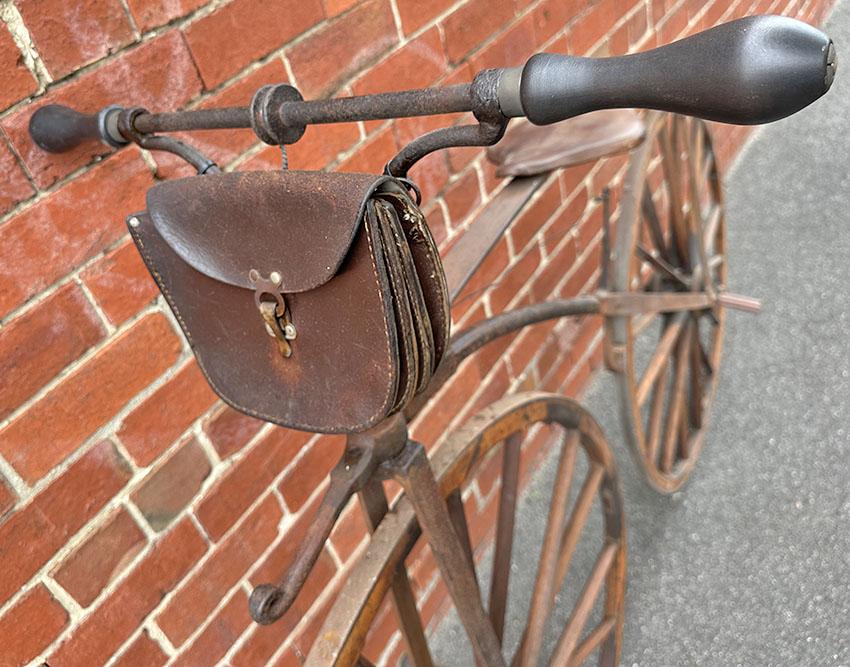
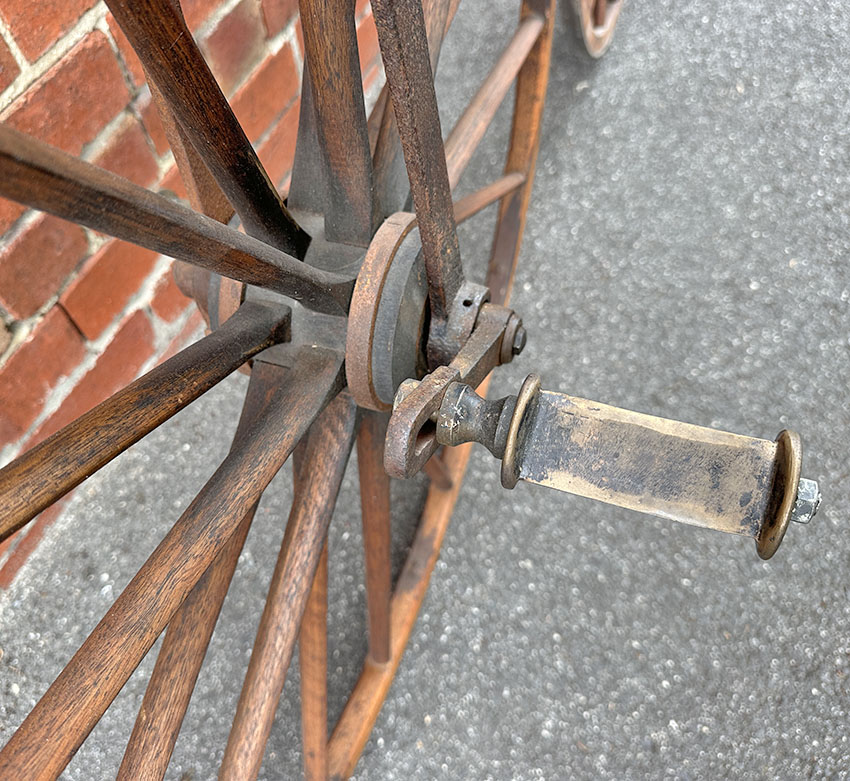
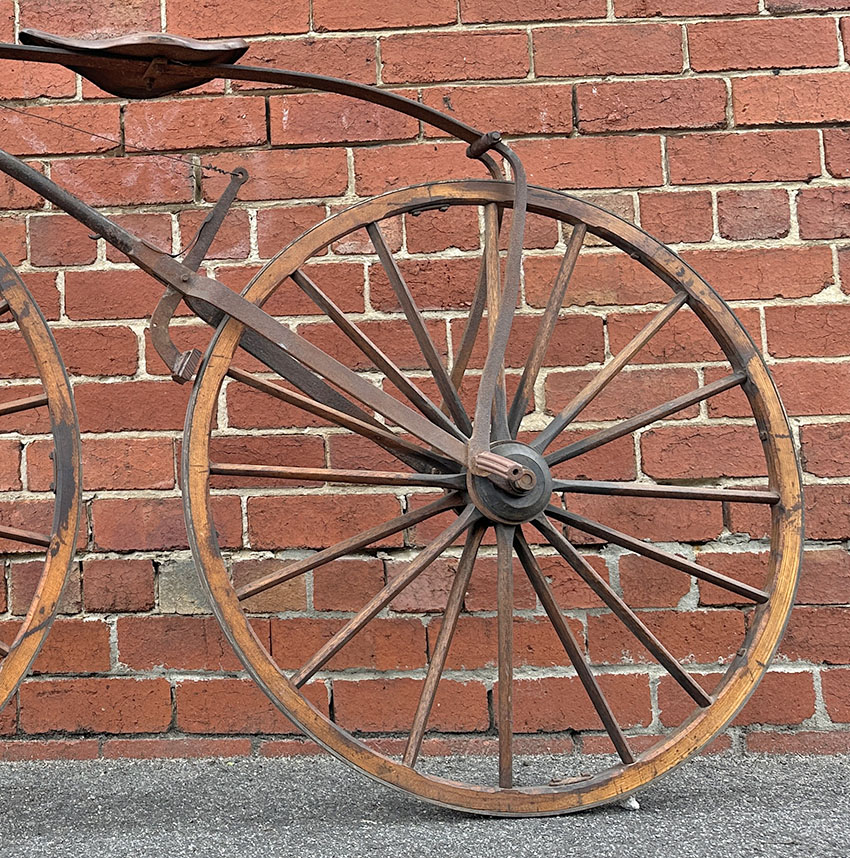
This Australian velocipede appears to be a local machine built when there was a demand for them in the goldfields. Blacksmith-made machines often had a rough and unfinished appearance, and did not survive the hard labour their riders put them through. This one, however, though not stylish and intricately finished like British and French machines, has a certain charm. And it did survive, to be eventually found by Paul Farren and put on display in the Farren Collection private museum. After cleaning it up, Paul had new wheels built for it (at considerable cost) and it has been used for various rides and events. It’s therefore a fully-functional machine and deserves acknowledgement of its place in Australian bicycle history.

The first bicycles arrived in the colonies in the 1860s and Australians were quick to embrace this new technology. By the late 1890s, the safety bicycle offered people a cheaper and more comfortable ride and the cycling craze had taken hold. Riding schools and touring clubs formed and cycle racing became a big business.
– National Museum of Australia
The engraving above, published by Ebenezer and David Syme, shows a velocipede race at Melbourne cricket ground in 1869. Some claim that the first Australian cycle race was held here, though others believe that French velocipedes were previously ridden in contests in Sydney.
The velocipede industry in Australia was initially centred around Ballarat, in Victoria, which had been a gold-mining centre on a massive scale in the 1850s, leading to many subsidiary industries such as the manufacture of steam engines and cast iron foundries. From the late 1860s to the early 20th century, Ballarat made a successful transition from a gold rush town to an industrial-age city.
“Ballarat locals were intrigued by the appearance of the velocipede. In 1869, a crowd of 500 onlookers gathered opposite the Ballarat Post Office to see a rider propel his velocipede down Sturt Street. One onlooker described the vehicle as a ‘buggy the man worked by himself’. Not everyone welcomed the new addition to Ballarat’s roads. Reports of collisions between cyclists and horses were used by media commentators to highlight the dangers of two-wheeled vehicles.” *
Whereas, in Europe, velocipedes went out of fashion in the early 1870s, in Australia they continued to be manufactured by local blacksmiths. The reason was simple: the new ‘ordinary’ (penny farthing) style of bicycle imported from Britain was a ‘high-tech’ piece of equipment that was very hard to fabricate, whereas the velocipede could easily be made by a blacksmith and its wheels supplied by a wheelwright. Even after ‘ordinaries’ took over, velocipedes were still kept by families and by riding schools to teach new riders, as it was easier to learn to balance on a velocipede than on an ordinary. Bartleet commented that, in England, velocipedes were available to hire at Crystal Palace until 1883 for the same purpose.
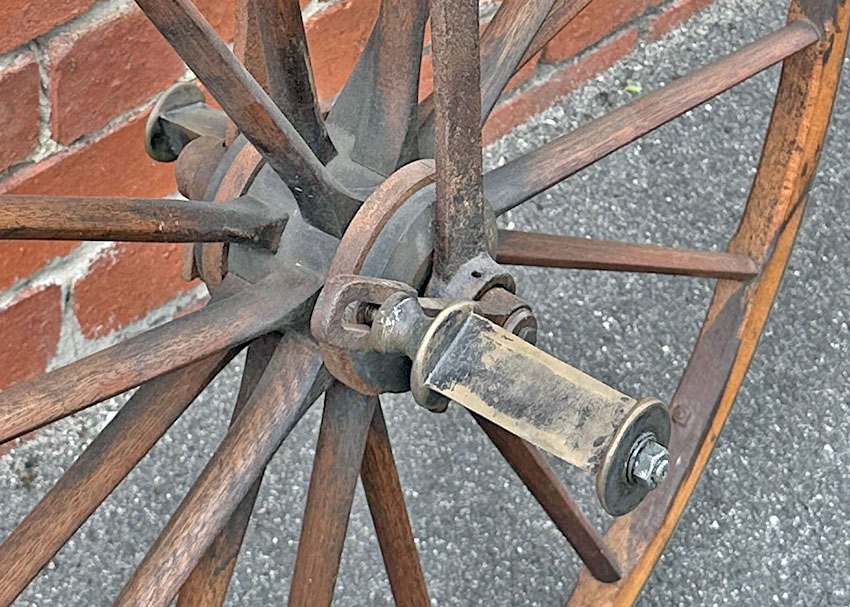
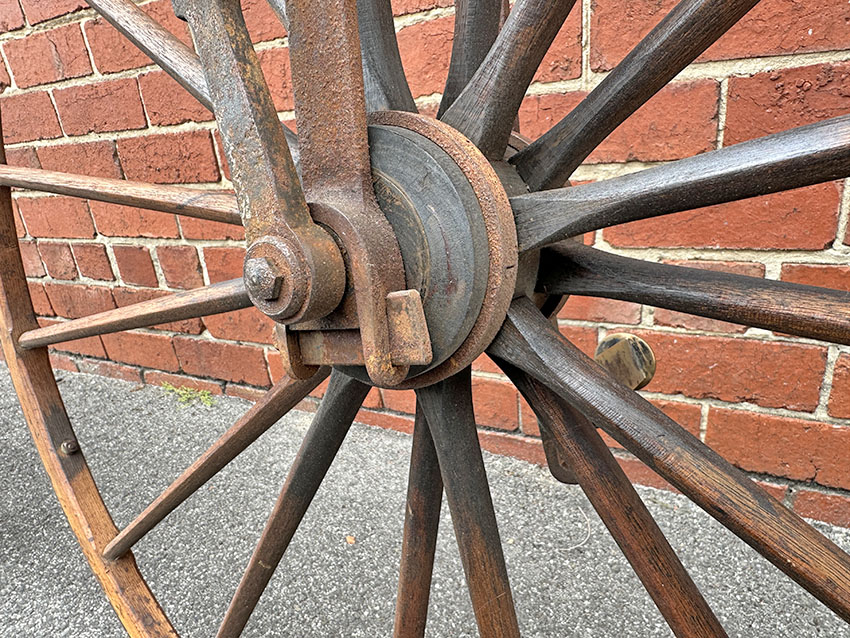
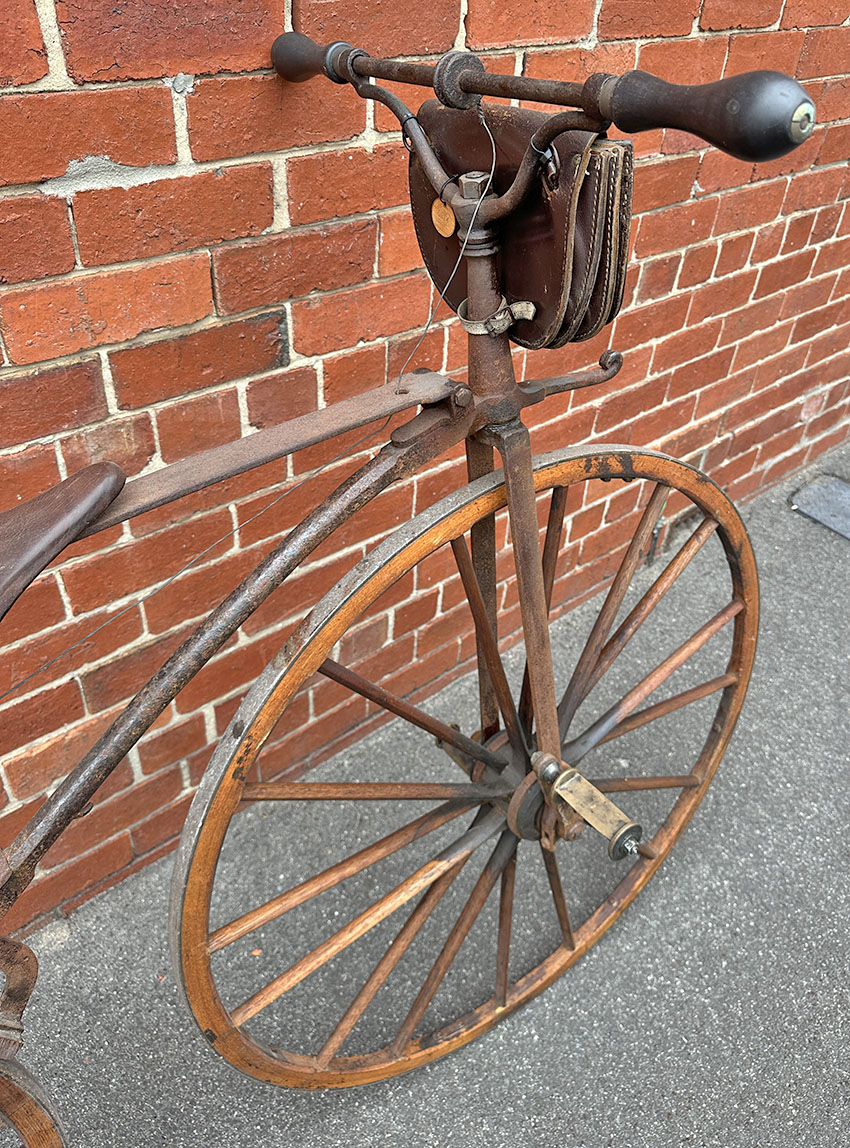
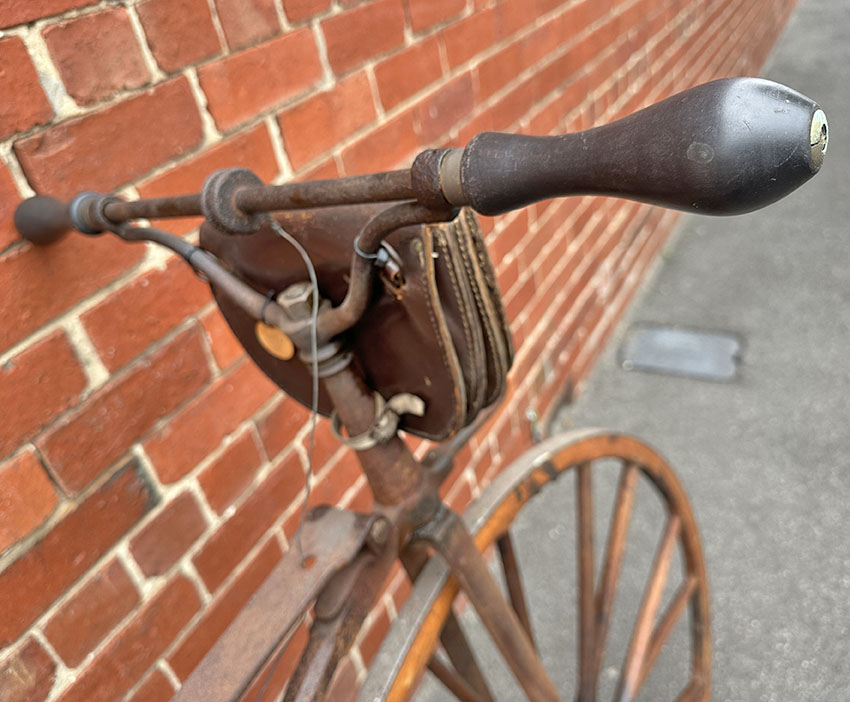
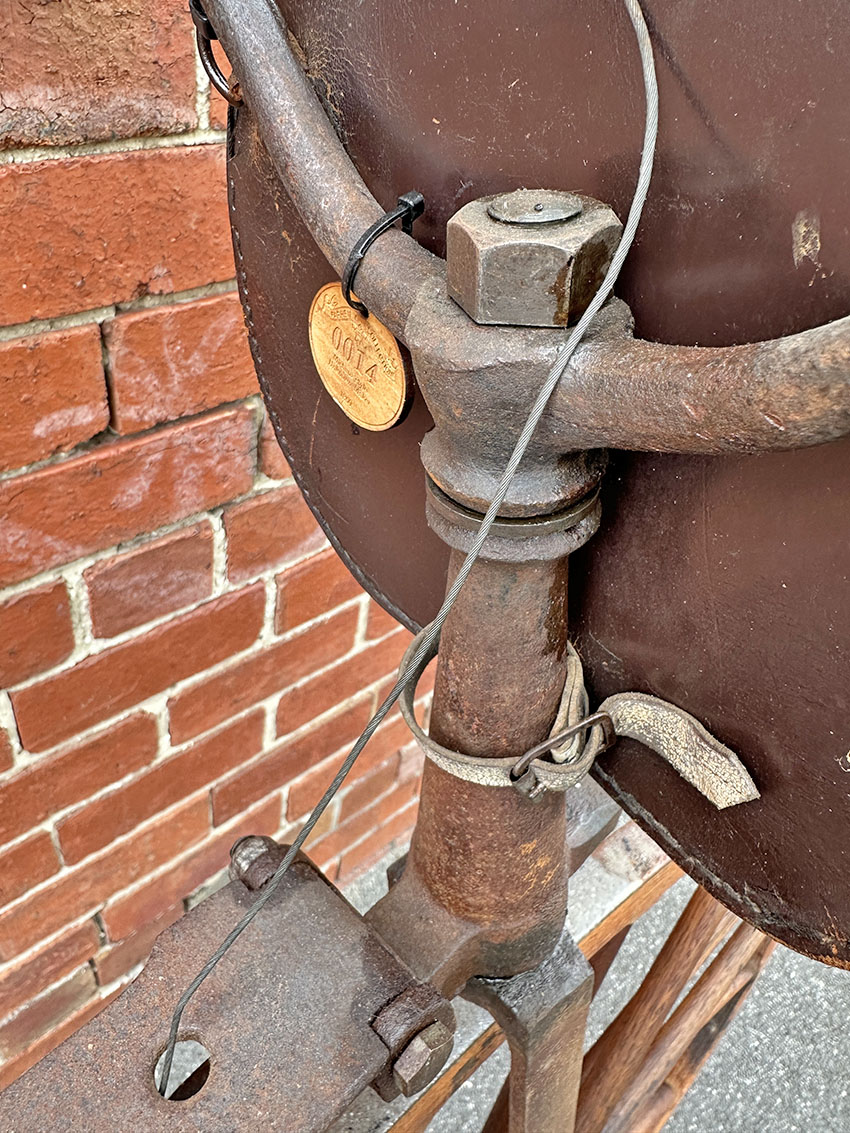
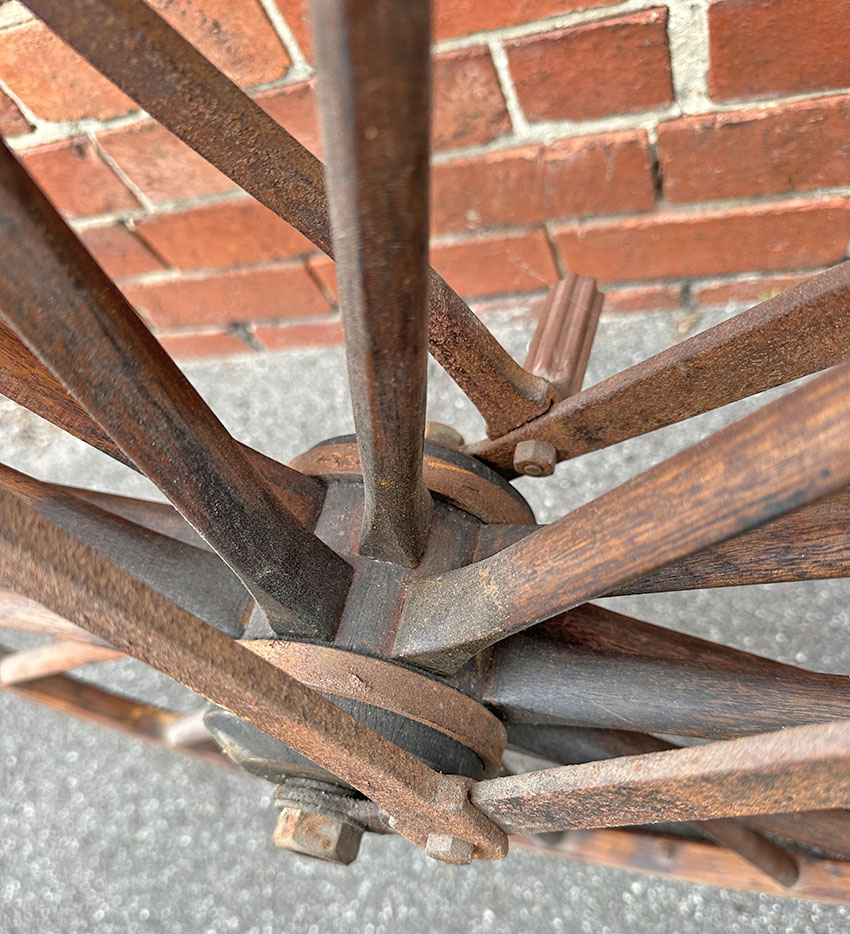
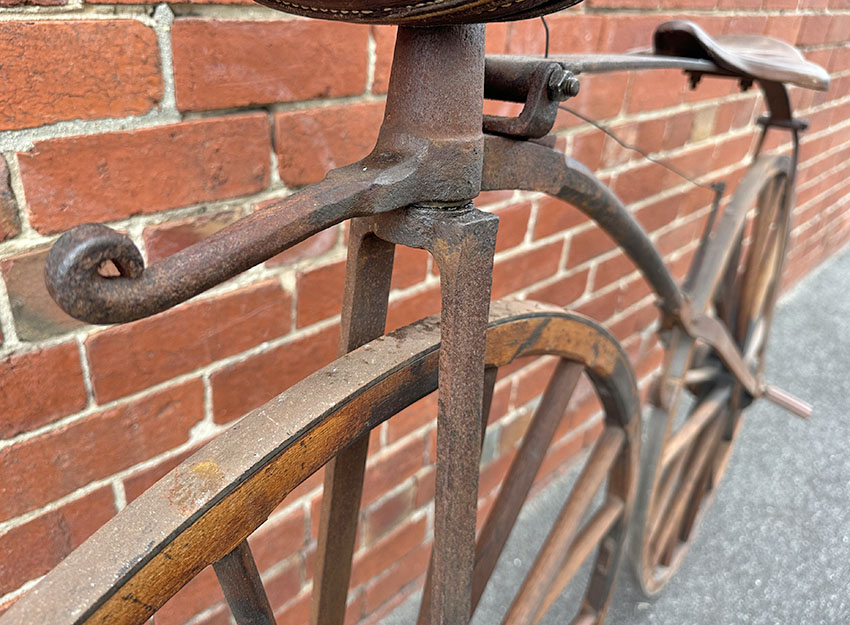
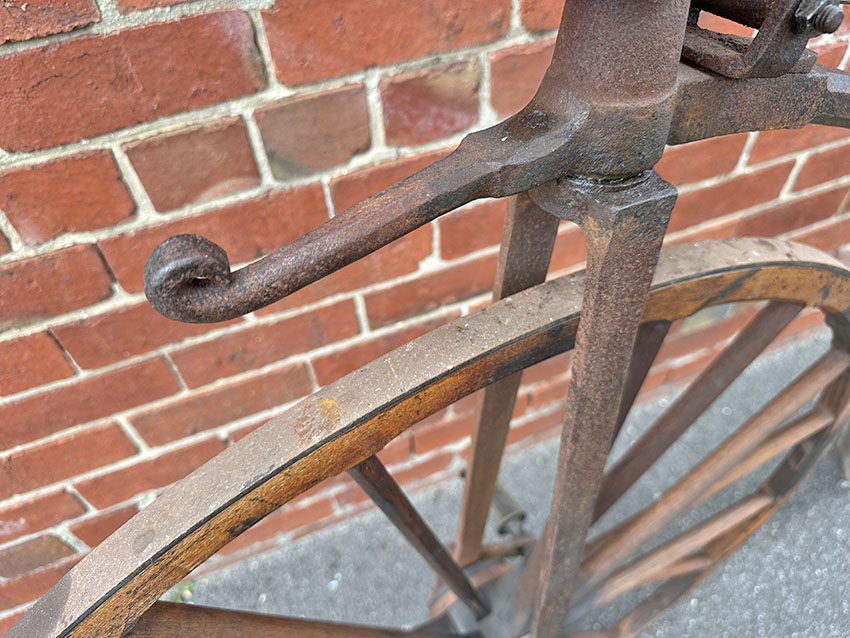
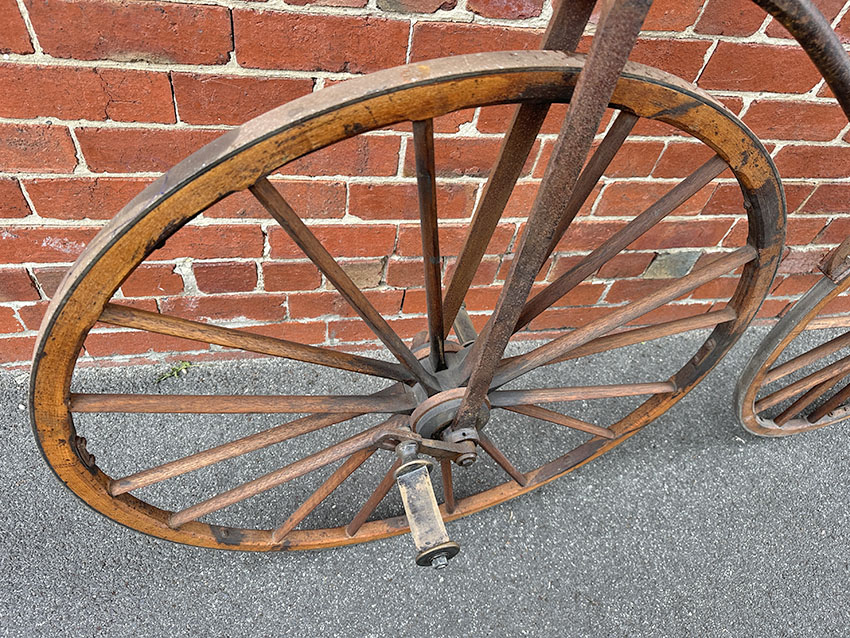
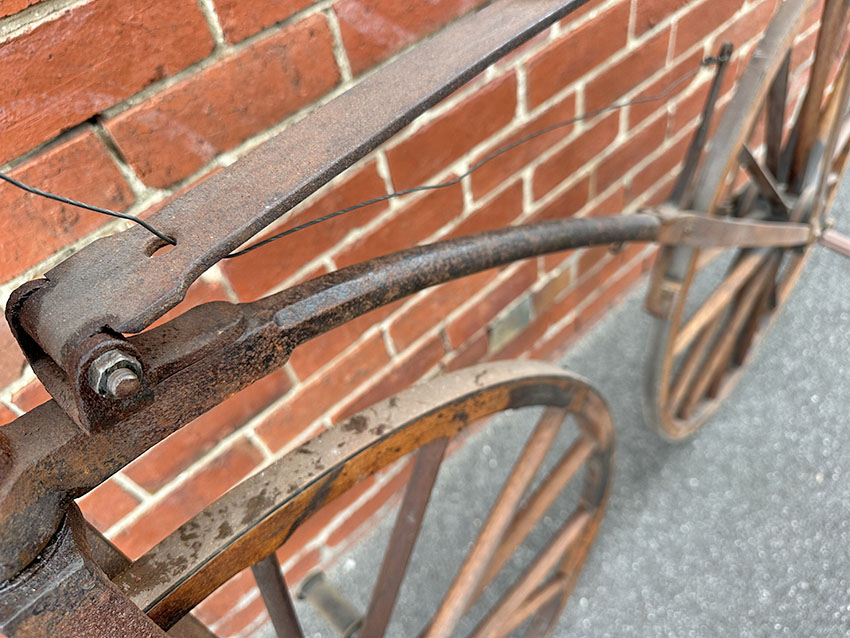
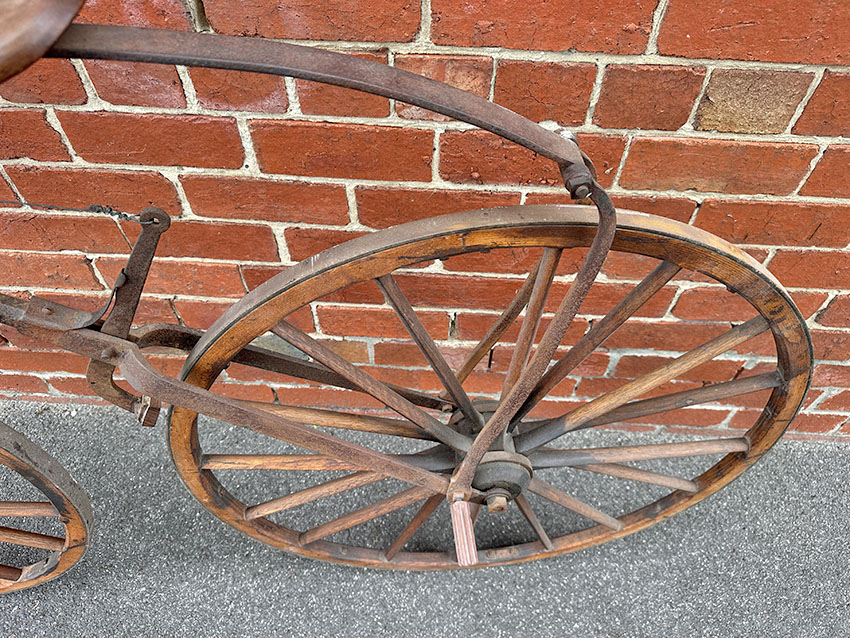
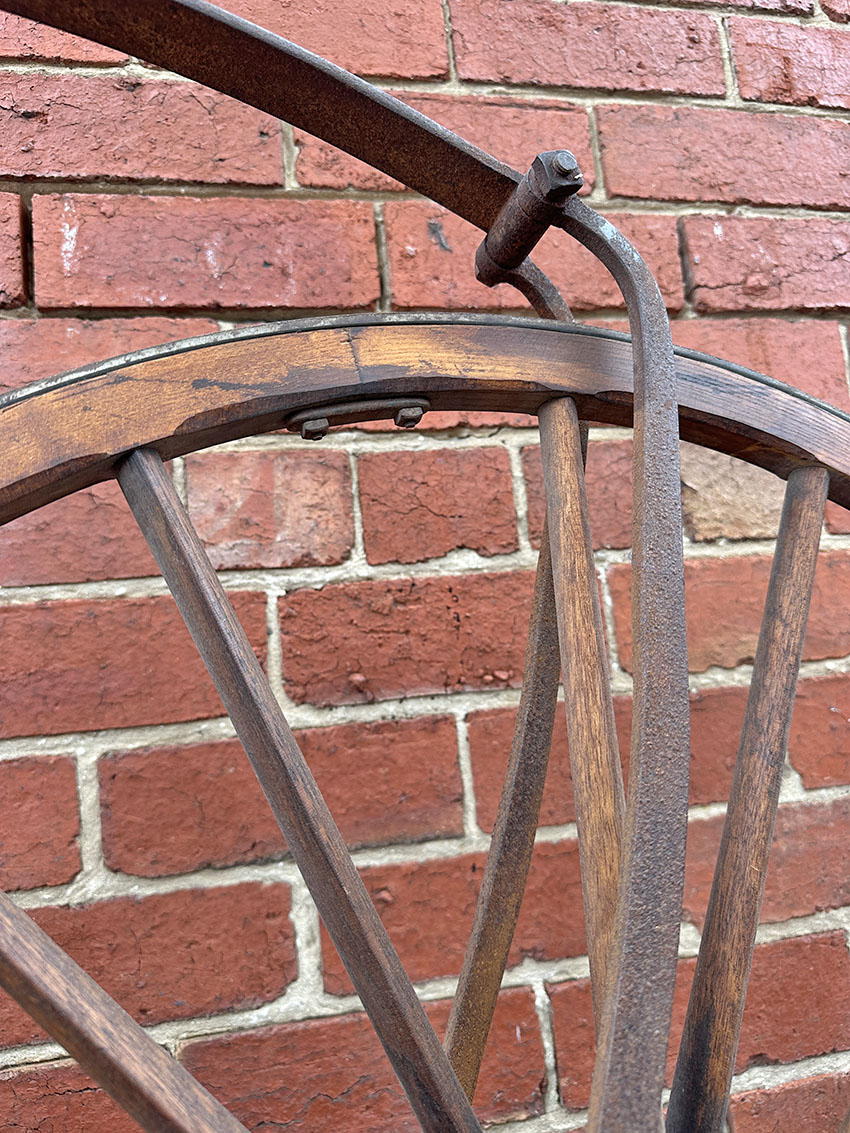
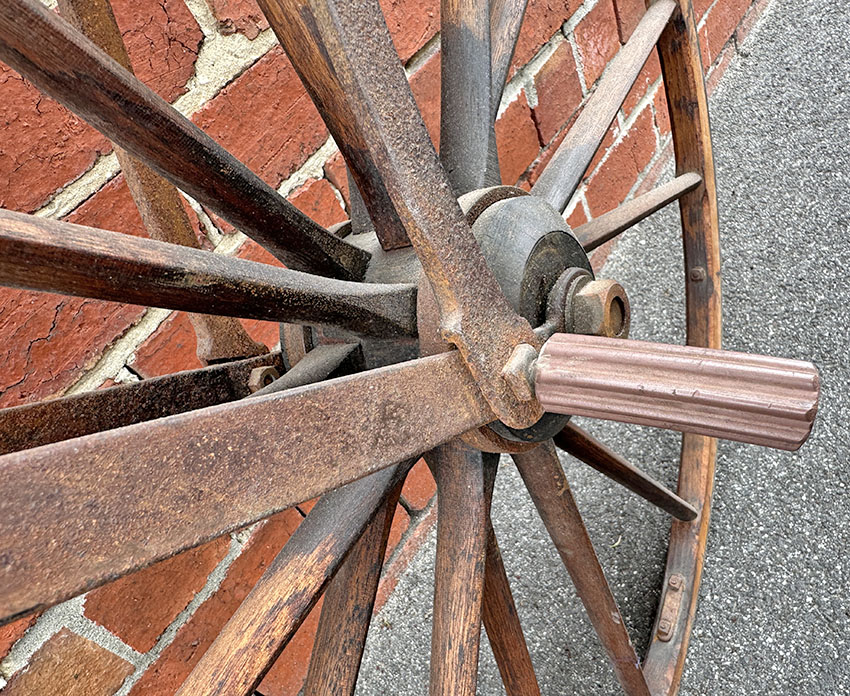
The most interesting aspect of this velocipede is its utilitarian construction. Because of intense competition from so many other manufacturers, velocipedes in Europe tended to be highly stylised, whereas in Australia there were few builders. The majority were blacksmiths who catered to local demand rather than selling nationally, so a simple construction and cheap selling price were the most important factors for the maker.

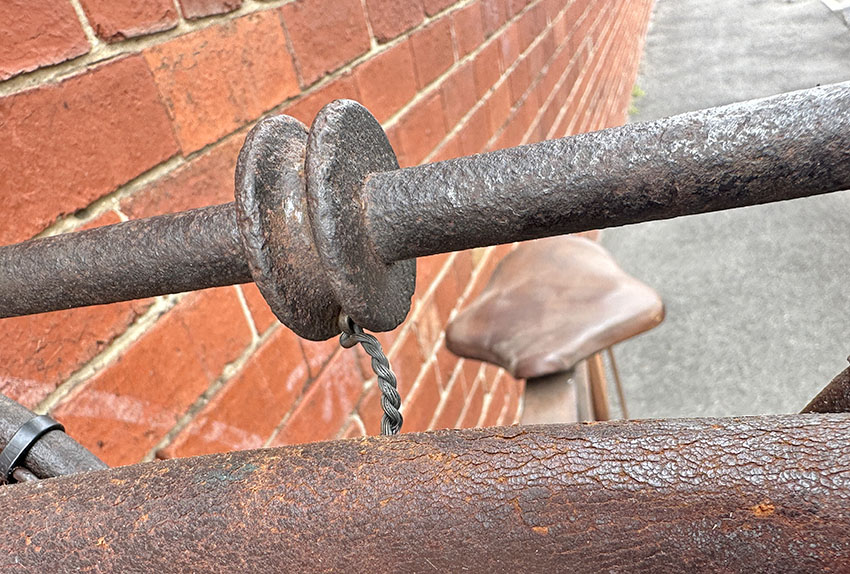
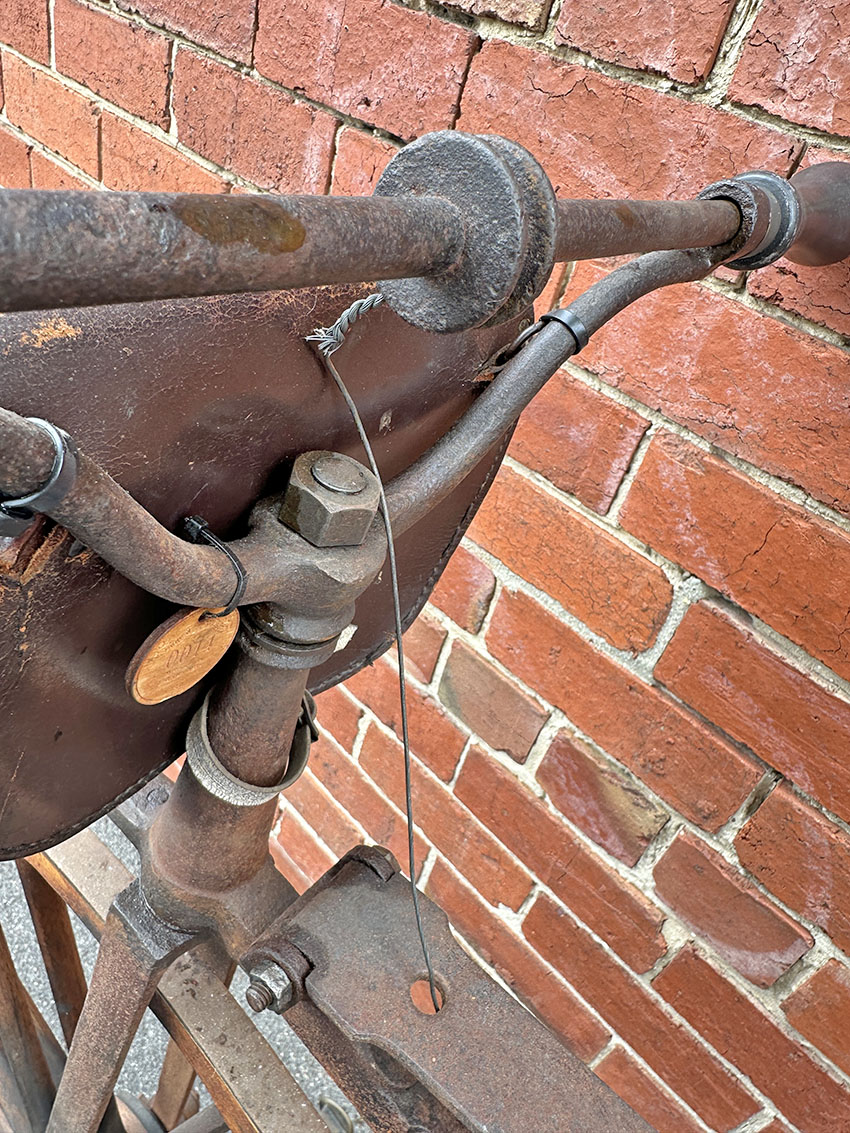
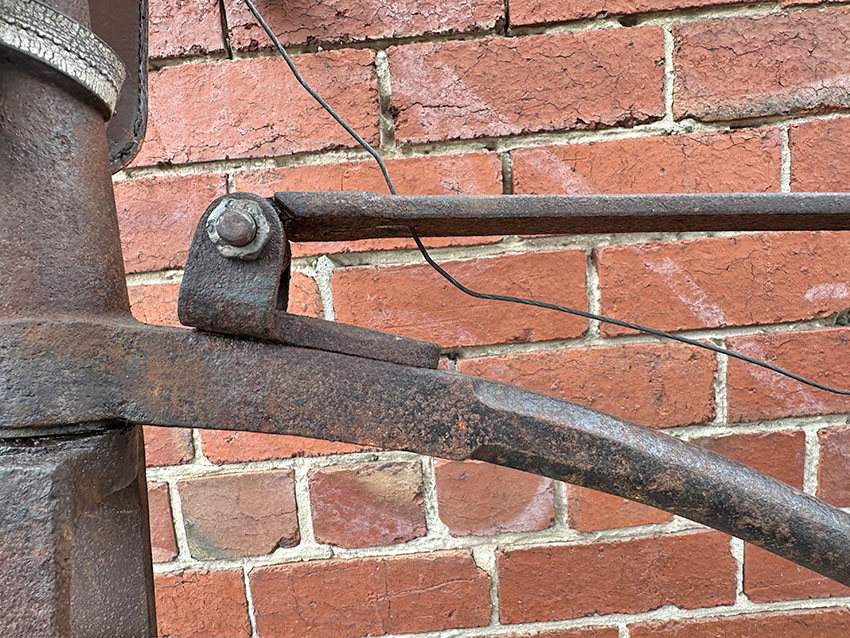
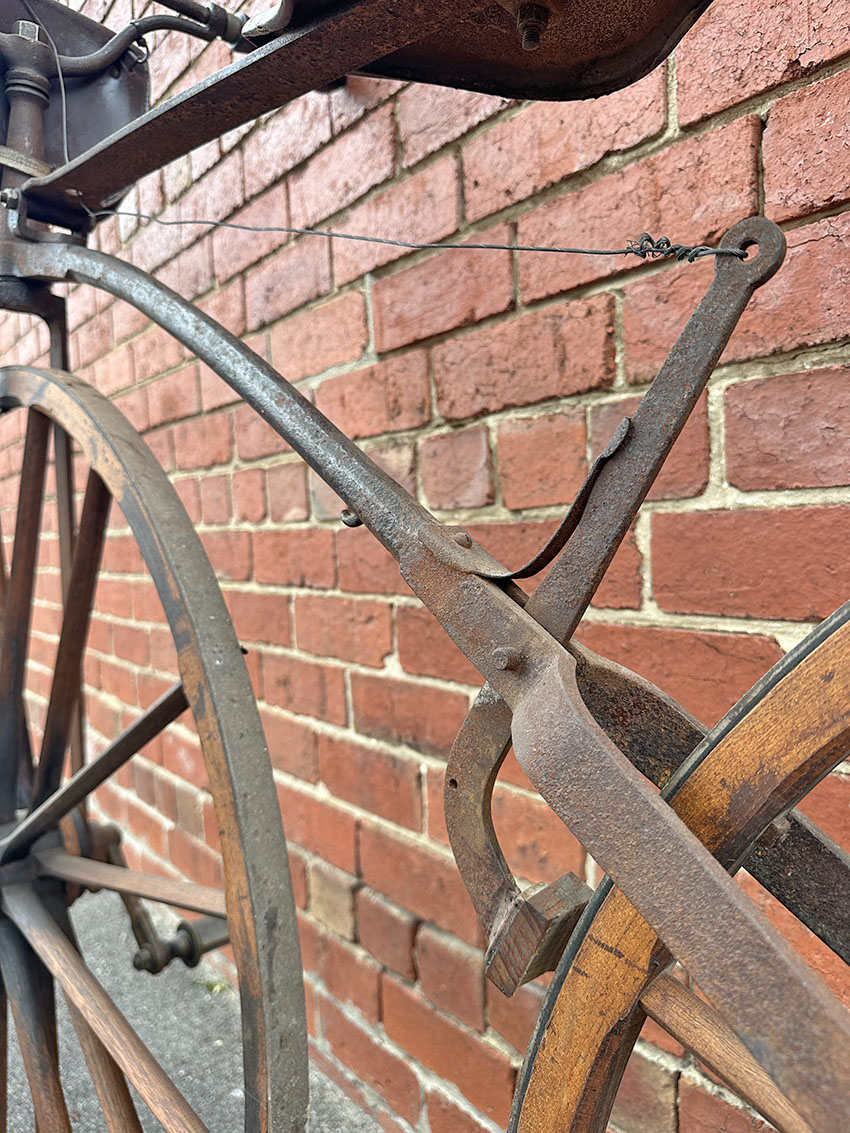
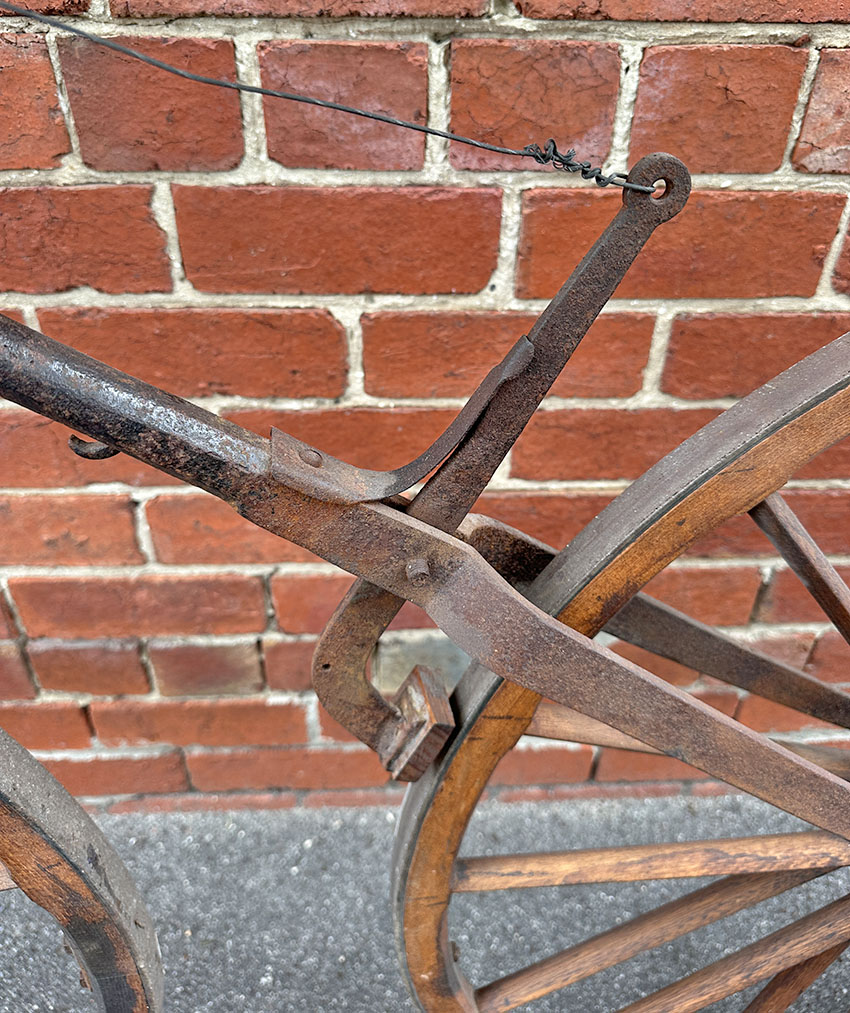
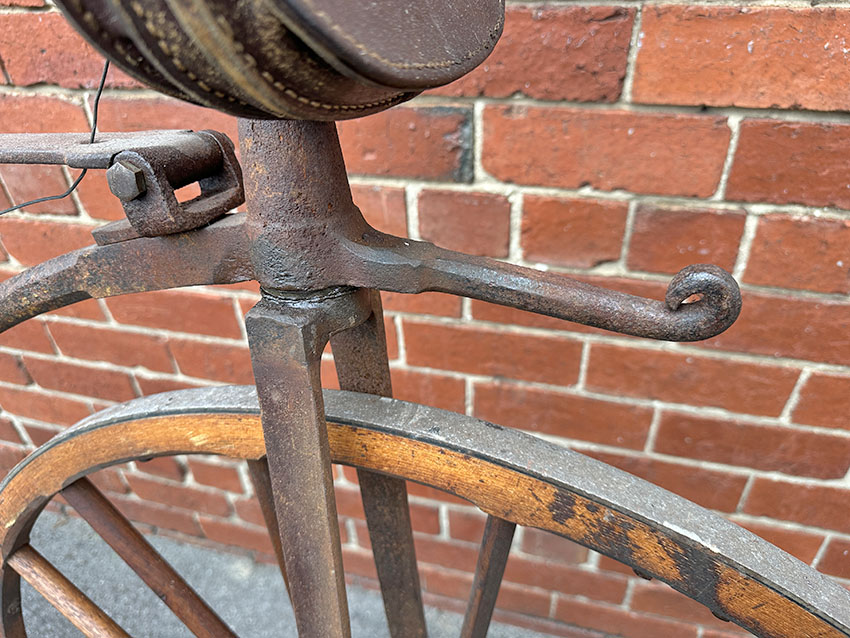
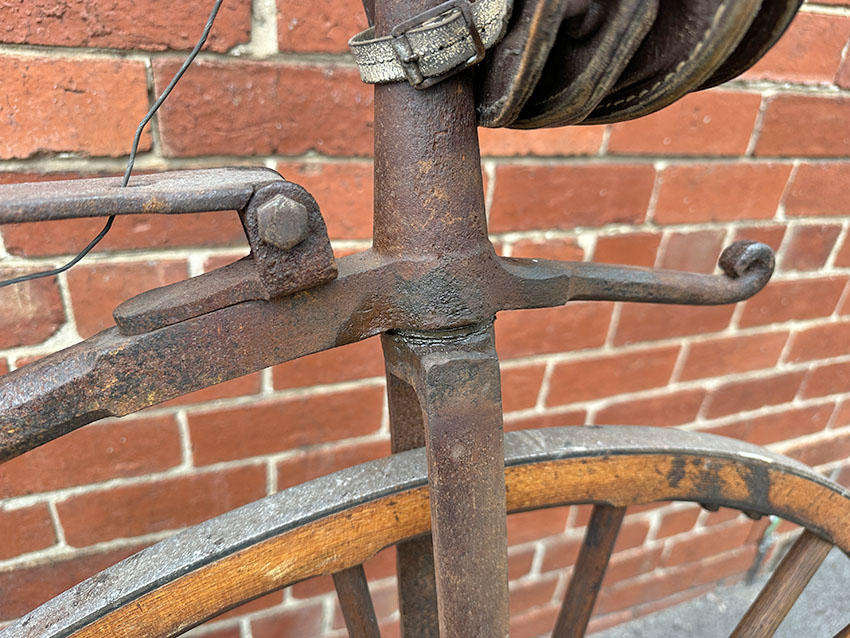
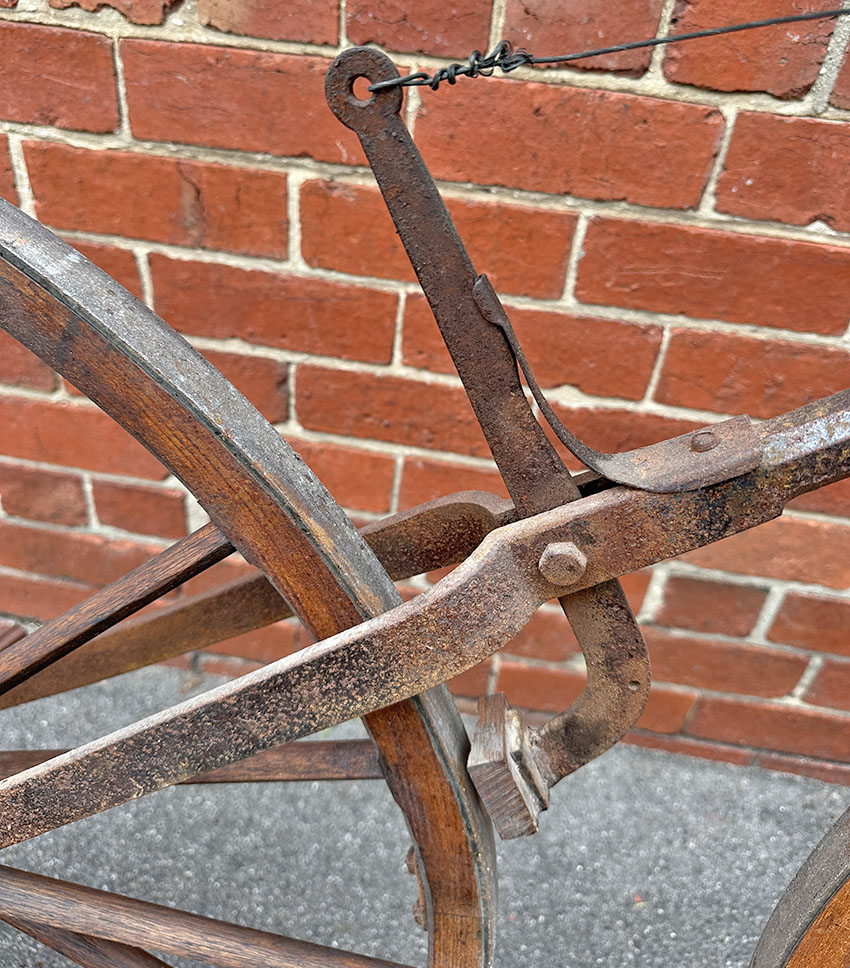
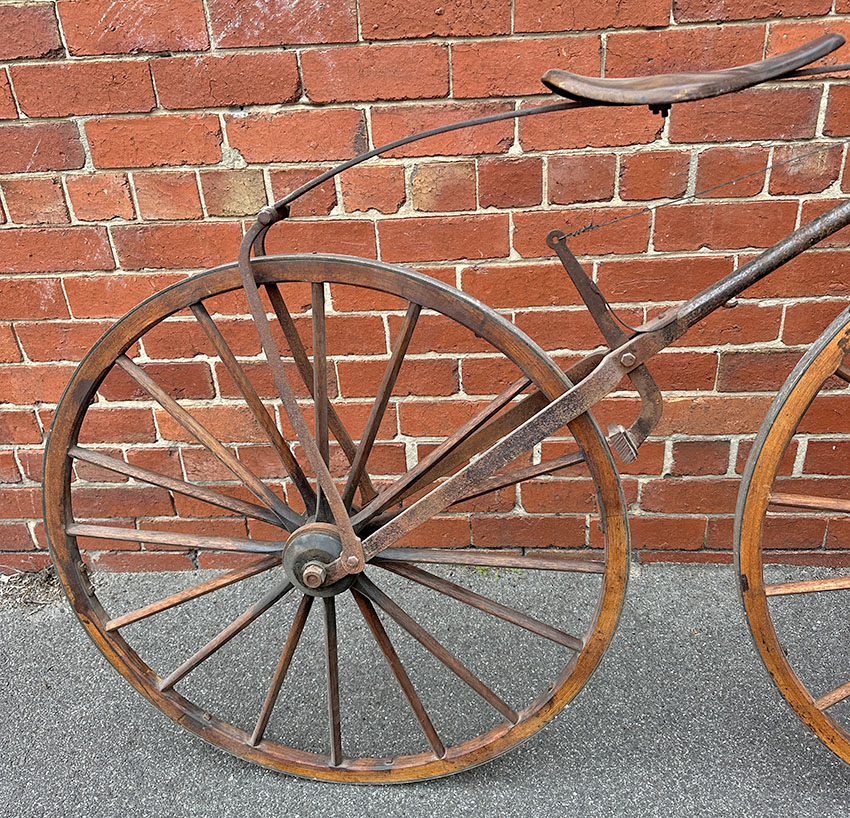
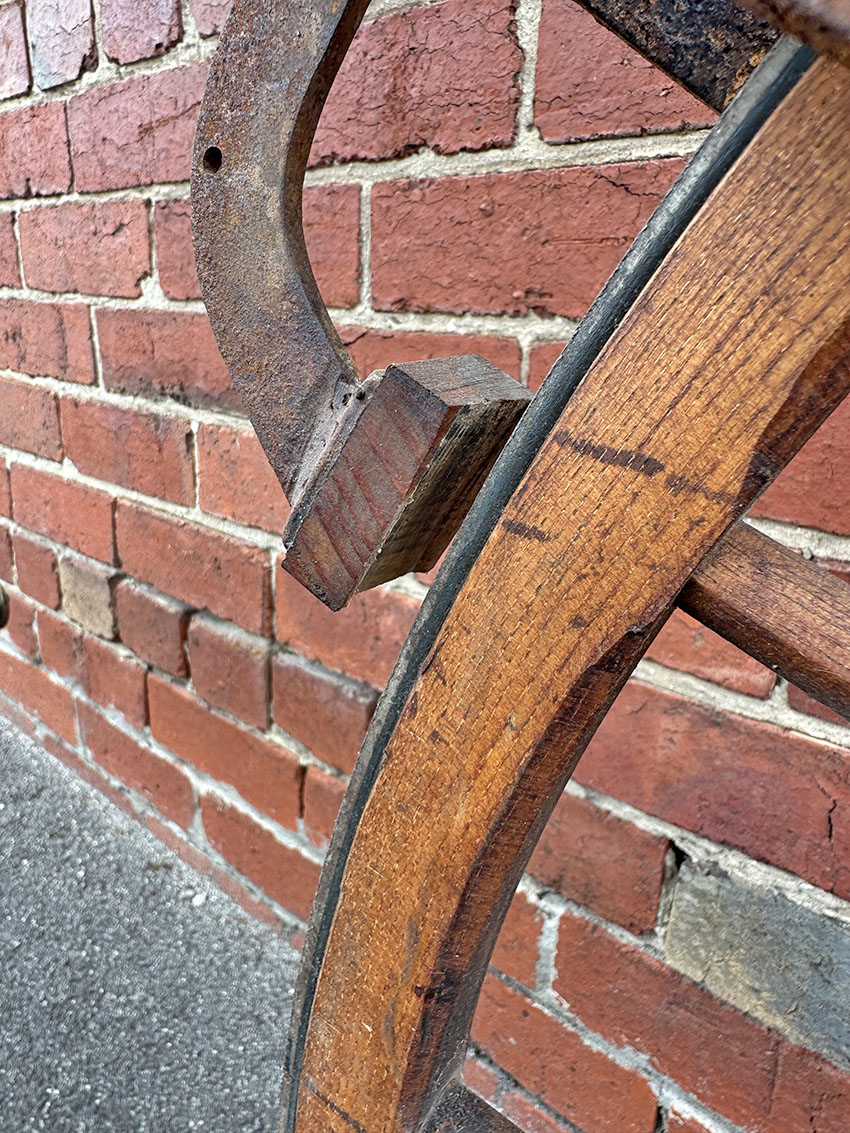
THE BRAKING MECHANISM













* Ballarat info with thanks to Gold Museum, Ballarat, Victoria, quoting reports in the Ballarat Star newspaper, 1869 –
http://www.goldmuseum.com.au/category/collections/
