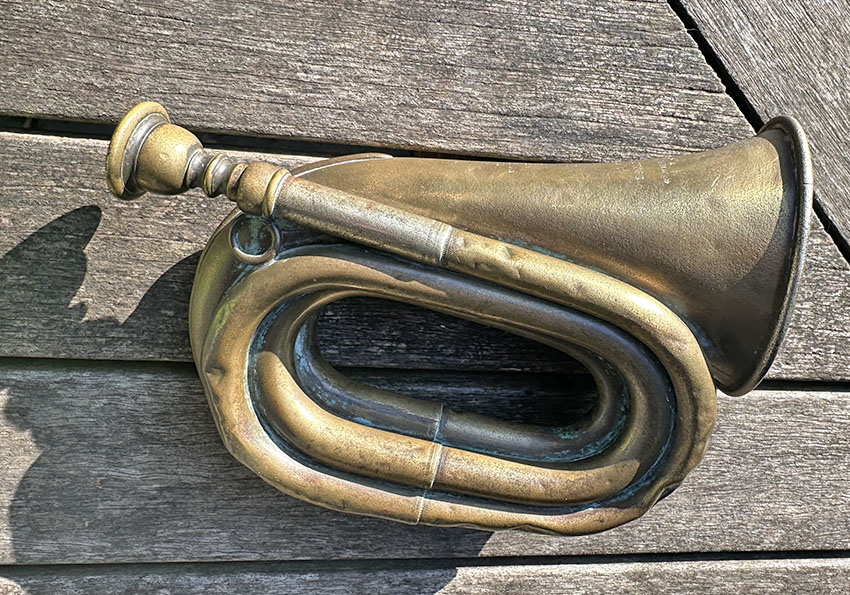
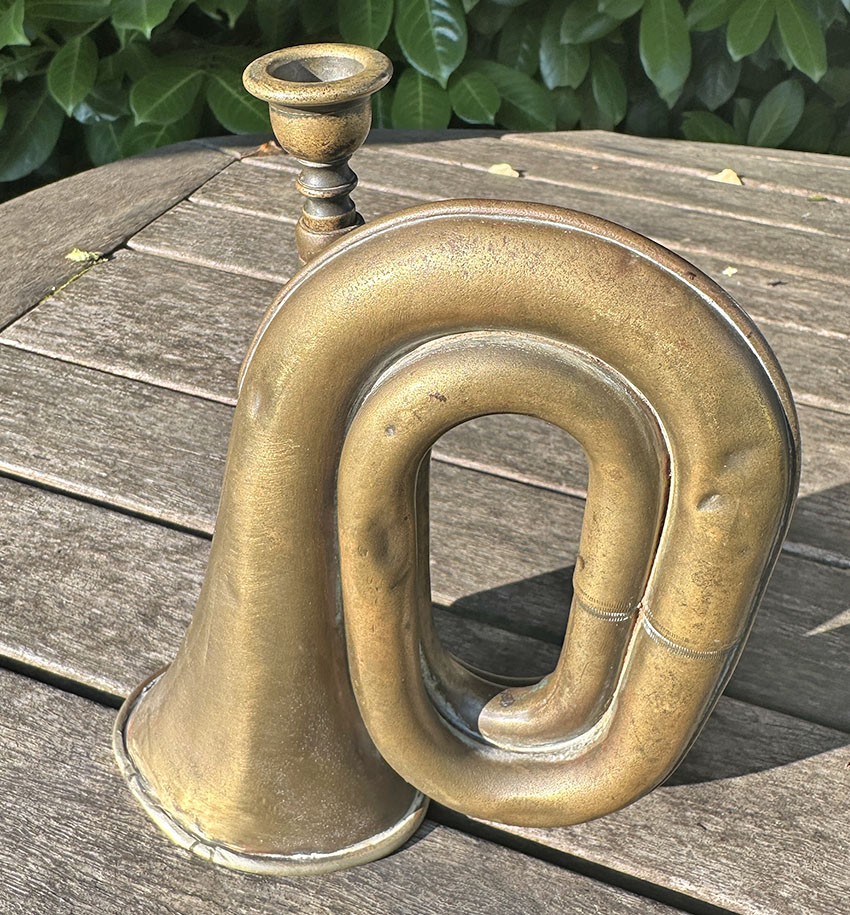
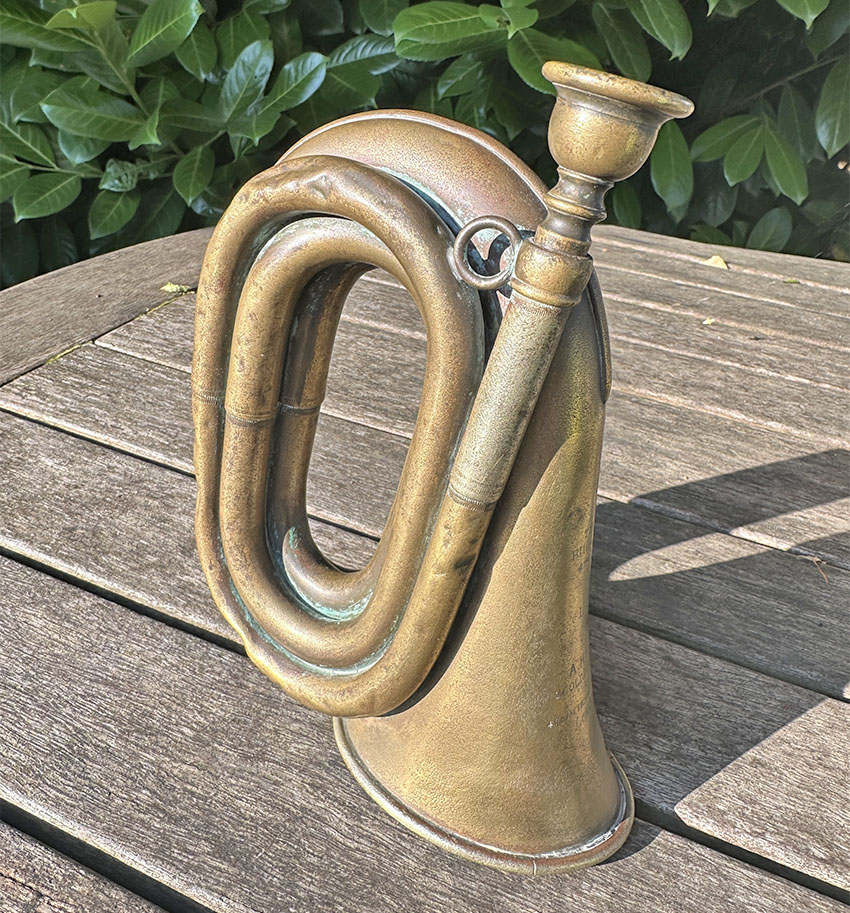
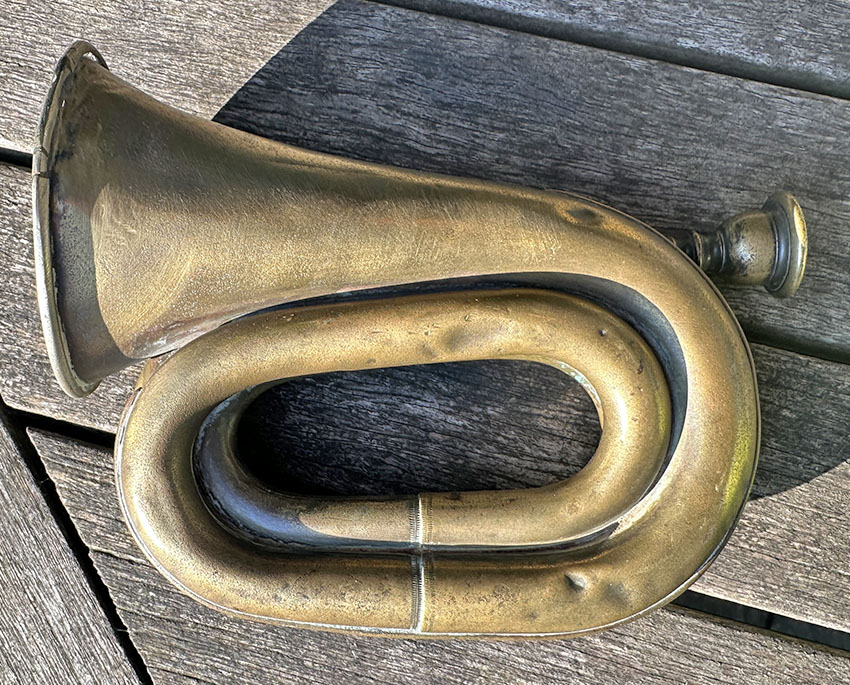
1890s Cycle Buglet with 4 Turns.
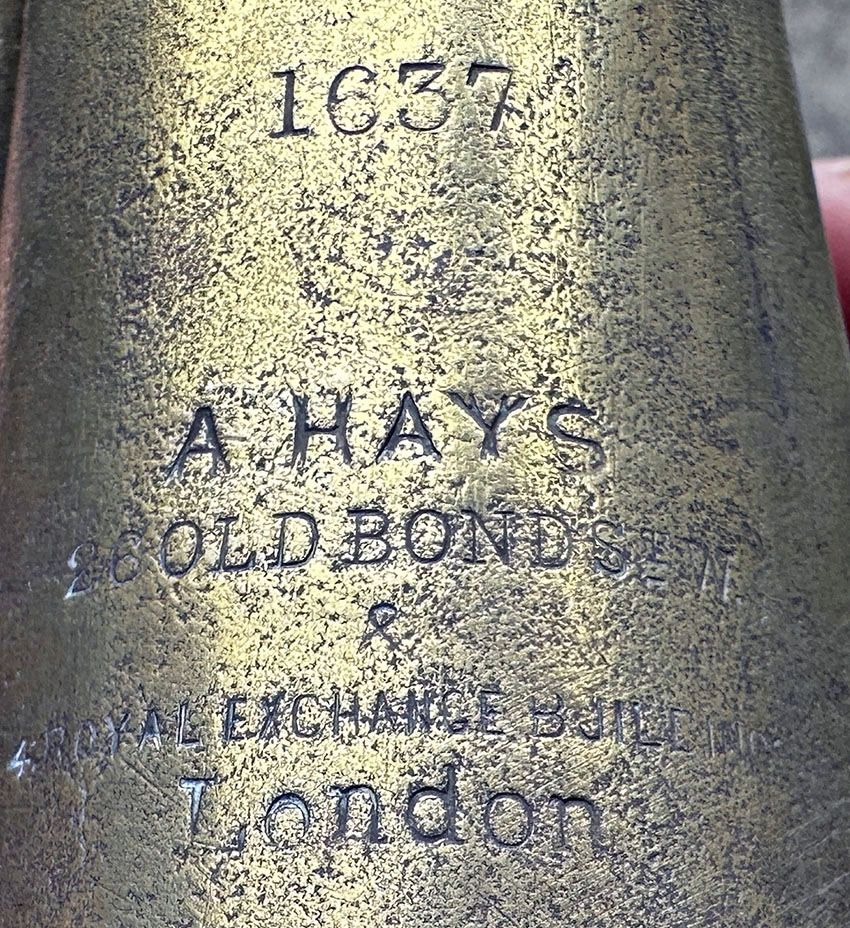
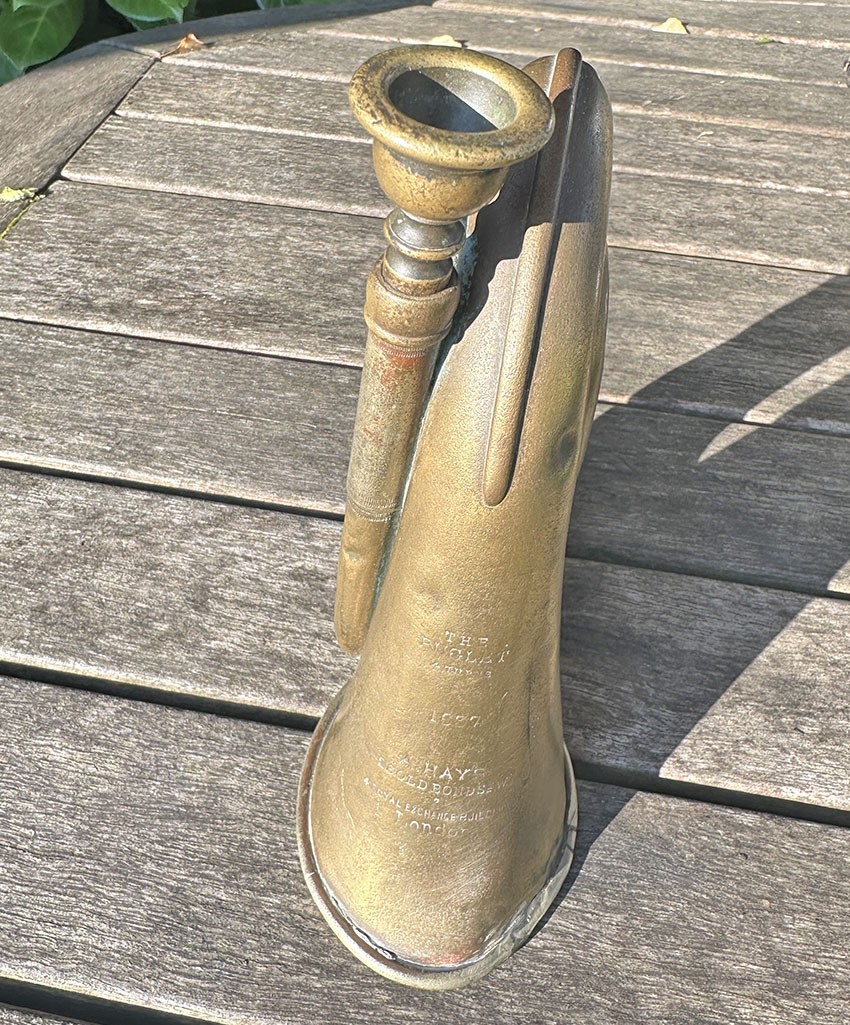
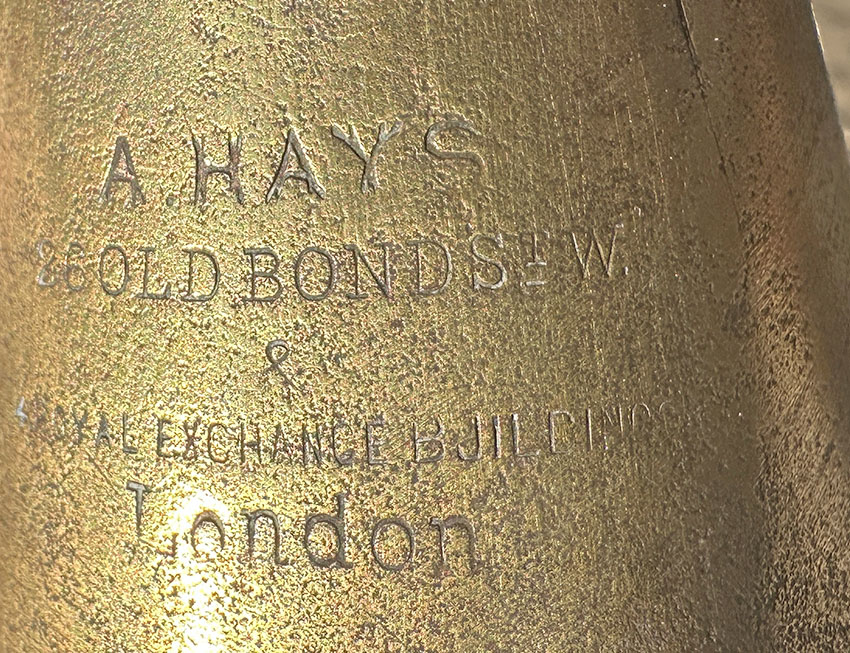
Maker Alfred Hayes, 26 Old Bond St, London
No 1637
LENGTH: 7″
WIDTH: 2.5″
HEIGHT: 5.5″
(Now sold)
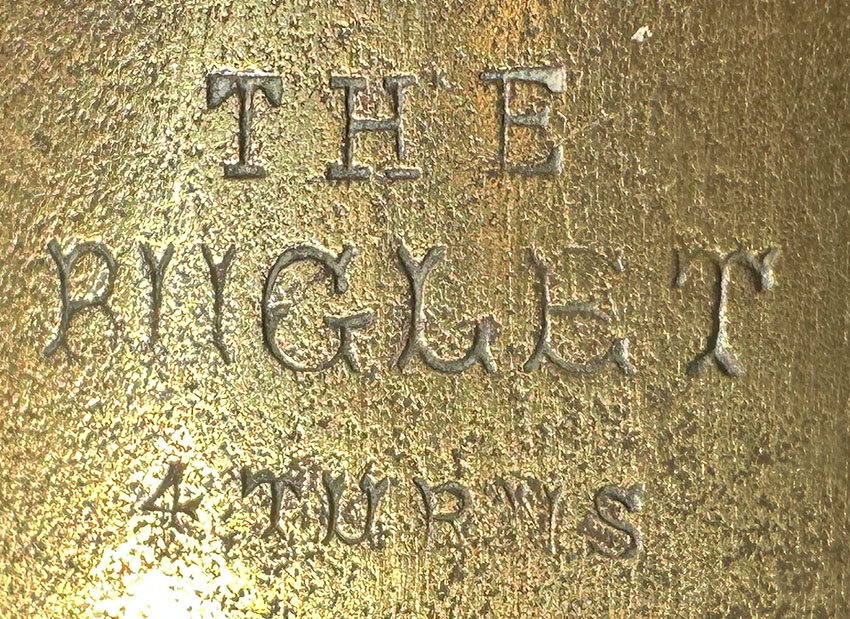
The cycling bugle was described as a Buglet by the manufacturers, as it was a smaller version of the military bugle, comfortably fitting into a cyclist’s coat pocket. Despite the smaller size, the buglet still had the same resonance as a full size bugle because it had ‘4 turns’ – in other words, it had the same length of tubing but in a more compact form.
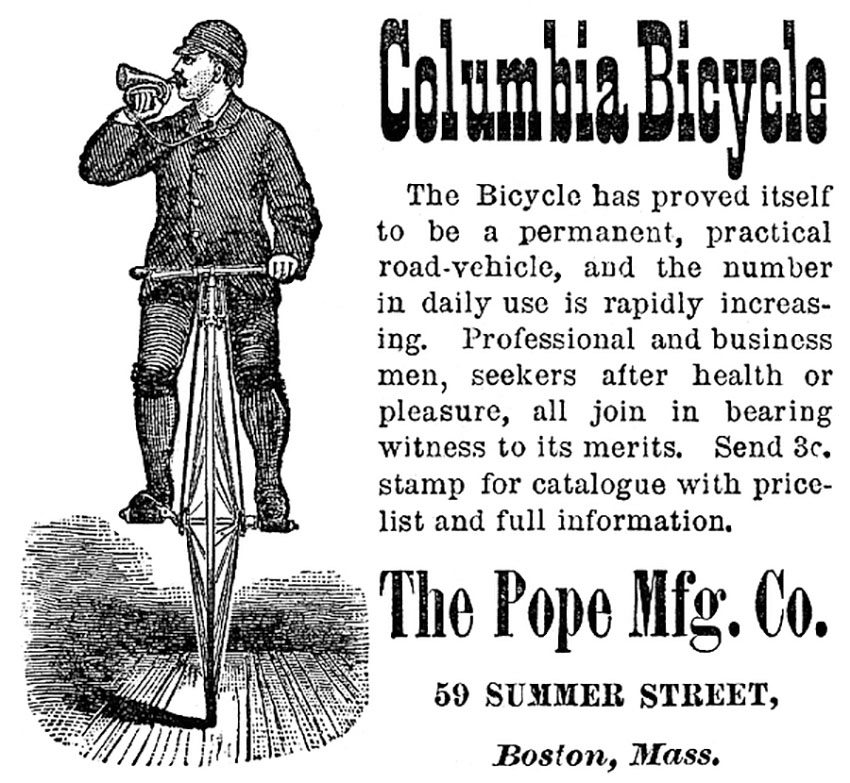
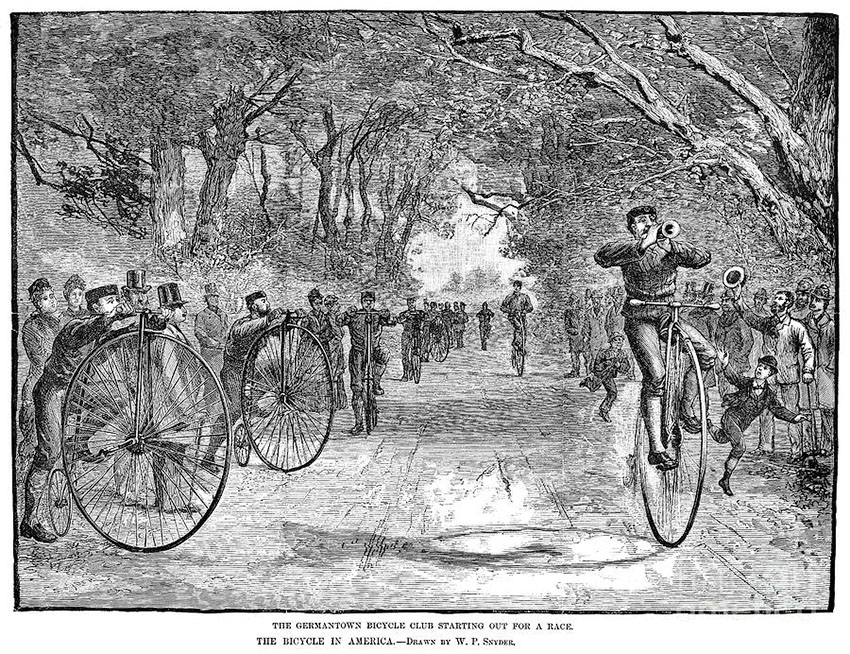
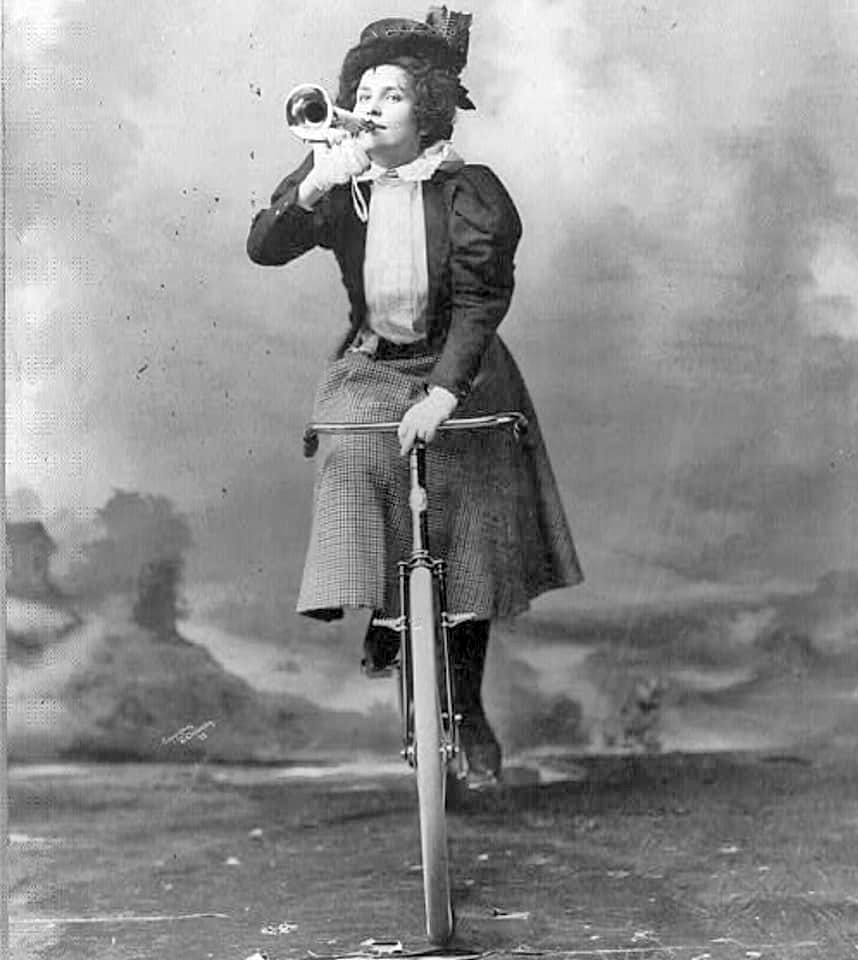
Early cycling clubs were formed along military lines, with a captain in charge. The bugler would announce when the cyclists were to mount, move off, slow down, beware of other road users or dangerous hills, dismount, etc.
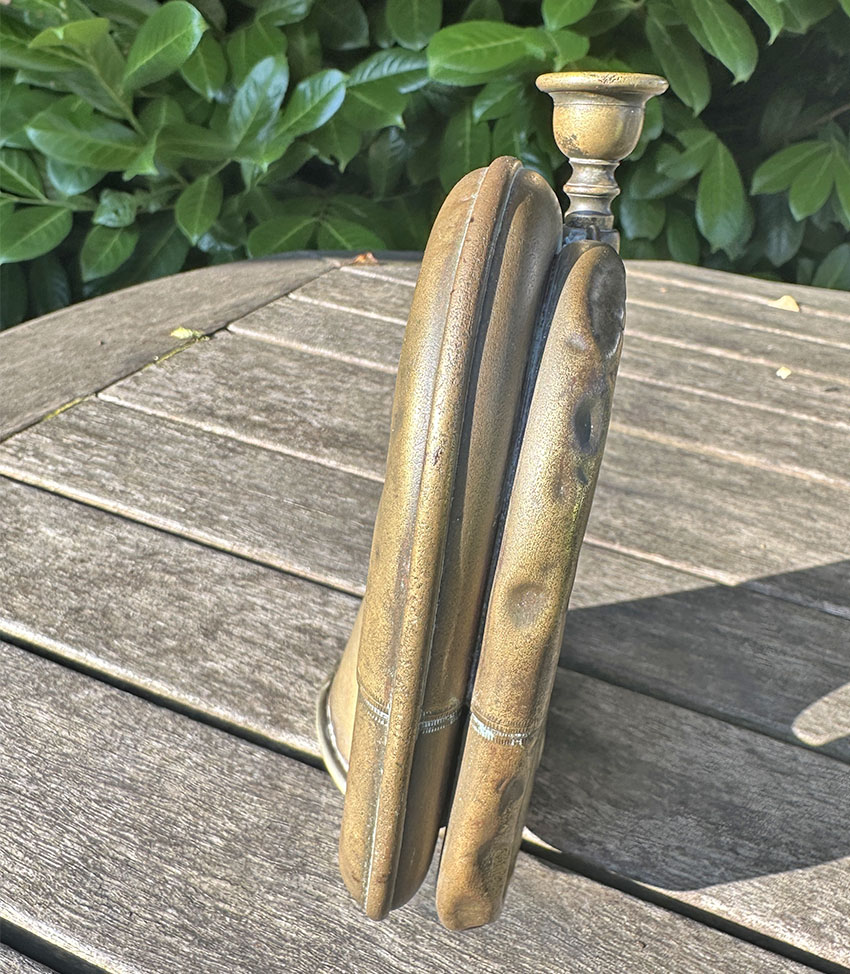
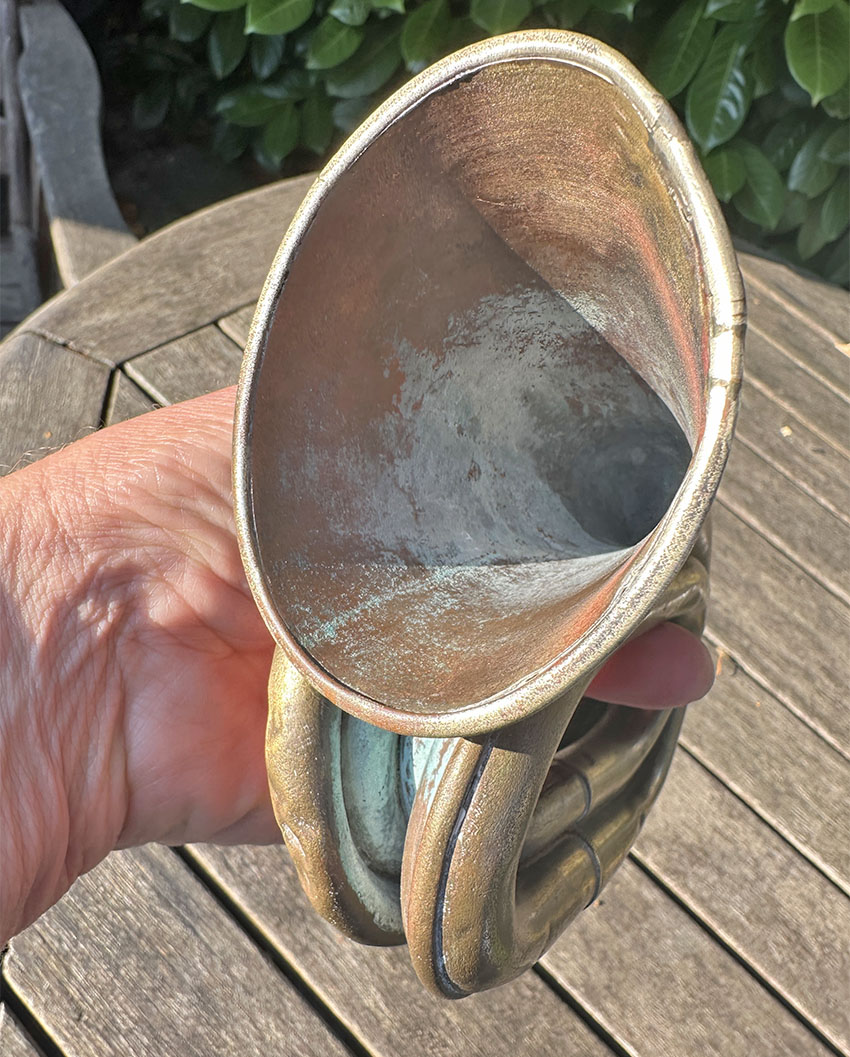
As may be expected with a copper item that has been used over thirteen decades, there are a few dents, but overall this bugle is in excellent original condition.
Hays instruments with the 26 Old Bond St address date between 1881 & 1909. There is no record of exactly when this Buglet was made with the number 1637 engraved on it, so I’ve assumed an age of 1890s.
This early cycling accessory provides a unique glimpse into the cycling world of 130 years ago.
EVOLUTION of the BUGLE in BRITAIN & AMERICA
No group had more of an impact on the evolution of the bugle than the Royal Artillery Bugle Band. Located in Woolwich, England, the ensemble started as a drum and fife band in 1748. Following the Crimean War (1853-1856), the existing drum and fife band was turned into a bugle band.
French military influence on the U.S. military during the Civil War (1861-1865) prompted the substitution of the bugle in fife and drum corps by some volunteer units. U.S. bugle corps resembled French corps very closely. Many of the bugle signals used during the war even came from the French military.
The late 1800s provided an astonishing assortment of bugles offered by manufacturers. Bugles for the military were offered in several keys and several configurations. Likewise, bugles designed for civilian use were also becoming more prominent.
A specialized bugle was created for use by bicyclists. Triple coiled, these compact bugles were small, but were the same length as larger double-coil bugles. The compact design of the bicycle bugle was also utilized for pocket bugles. Bicycle bugles sometimes utilized an oval bell flare instead of the traditional round configuration.
Becoming a symbol for the bicycle competitions, some finely crafted presentation bicycle bugles were used as prized for some of the more prestigious bicycle competitions. These particular bugles are considered highly-prized and valuable by today’s instrument collectors.
It’s unclear what affect these instruments had on the design of the small horns with rubber bellows that were later used on bicycles and early automobiles. To this day, the universal bugle symbol is used as identification on horn buttons found on automobile steering wheels. *
ALFRED HAYS
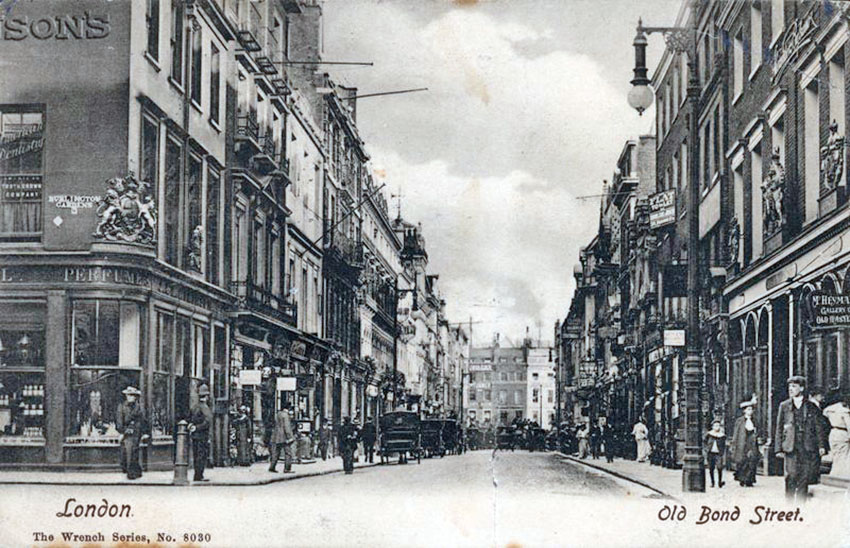
Alfred hays arrived in London in 1835. He was a woodwind & Brass instrument maker and he started his own business in 1869 at 4 Royal Exchange Buildings, London, manufacturing & importing instruments.
Horns with just the Royal Exchange Address date between 1869 & 1909. Horns with the additional 26 Old Bond St address date between 1881 & 1909. Royal Exchange buildings border Cornhill & occasionally this address was used too. **
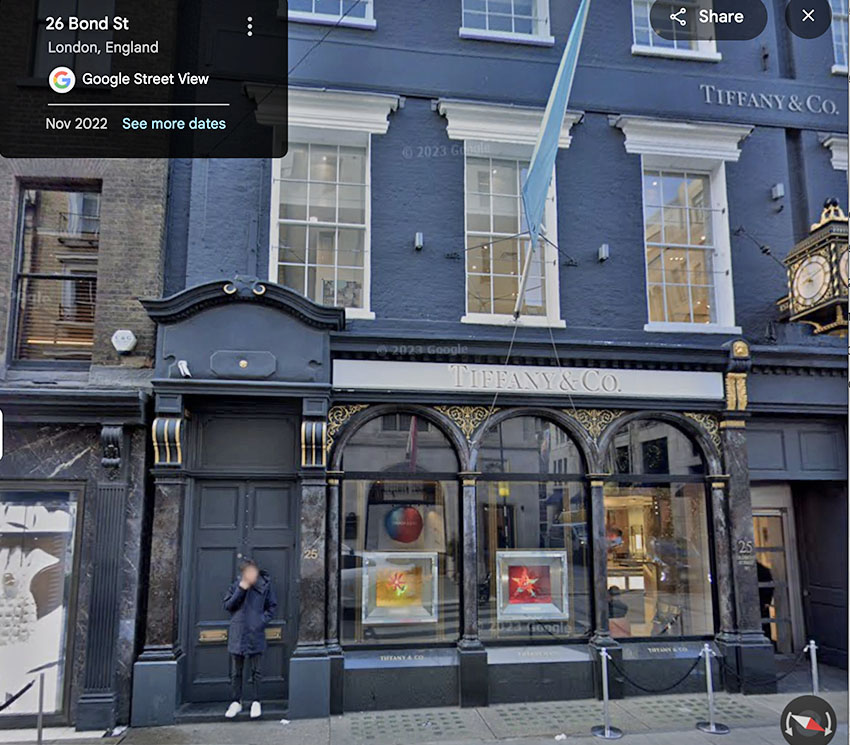
Today 26 Bond St is occupied by Tiffany & Co.
* Bugle history with thanks to – http://www.middlehornleader.com/Evolution%20of%20the%20Bugle%20–%20Section%202.htm
** Horn maker info thanks to – https://www.tackagain.co.uk/content/18-horn-makers-4
