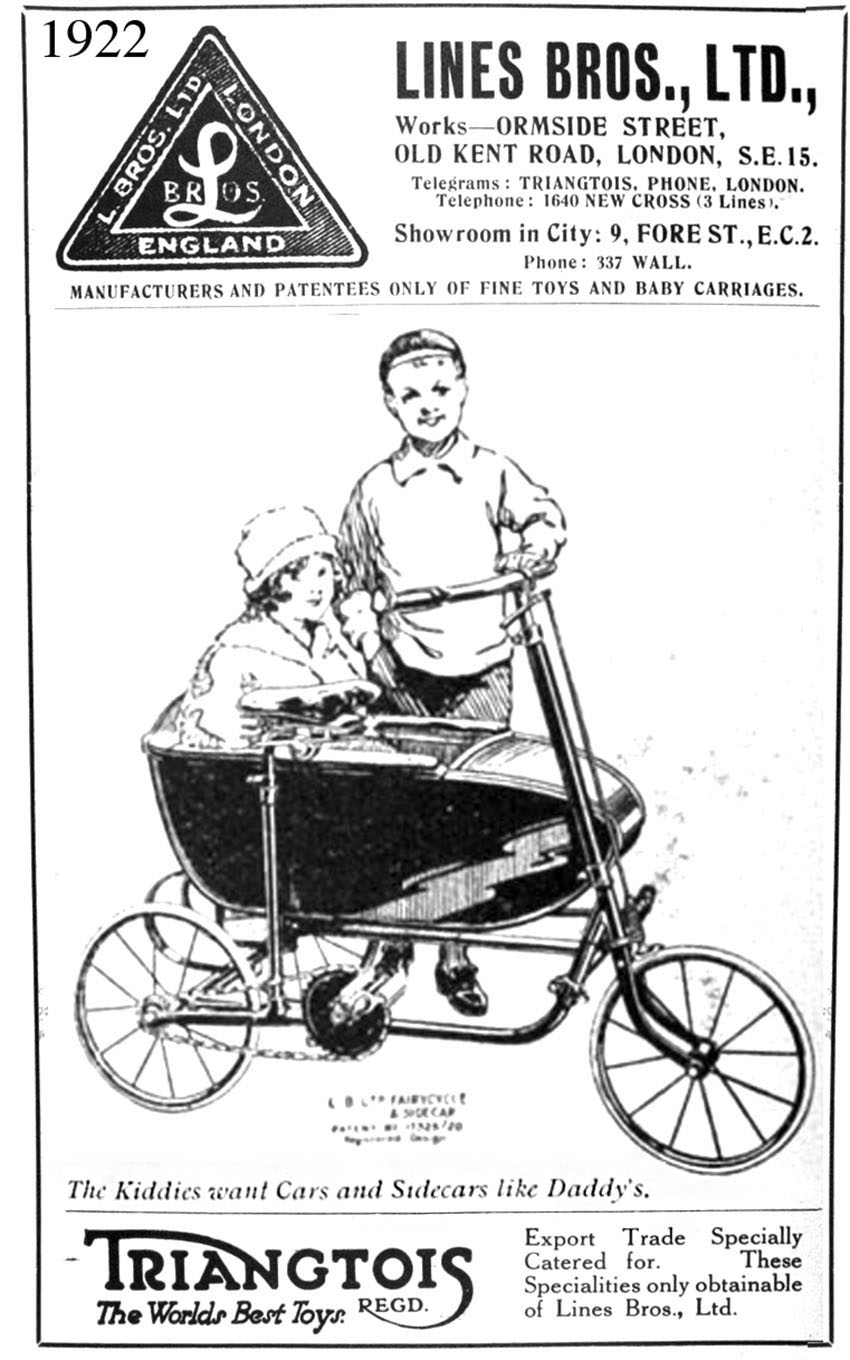
THE KIDDIES WANT CARS AND SIDECARS LIKE DADDY’S
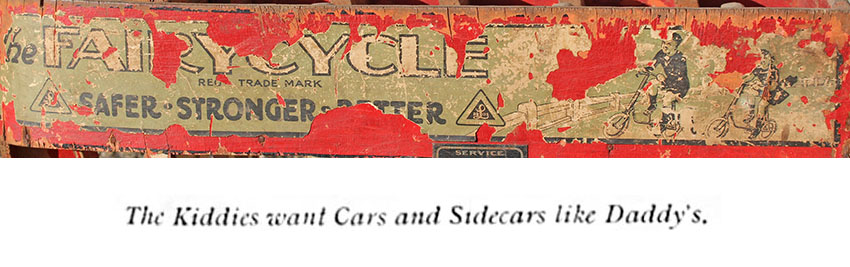

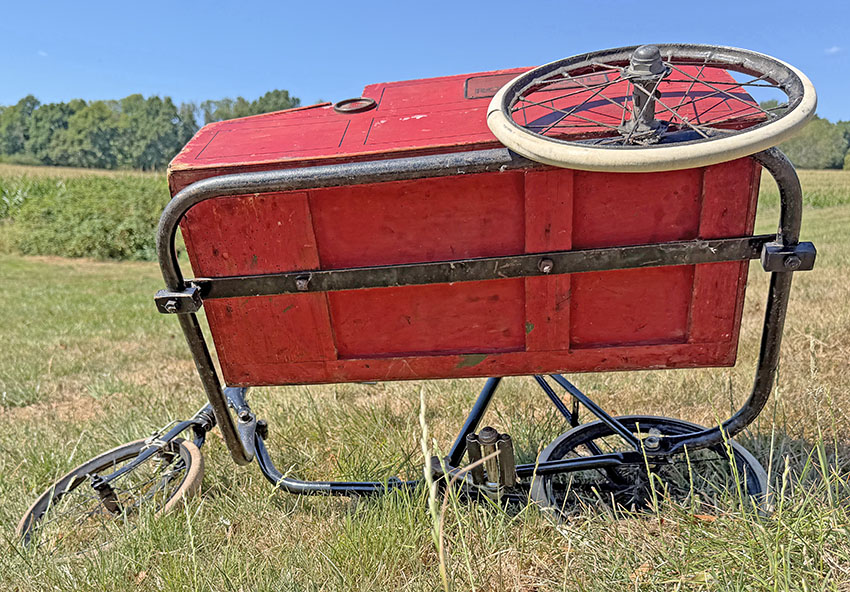
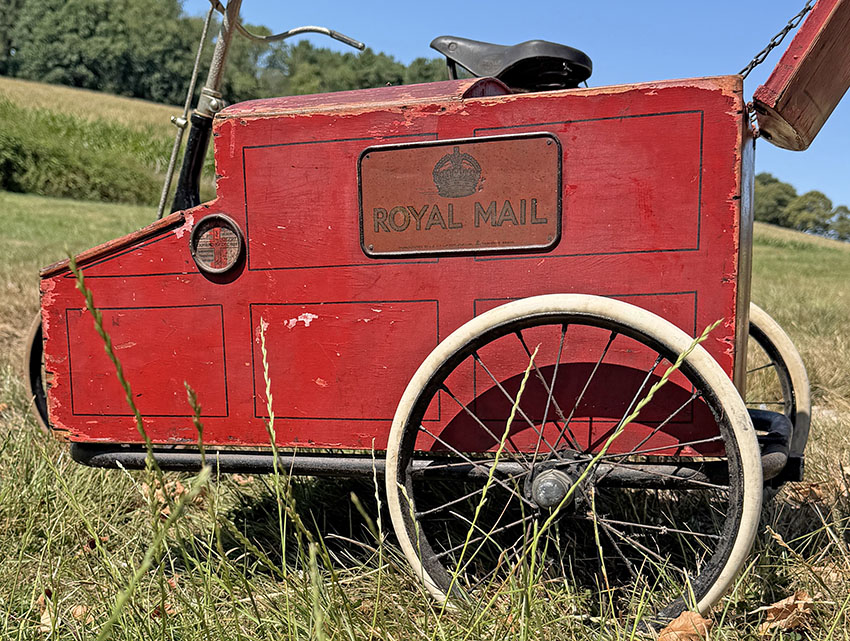
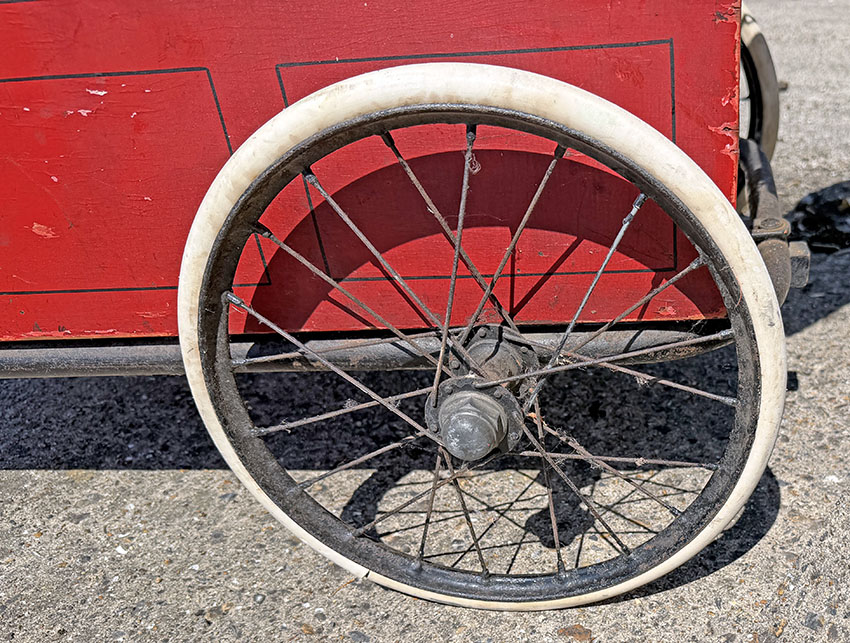
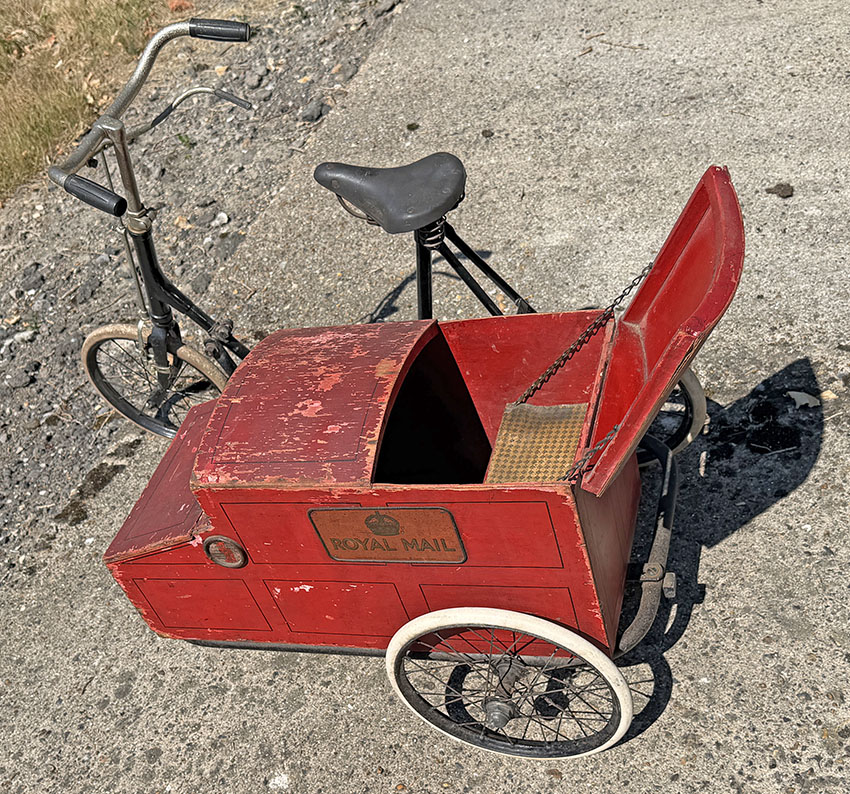
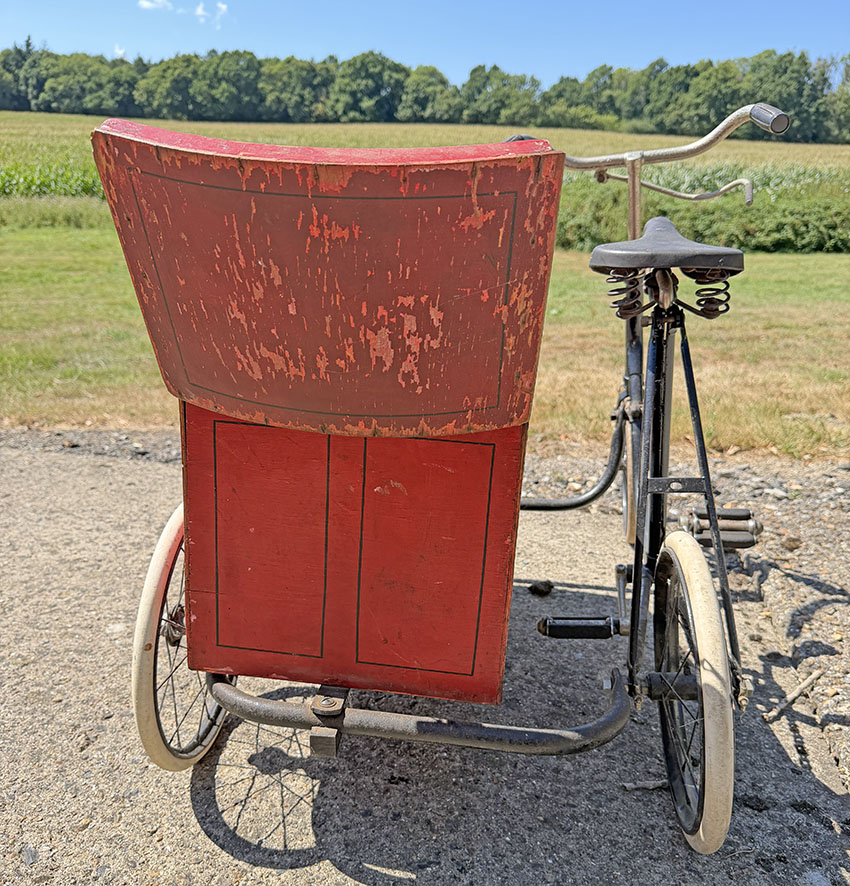
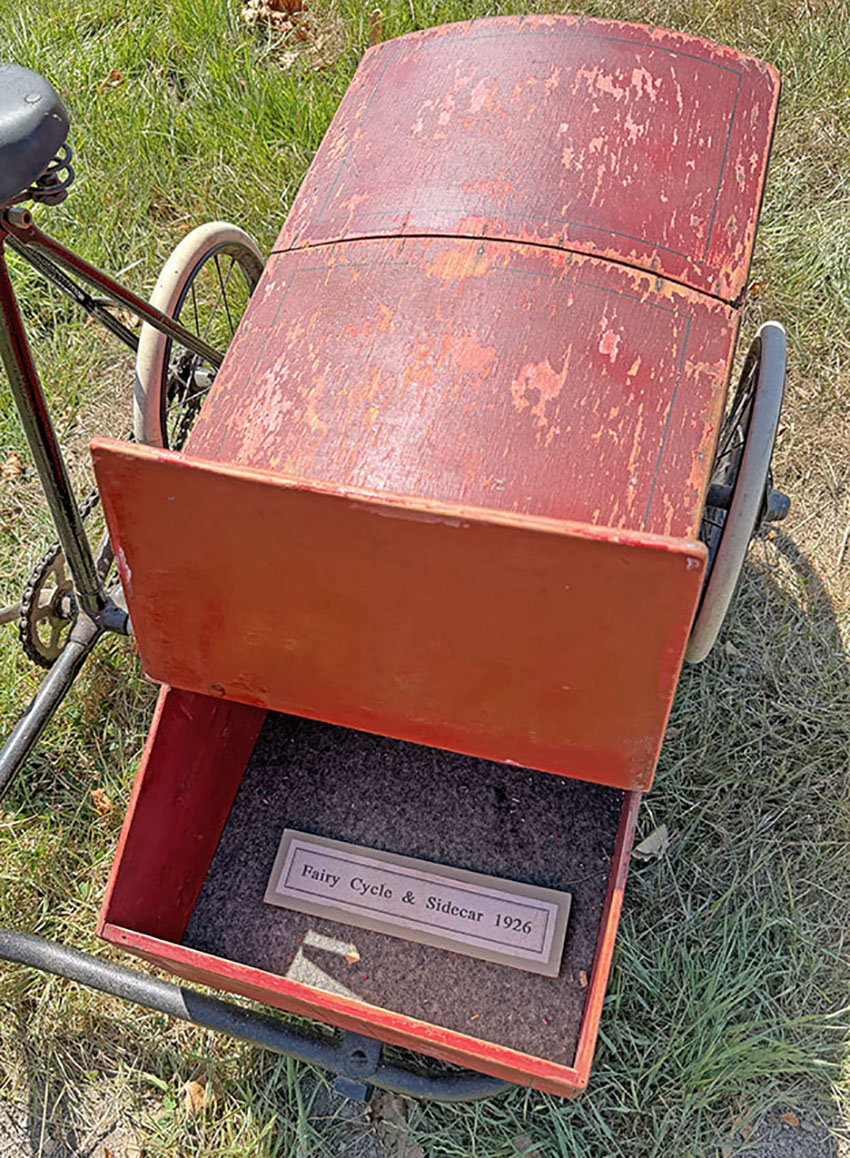
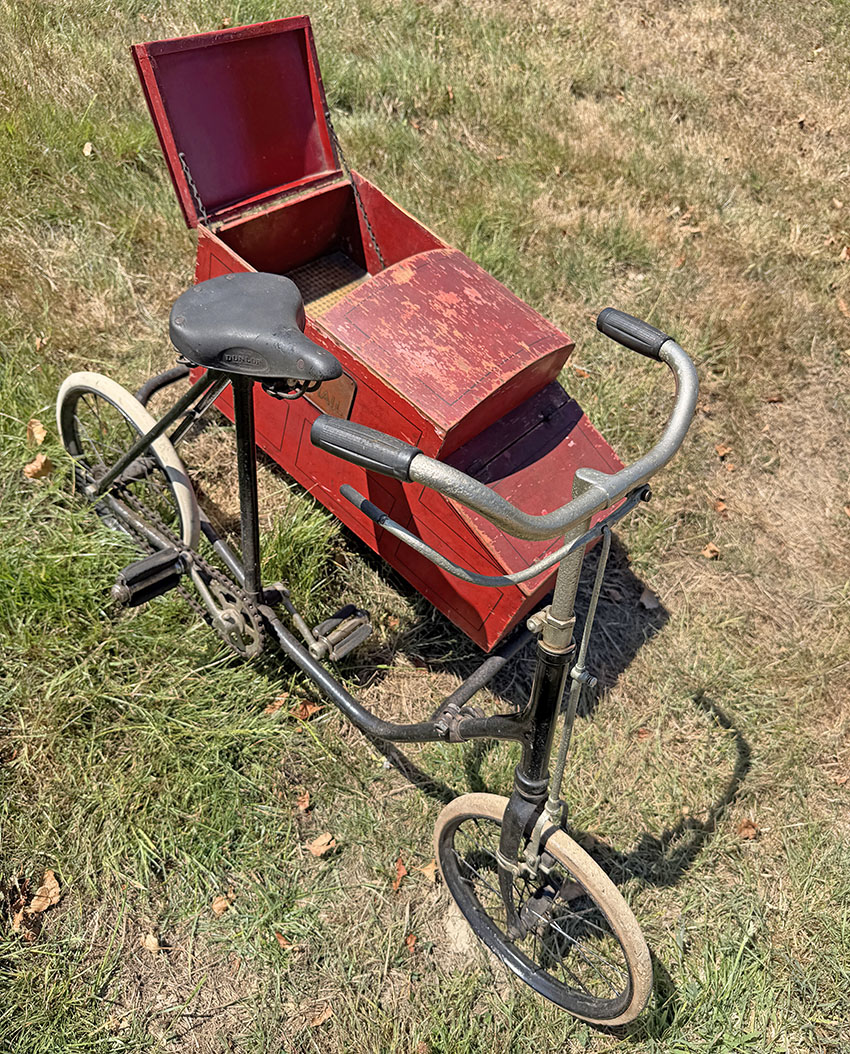
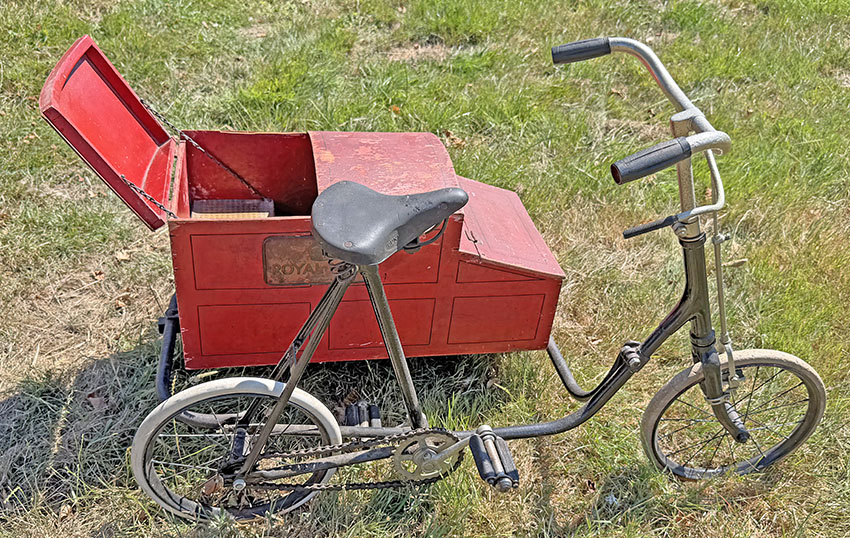
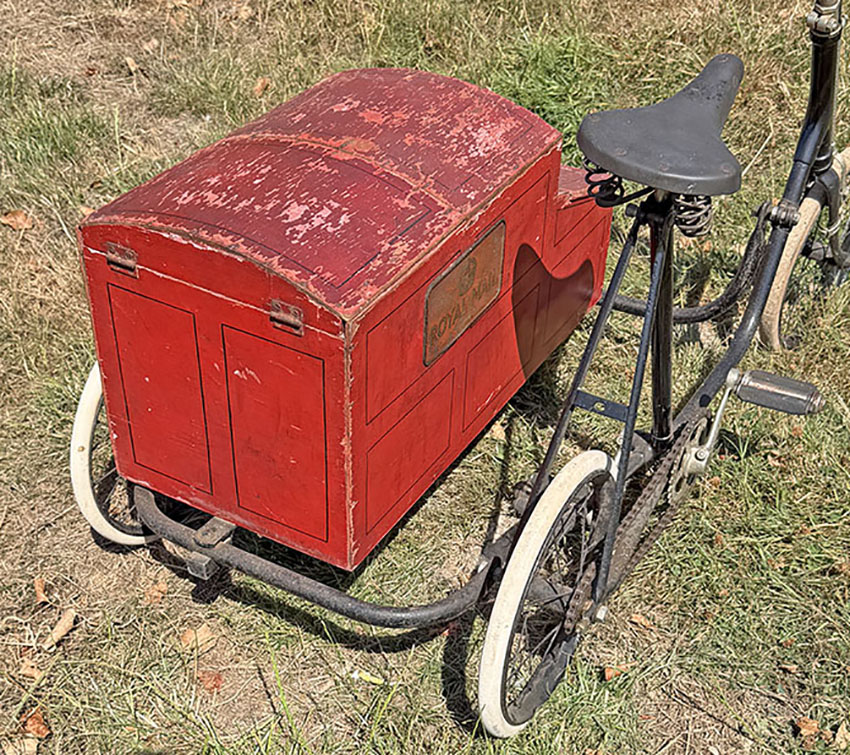
1926 Triang Fairycycle with Royal Mail Sidecar
12″ Wheels
LENGTH: 44″
WIDTH: 25″
HEIGHT: 28″
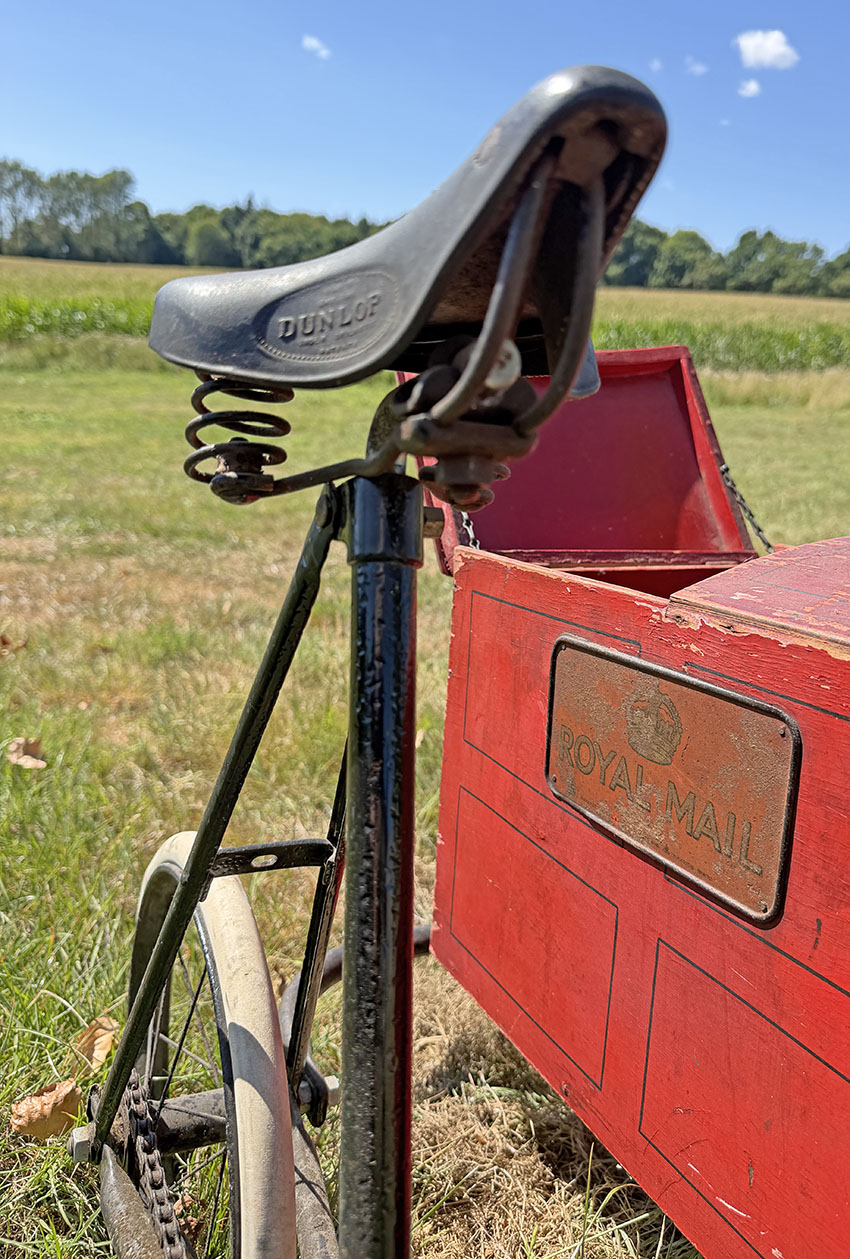
Dunlop saddle

A juvenile bicycle with sidecar was a top range product in the 1920s and was a popular item in Britain because many men used motorcycles for their daily transport, often fitting a sidecar onto the machine at weekends to take the family to the seaside.
The Fairycycle was one of Triang’s most successful lines and its sidecar version was sold at the most expensive toy shops such as Harrods. The Royal Mail sidecar box is actually a superb idea, as the lucky owner could write letters to his family and friends and then cycle round to deliver them.
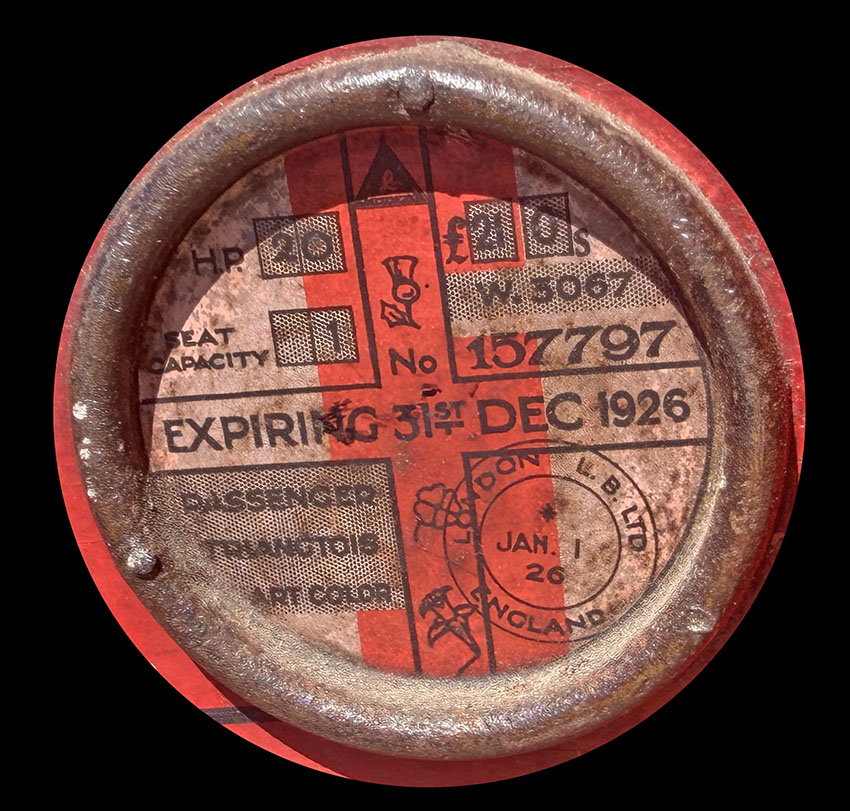
It was previously owned by a long-time collector who displayed it in his private museum. It has a tax disc showing an expiry date of December, 1926. The red sidecar paintwork is in superb unrestored original condition. The rear portion has a lid that flips open to reveal a seat for a child, and the lid at the front opens for storing letters and parcels. It’s ready to display and ride.






LINES BROS HISTORY
The early experiences of Walter, William and Arthur Lines, the three brothers who together founded Line Bros., prepared them for running one of the world’s largest toy manufacturers. On leaving school at the age of 14 all three went to work for their father, Joseph Lines, in the family firm of G&J Lines Ltd. (William starting in 1894, Walter in 1896 and Arthur in 1910). Here they gained first-hand experience in all aspects of toy manufacture. Walter, for example, attended evening classes for design, building, carpentry and cabinet making.
In 1905 William and Walter (at the age of just 23) became joint managing directors of G&J Lines when their uncle, George, died. During these early years, Walter also demonstrated his flair for design, assisting an architect with the design of the new, purpose-built Thistle Works in Tottenham, North London. This was built to streamline production, and was designed as “…a series of contiguous process workshops.”
With the outbreak of war, the brothers’ leadership qualities were again tested. Walter and Arthur joined up and saw active service in France and Italy, where Walter, having risen to the rank of Captain in the Royal Horse Artillery Company, was mentioned in dispatches. William, too old to fight, remained working for the family firm.
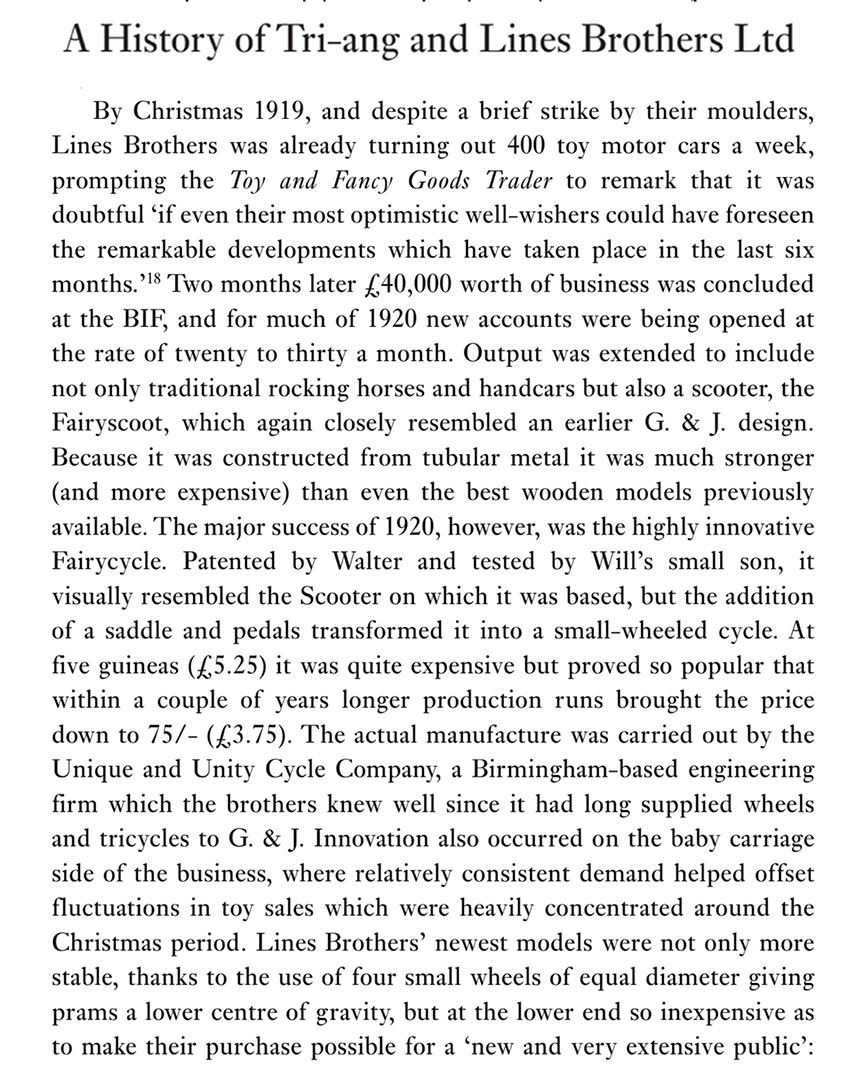
On their return from the war, and after disagreements over how best to manage G&J Lines, Walter, Arthur and William decided to leave their father’s company and set up their own toy manufacturing business. Their new company, Lines Bros., was registered on 1st May 1919. Walter, who was the public face of the company and the main driving force behind it, became managing director, with additional responsibility for the design department. William looked after sales, and Arthur ran the factory. Amongst the first directors, in addition to the three brothers, were R.C. Munro, whose company R. W. Munro Ltd. was well known in the engineering world, Sir Ralph Freeman, a civil engineer and brother-in-law, and Mr. George Campbell, another brother-in-law. To start the business, the brothers borrowed £28,000 from Lloyds Bank and bought the Hatcham Works in Ormside Street, Old Kent Road, London in June 1919. This was named the Triangtois Works and had an area of 45,000 sq ft. The first range of toys was designed by Walter, and sold under the Triangtois trade name.
The company’s order book soon began to grow impressively, with orders quickly received from customers such as Harvey Greenacre & Co. Ltd of Durban, South Africa and also Harrods in London, who were especially glad to receive good quality toys after the war. Orders also came in due to the advertisements that Walter had taken out in national newspapers, at the time a progressive approach to sales and marketing. Lines Bros. also exhibited at the British Industries Fair in February 1920, where they took approximately £40,000 in orders, and throughout the same year opened between 20 and 30 accounts every month. As a result, their net profits in the first year of trading were nearly £8000. These profits were further boosted by the new and highly efficient factory that Walter again designed. It had approximately 30 separate departments, and this level of division of labour allowed the specialisation of workers on specific tasks, which in turn allowed the company to pay lower rates, thus reducing overheads and maximising profits. In addition, the company invested heavily in modern machinery. As a result, their rate of production exceeded their competitors. For example, on average each Lines Bros. employee produced 625 dolls prams in 1923, compared with a figure of 181 per G&J Lines Ltd. employee. The continued success of the Company brought with it a continued need for expansion, and a further factory, providing an additional 60,000 sq. ft. of floor space, was acquired in 1922 at 761 Old Kent Road, London. This was operational by July of that year, having been fitted out again according to Walter’s designs. In addition, the Company also had London showrooms, acquired in 1921, at 9, Fore Street.
Even though the Old Kent Road factory had only been operational for a little over a year, by the end of 1923 it had become apparent that Lines Bros. was growing at a rate that required even bigger premises. In December, a contract was placed for a new purpose-built factory in Morden Road, Merton, South London, on a 27 acre site. Typically for Lines Bros, the construction of this factory was quick and efficient, as was the Company’s relocation, and within 18 months of the contract being signed the move into Morden Road was complete.
The factory was again designed by Walter and was originally called Triangtois Works, renamed the Tri-ang Works, when he name ‘Tri-ang Toys’ was registered. It initially housed approximately 500 employees, and covered 191,000 sq. Over the next three years this was increased by 110,100 sq ft., and then from the period from 1929 to 1935 again expanded by a further 164,000 sq ft. A description of the factory from October 1932, when approximately 2000 employees worked there, lists an imposing exterior to the factory, with a commissionaire on the gates and a wide carriage drive leading to the general offices, numerous canteens, a first-aid station, a number of tennis courts, a cricket pitch and two full-size football pitches.*









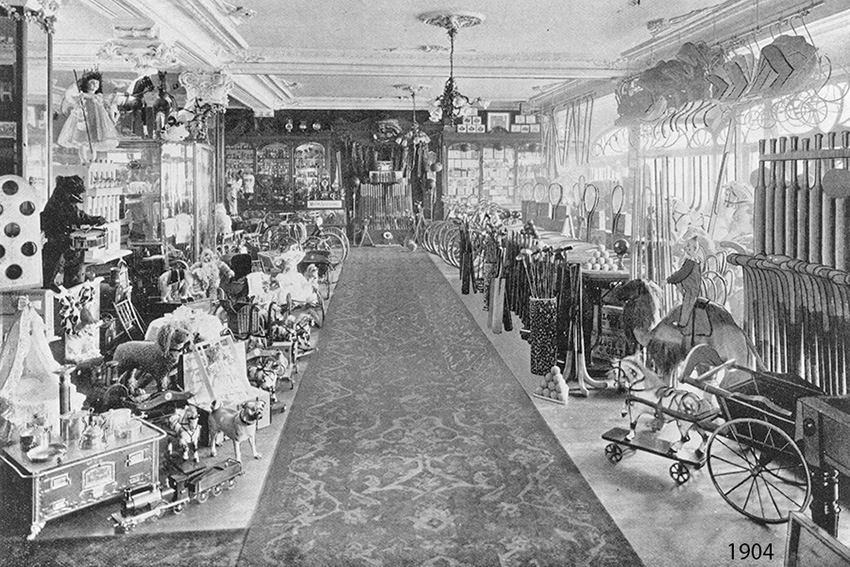
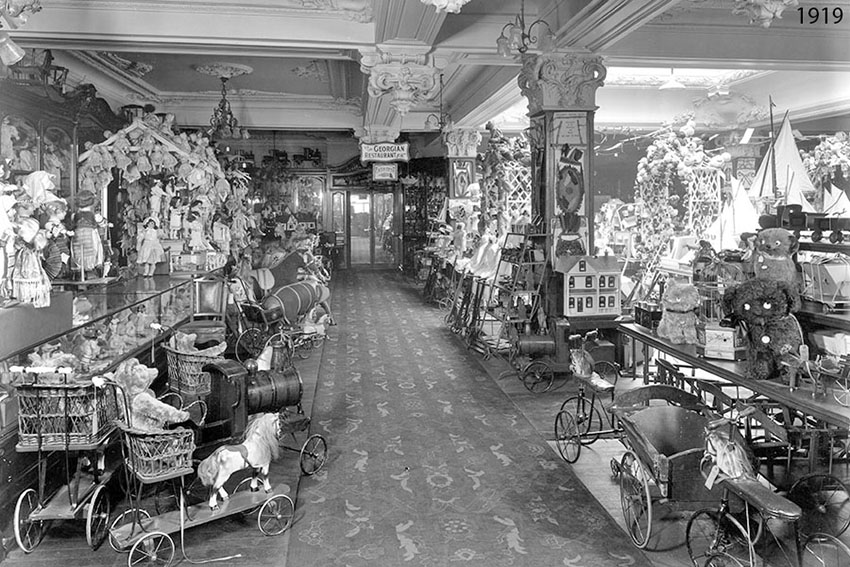
HARRODS TOY DEPARTMENT