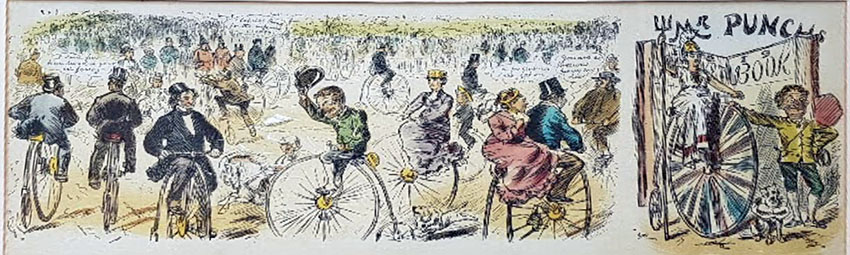
1879 ‘Punch’ magazine framed print, titled ‘A world on Wheels’
70 x 39cm

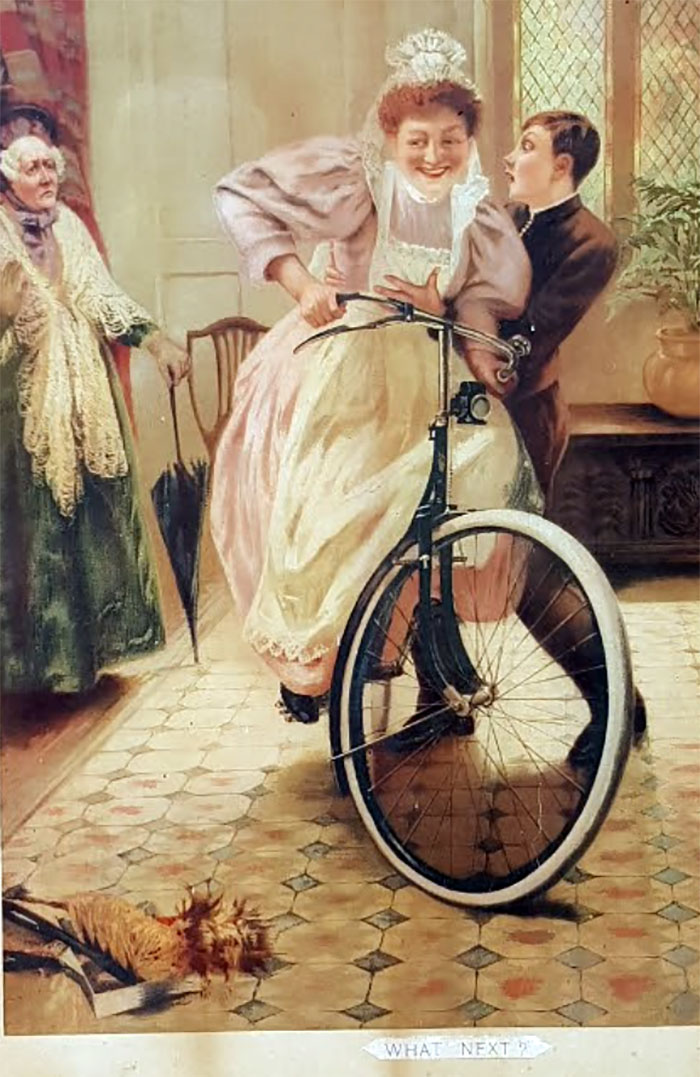
1897 Cycling magazine WHAT NEXT? Framed print.
61 x 76cm

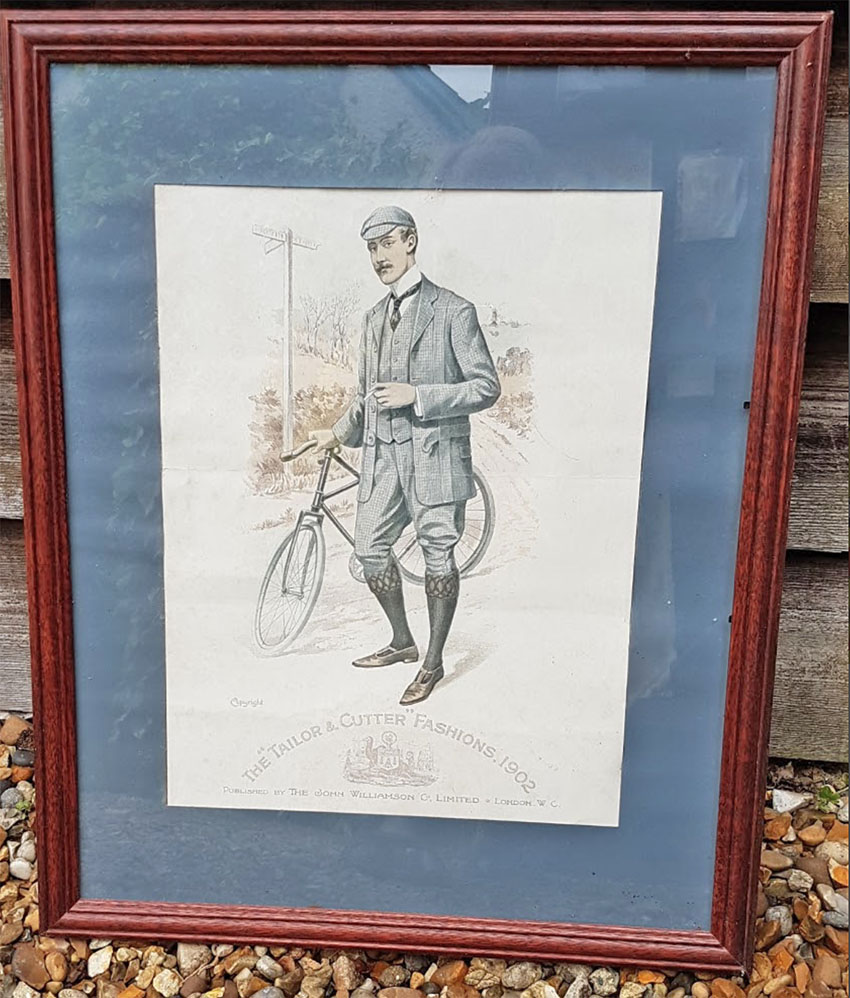
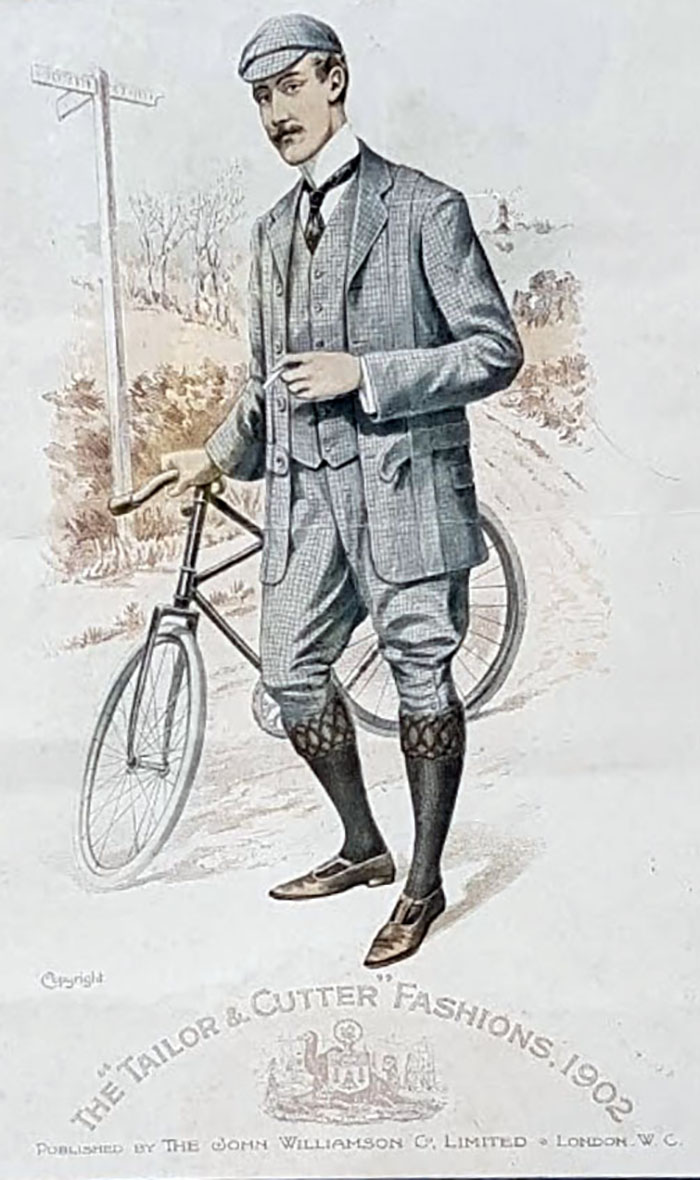
1902 Tailor & Cutter framed print.
45 x 55cm
Advertisement for a Gentlemen’s suit, with an X frame bicycle behind
1893 Zimmermen racing record on a Raleigh bicycle
1900s poster illustration printed onto a mirror and framed.
56 x 76cm

1900s poster of an 1896 Gladiator, framed
46 x 56cm

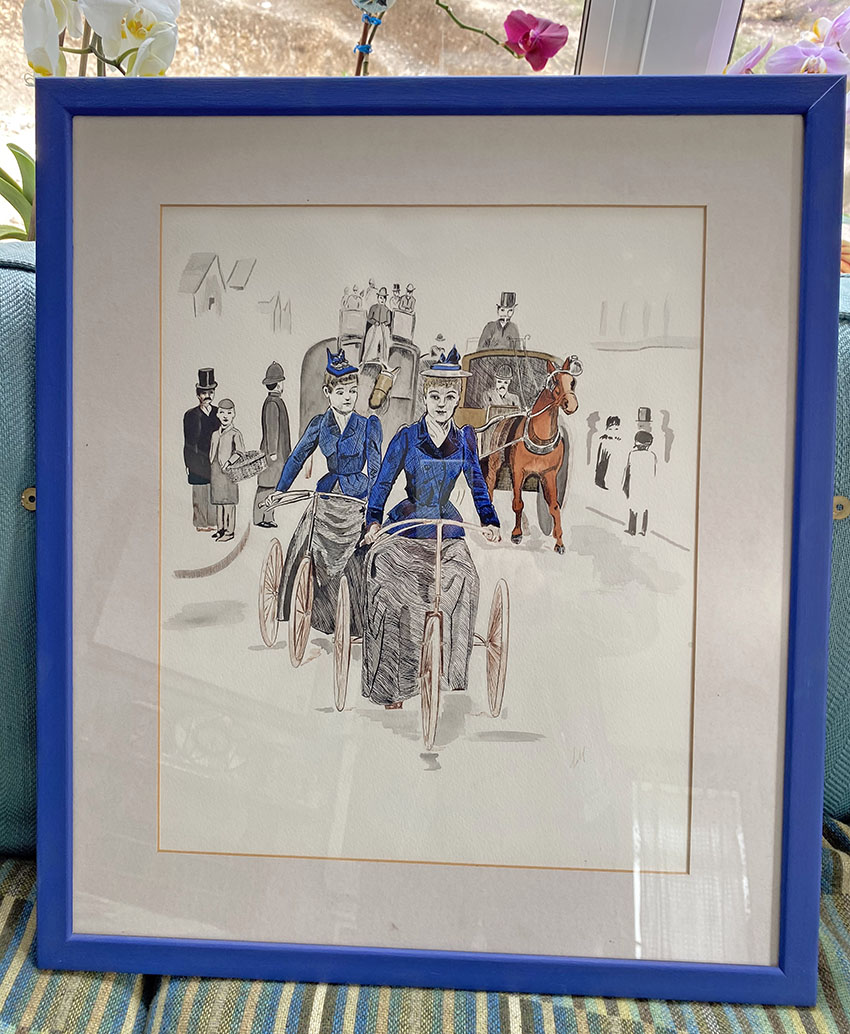
Framed painting, by a French artist a few years ago, copying an early scene of women tricycling
21” x 24”
I thought this would go nicely with the 1888 Humber Cripper tricycle. You also have the Ellis Rhoda children’s tricycle in the first batch, which is similar style.
In the early years of cycling, the only bicycles were penny farthings, which were ridden exclusively by men. At first it was only a man’s hobby.
After the mid-1870s, companies started making tricycles as it was considered an appropriate form of transport for women because they could mount it from the front and keep their dresses intact. But women were not particularly interested. Bear in mind that normally they would have to ask their husbands to buy one for them.
Then Queen Victoria bought three tricycles. It would not have been appropriate for the public to know if she ever rode one. But apparently her staff rode them so she could watch.
As a result of her endorsement, the tricycle industry took off in Britain. It became very fashionable for society women. These were extremely expensive vehicles at the time, so only rich aristocrats would be able to own them.
So men rode penny farthings (and, after 1886 when they were first invented, also safety bicycles). And women rode tricycles – mostly around London’s Hyde Park on a sunday to meet for tea 🙂